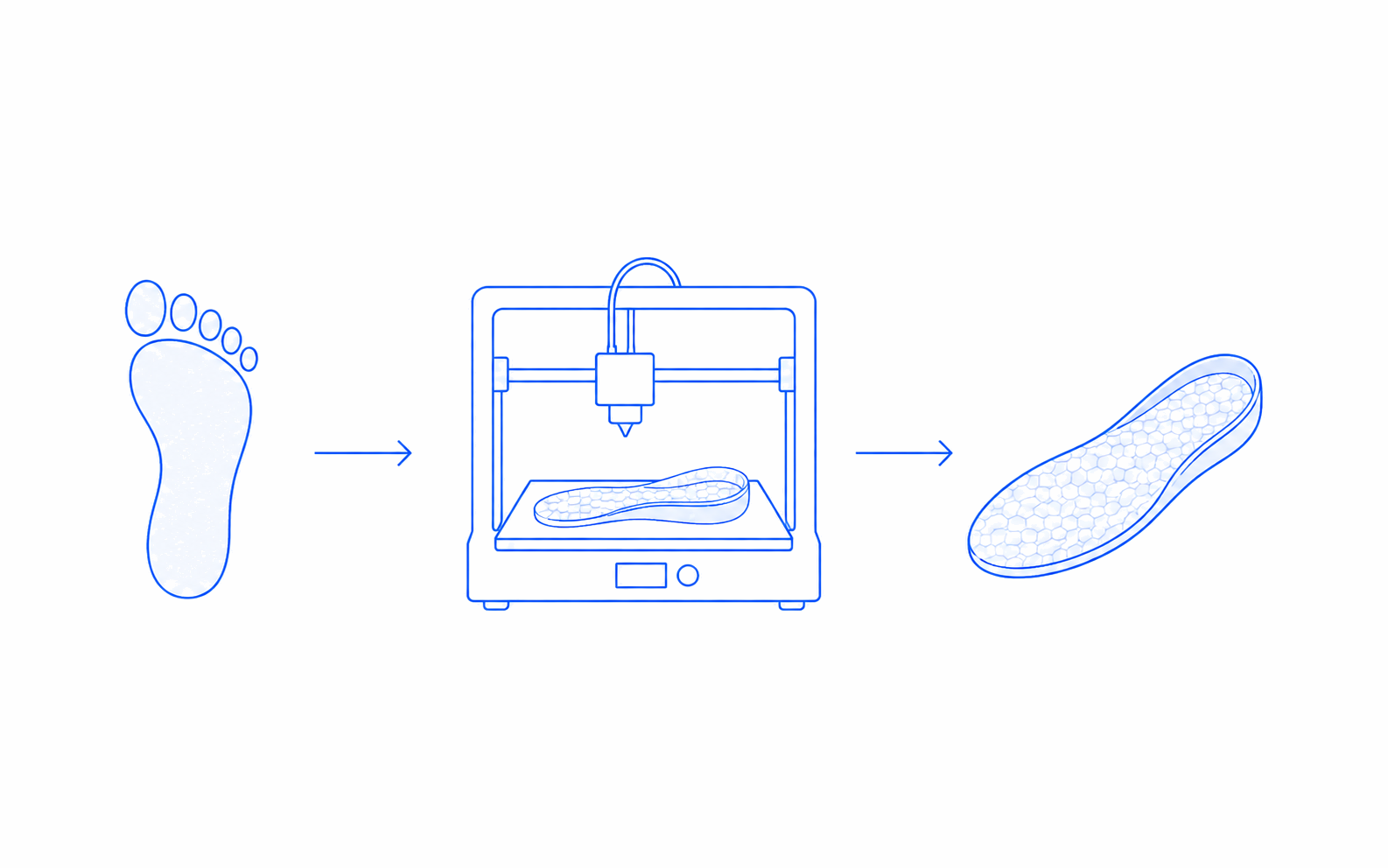
How 3D-printed custom orthotic insoles are made.
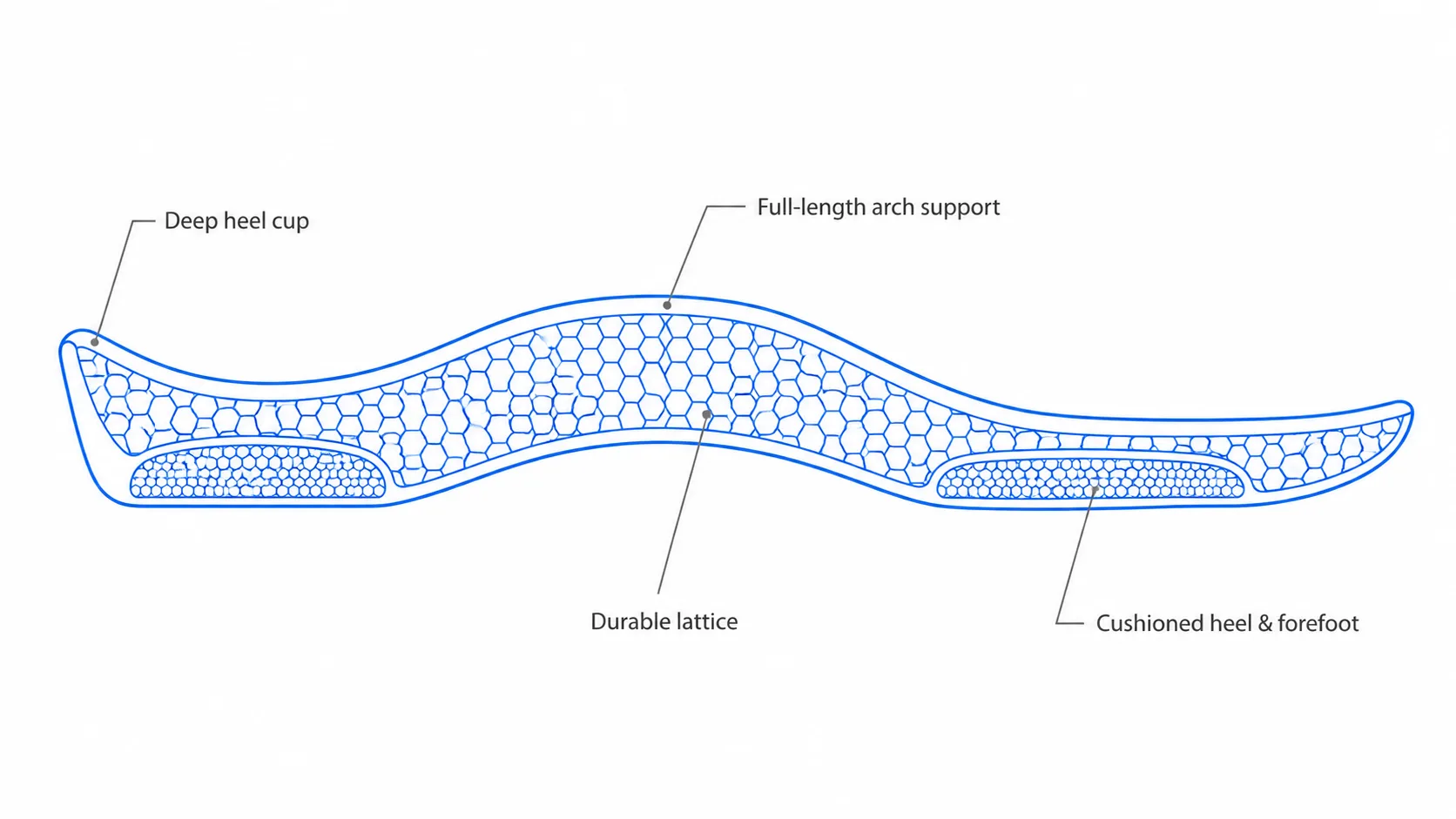
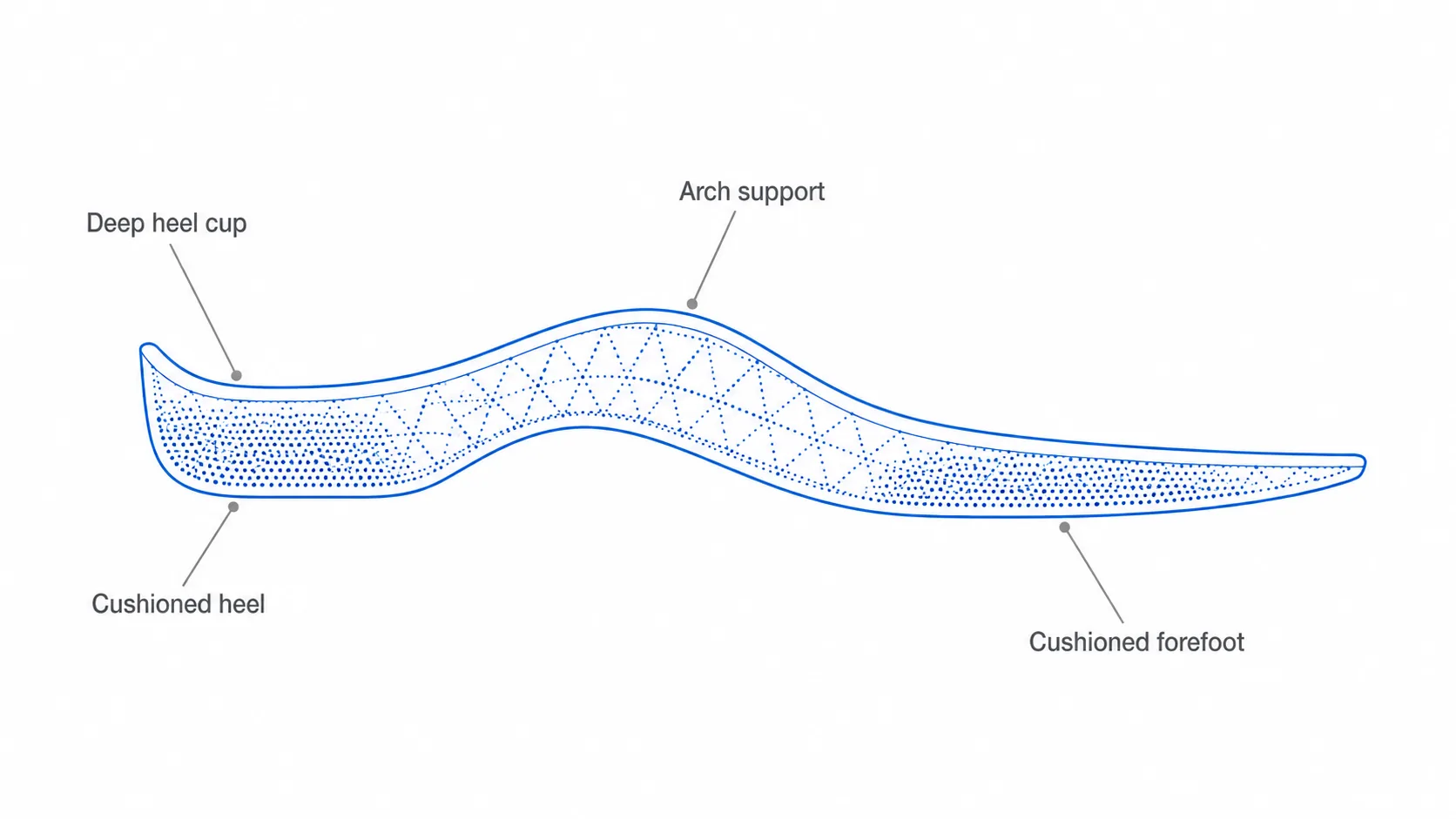
How custom orthotic insoles are made with 3D printing: from plaster casts to in-clinic printing, without CAD or a scanner, using parametric software and a desktop printer.
Research notes, print guides, and design guides written by the people who build Ergono3D.
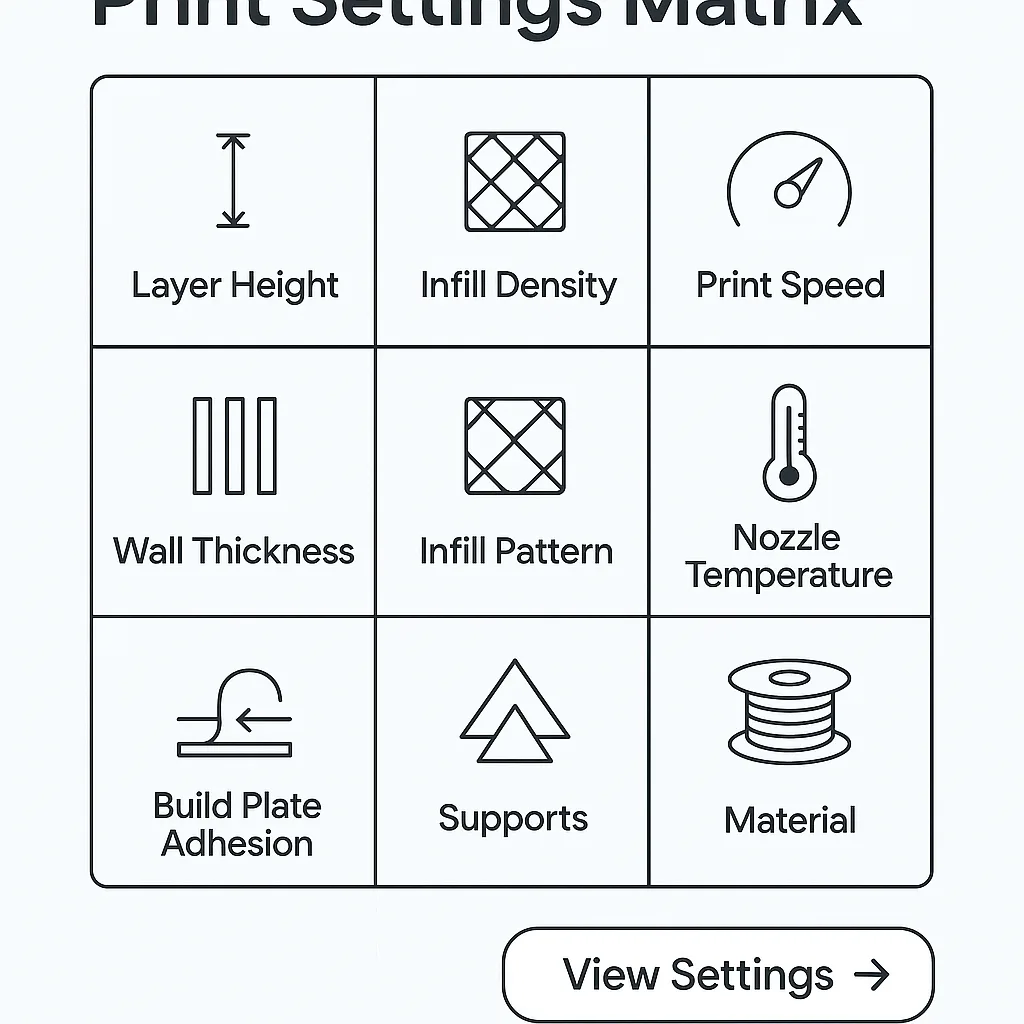
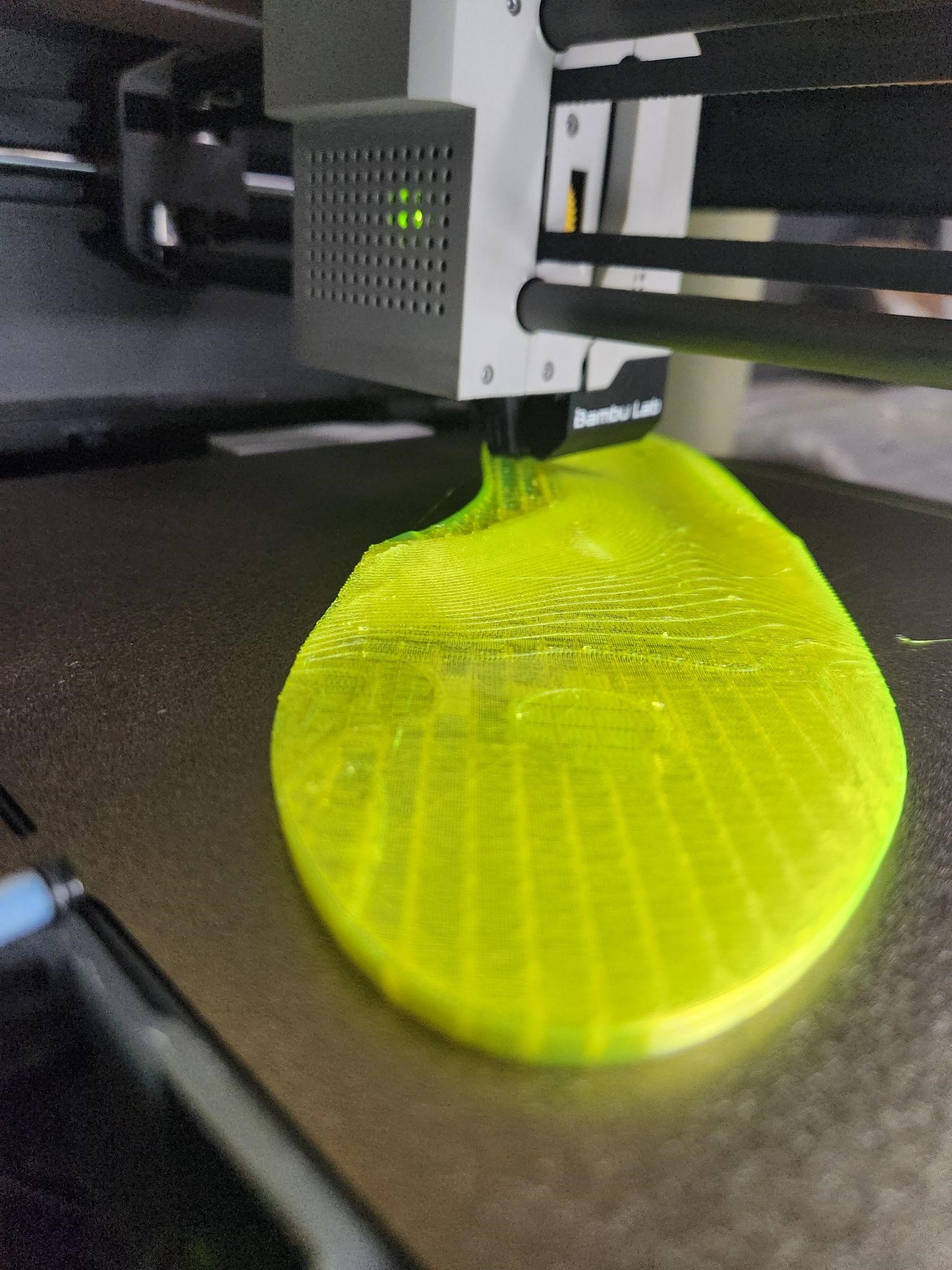
From guided survey to printed insole — a complete walkthrough of the Ergono3D workflow. Covers parameter selection, STL export, slicer setup, TPU print settings, and top-cover finishing.
Guides, release notes, and design research from the Ergono3D team.
How custom orthotic insoles are made with 3D printing: from plaster casts to in-clinic printing, without CAD or a scanner, using parametric software and a desktop printer.
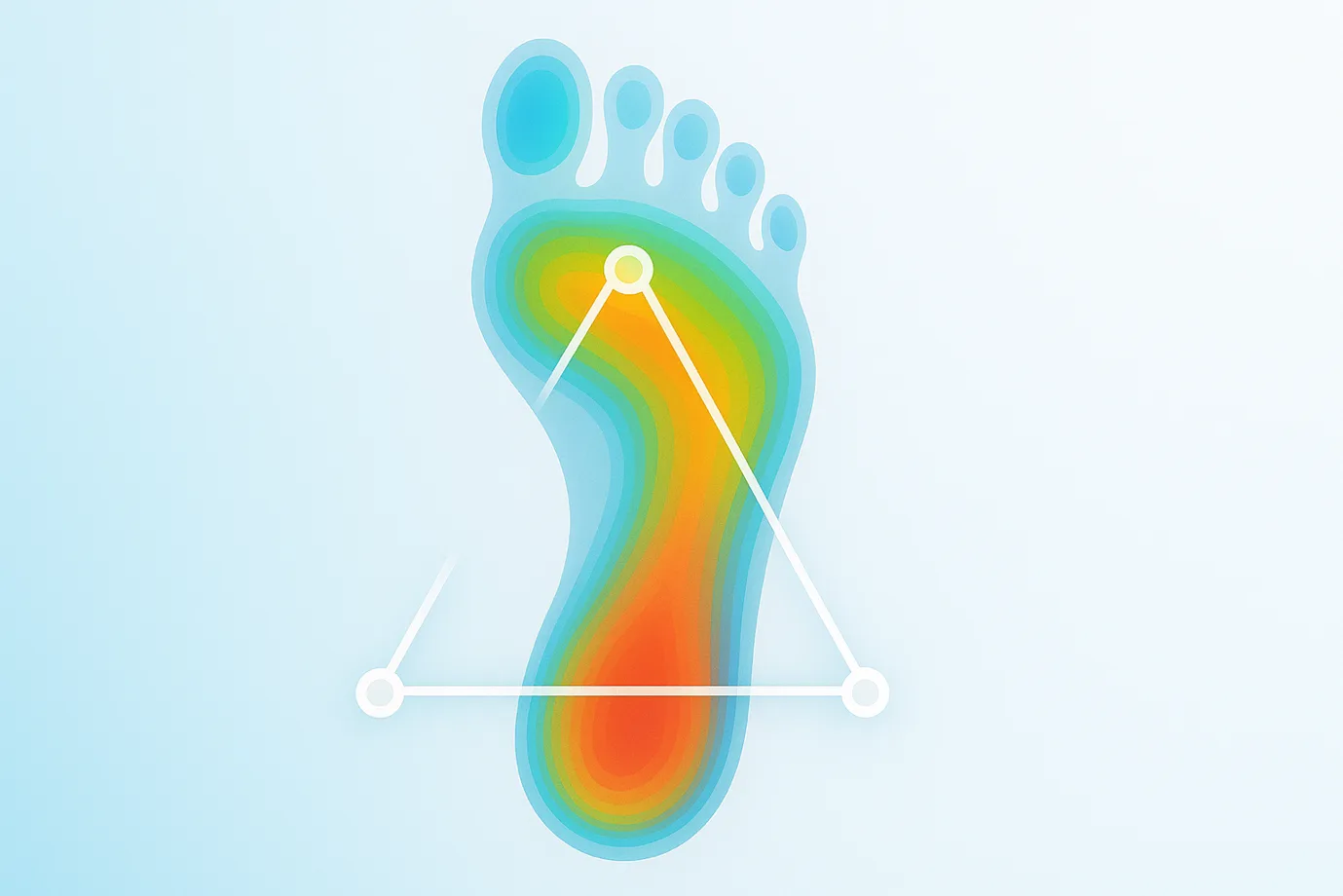
What a gait analysis (foot pressure and gait study) measures, and how its findings guide the design of custom insoles — arch, posting and heel cup.
What custom orthotic insoles are, how they're made (cast, scan or digital design), and what the price usually includes so you can compare quotes.
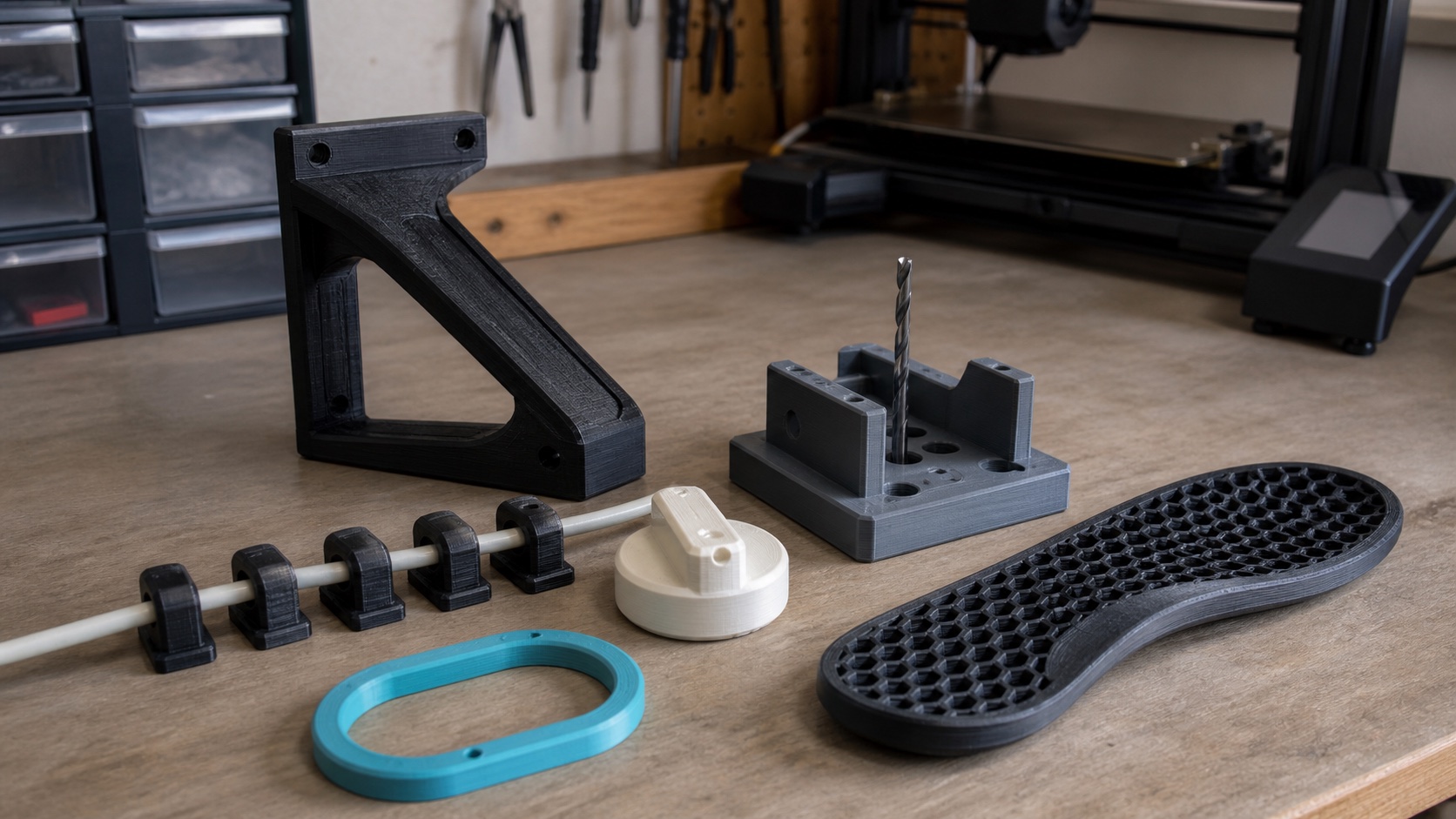
The most useful functional 3D prints: 12 things worth printing, the material for each, and the settings that make end-use parts strong enough to use.
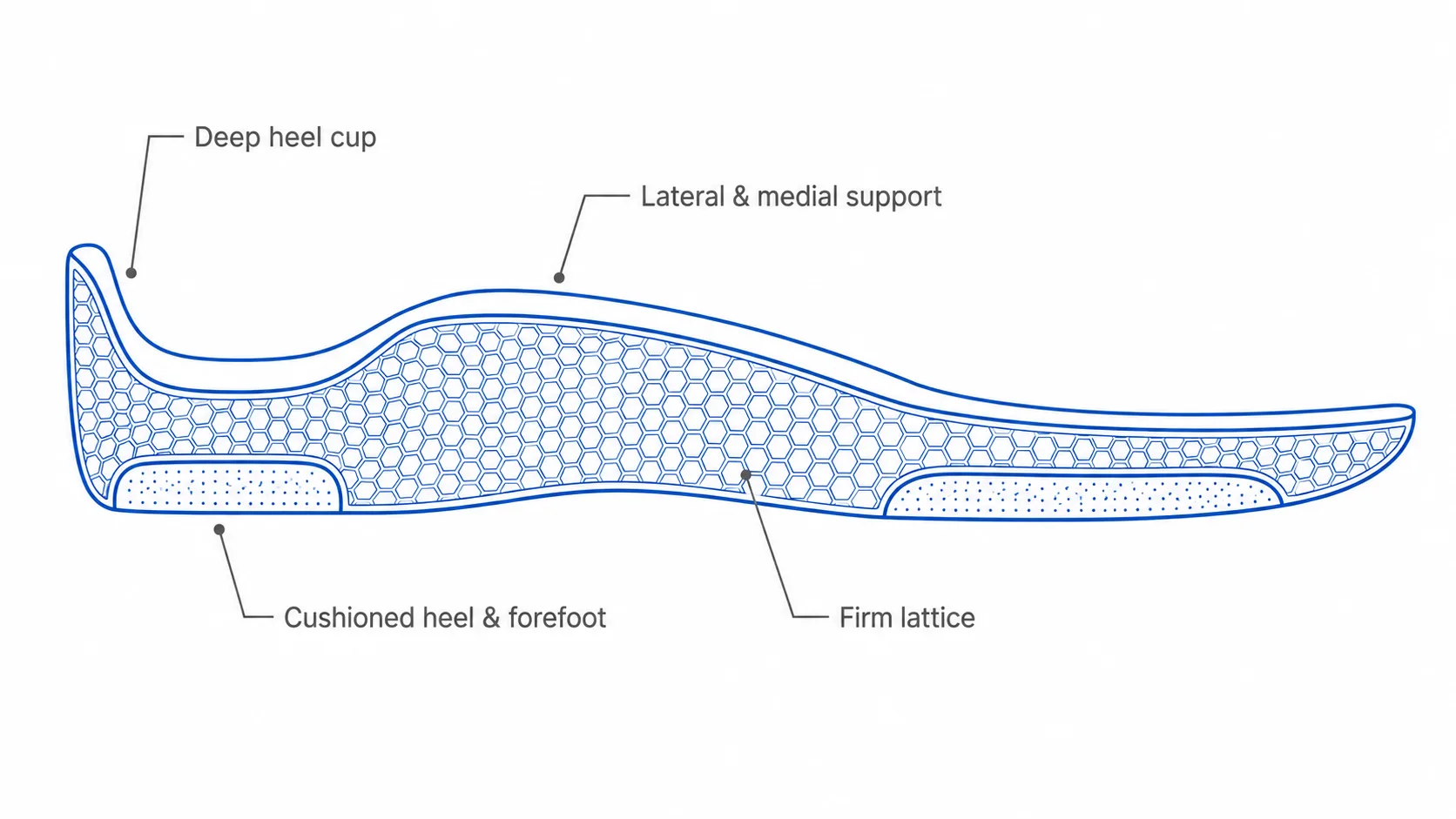
15,000–20,000 steps a shift on hard floors — what an all-day insole needs (firm arch support, deep heel cup, lasting cushioning, work-shoe fit), and where custom fits.
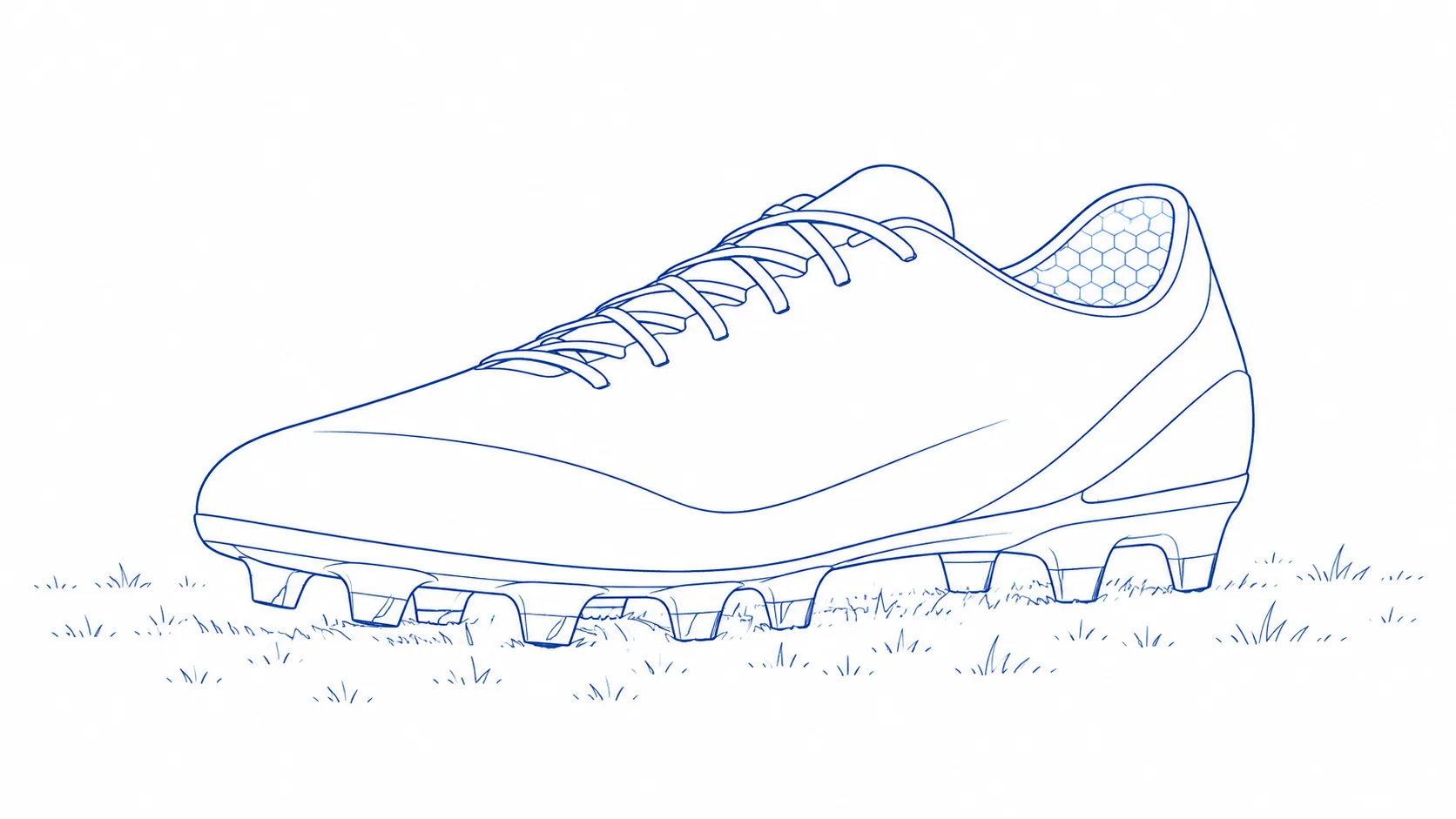
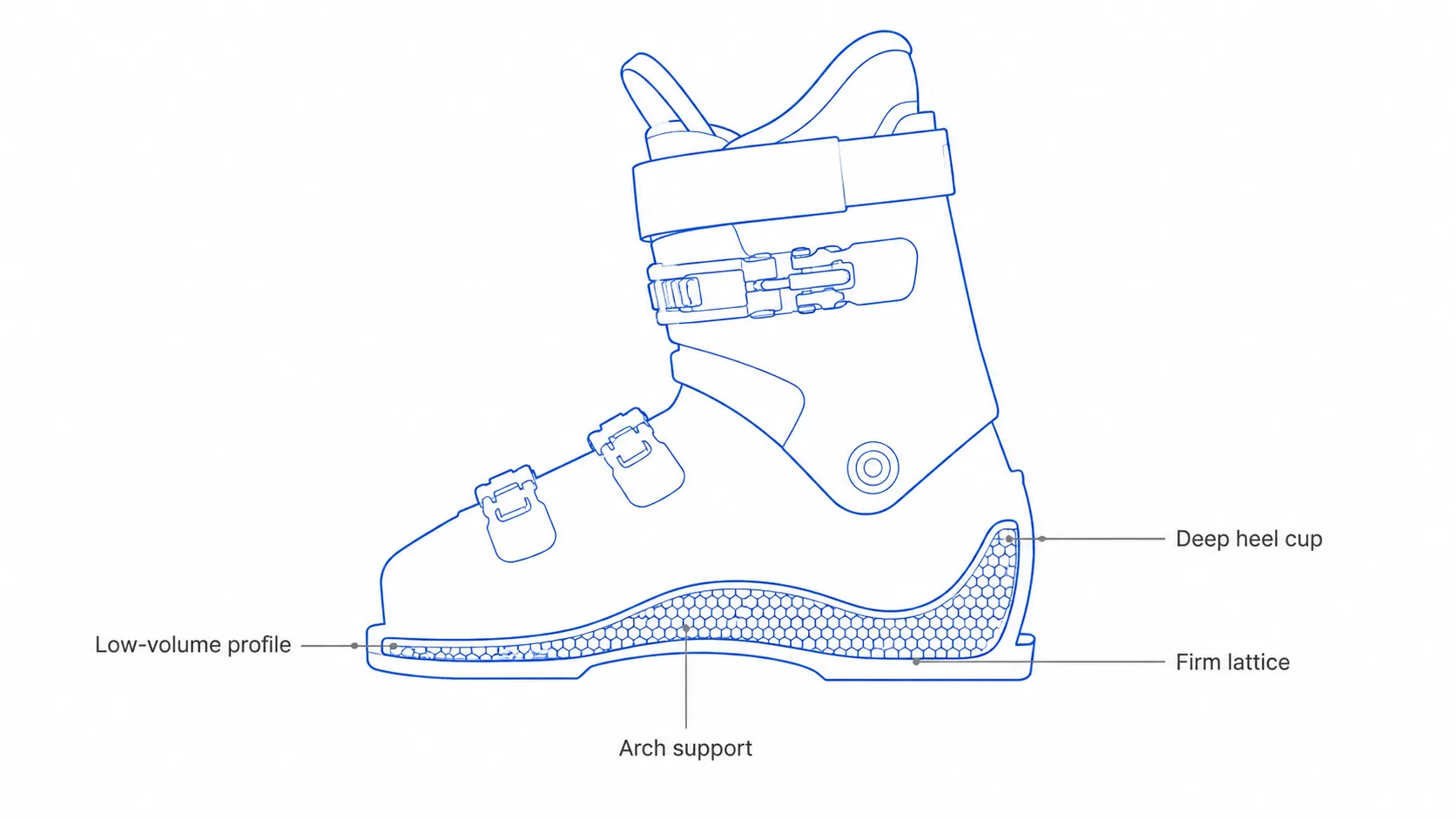
Cleats are thin and studded — what a football insole needs (low-volume fit, arch support, deep heel cup, stud-offset cushioning), by foot type, and where custom fits.
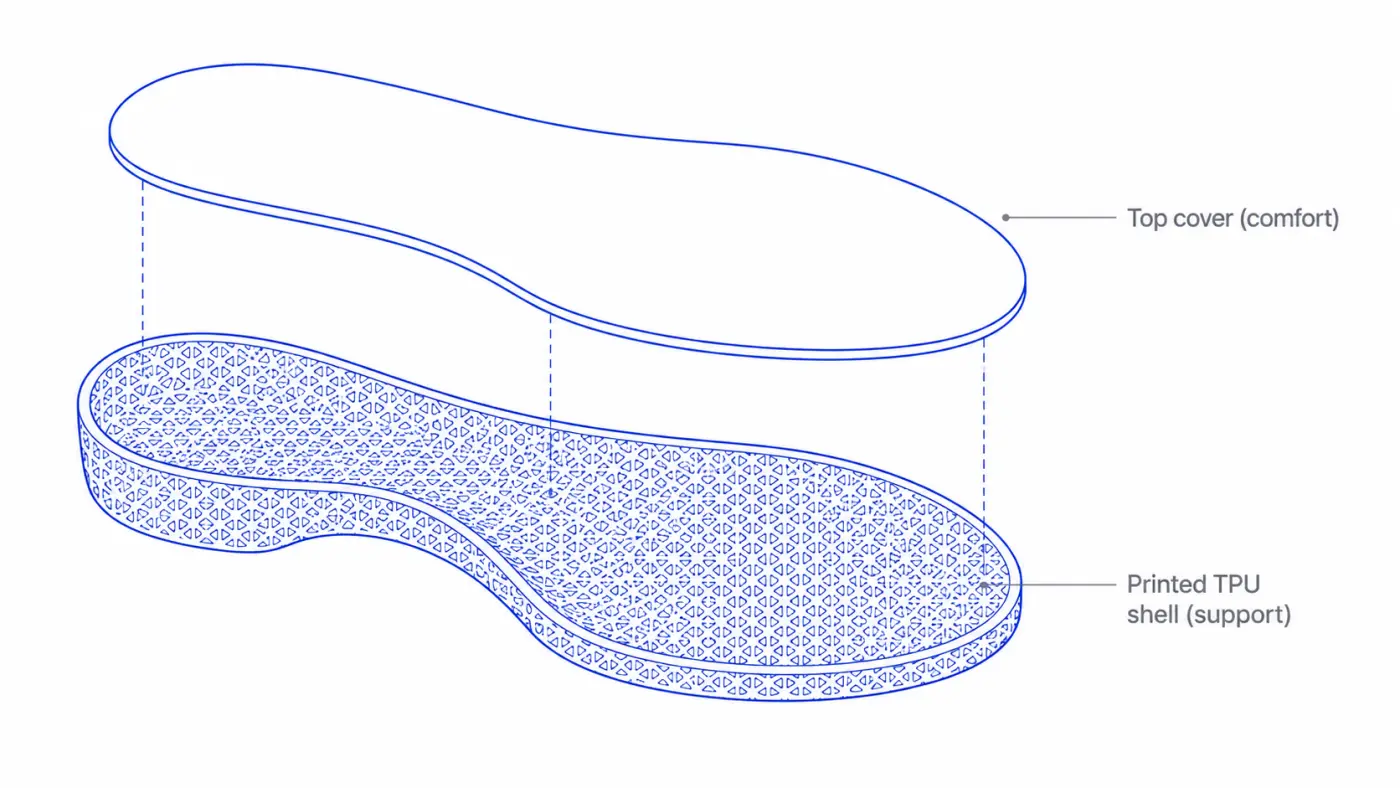
Pick TPU hardness by activity, choose a top cover (EVA, Poron, supercritical foam, leather), and glue it on cleanly from the heel cup forward.
The real cost of outsourcing custom orthotics to a lab versus designing in-house — per-pair cost, turnaround, revision cycles, and where a no-CAD parametric workflow fits.
Cuts, hard stops and jump landings — what a basketball insole needs (deep heel cup, lateral support, impact cushioning), plus the honest truth about jumping higher.
Long hours, uneven terrain, steep descents and a loaded pack — what a hiking insole needs (support, stability, durability), and where custom 3D printing fits.
Support, cushioning and a smooth heel-to-toe roll — matched to your foot type. What a running insole needs, and the honest truth about injury prevention.
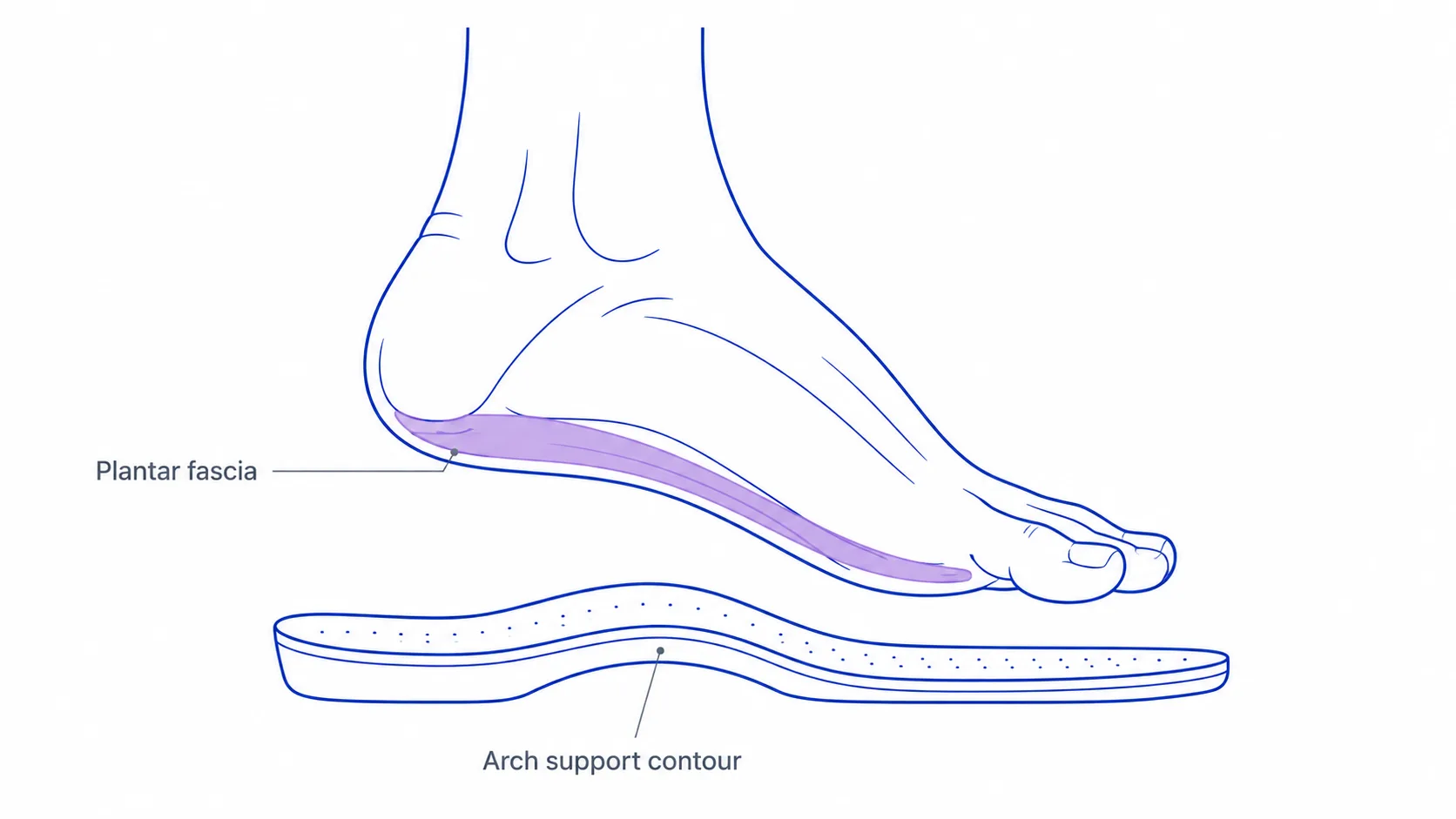
Firm arch support and deep heel cups for plantar fasciitis — plus when symptoms should be seen by a clinician.
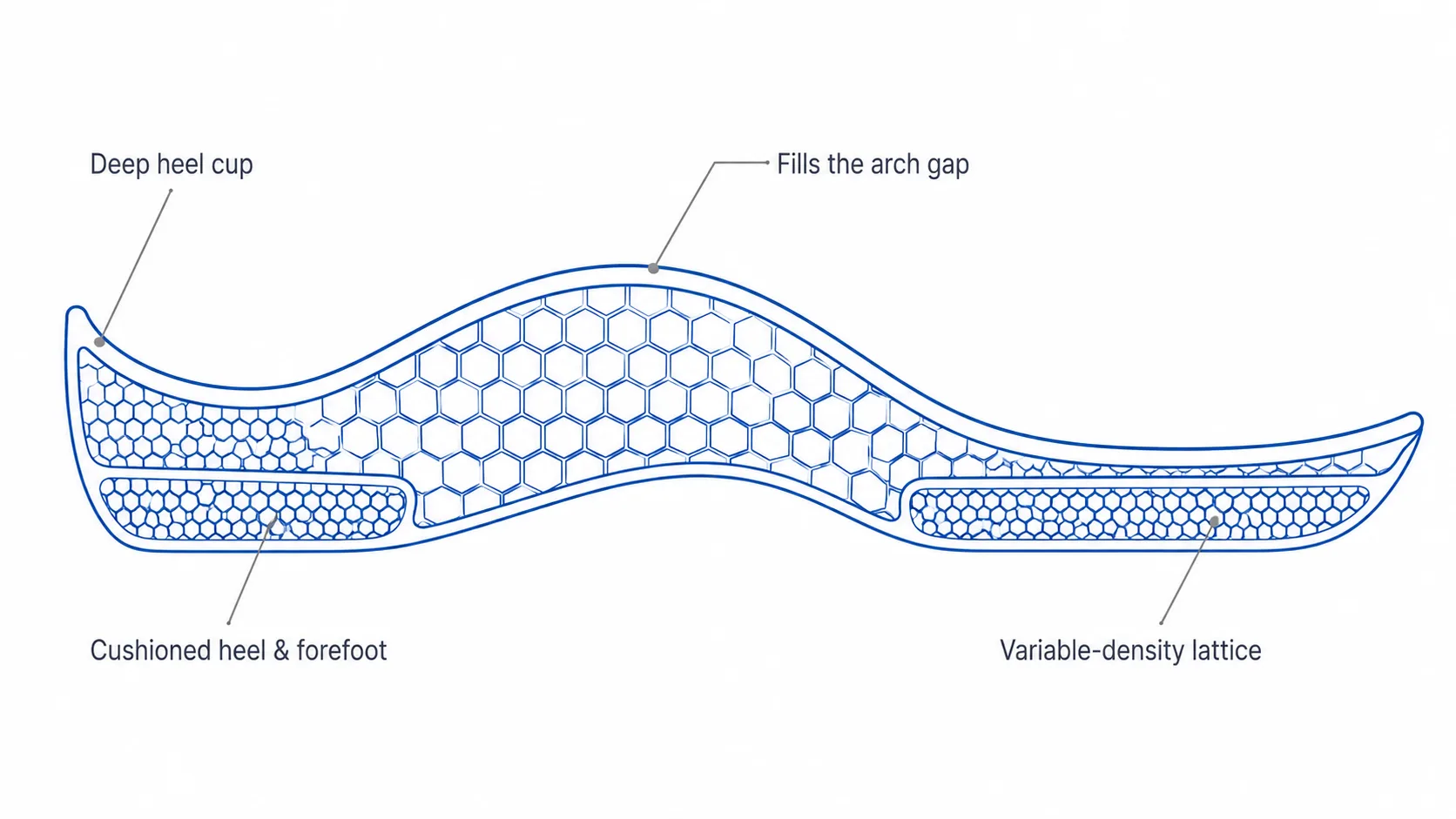
High arches need the gap filled plus cushioning, not firm anti-collapse support — and a new or worsening high arch can be a neurological sign worth checking.
In a rigid shell a footbed is about support and edge control, not cushioning — arch height, heel cup, low-volume thickness and firm TPU, tuned per foot.
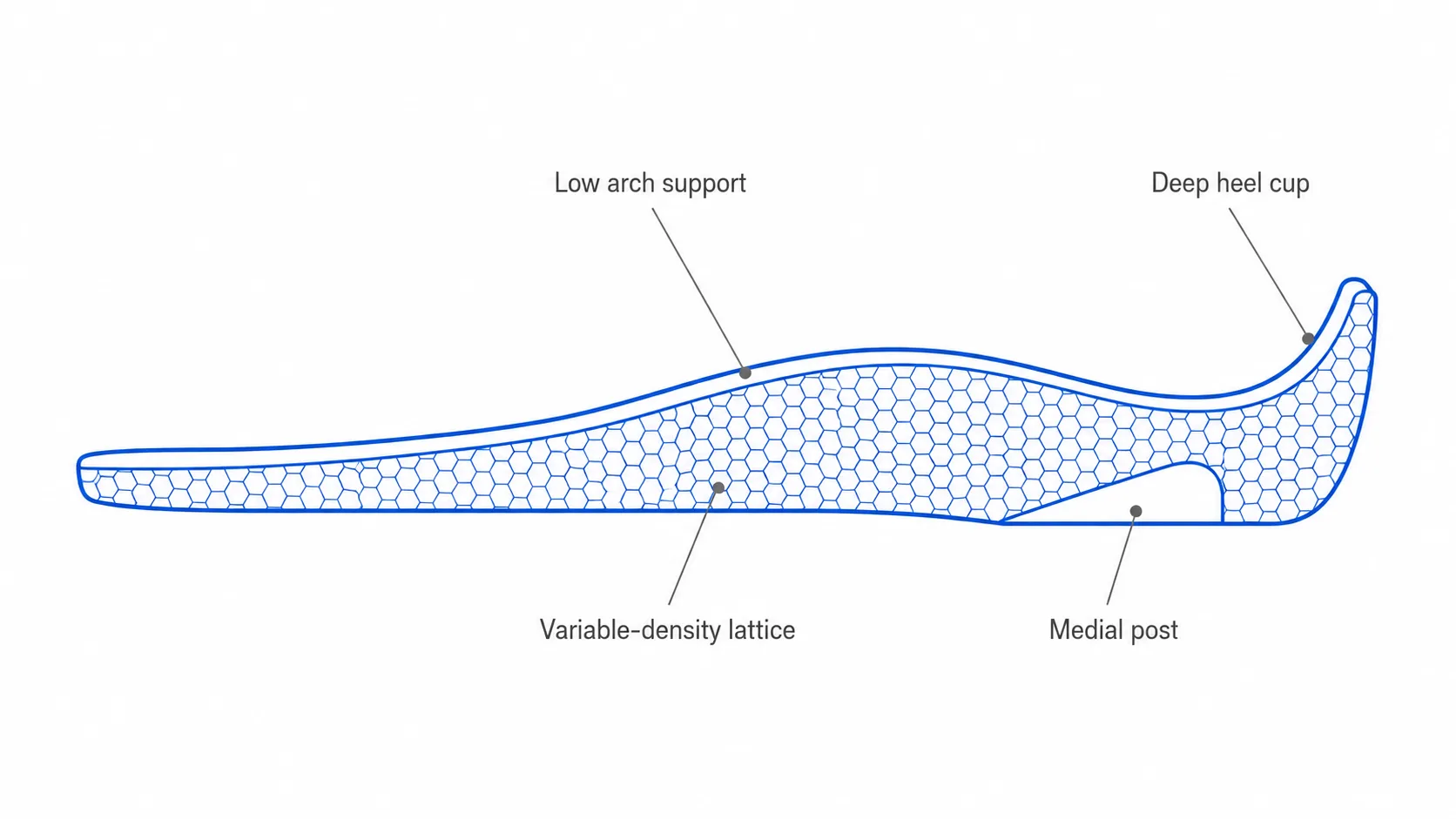
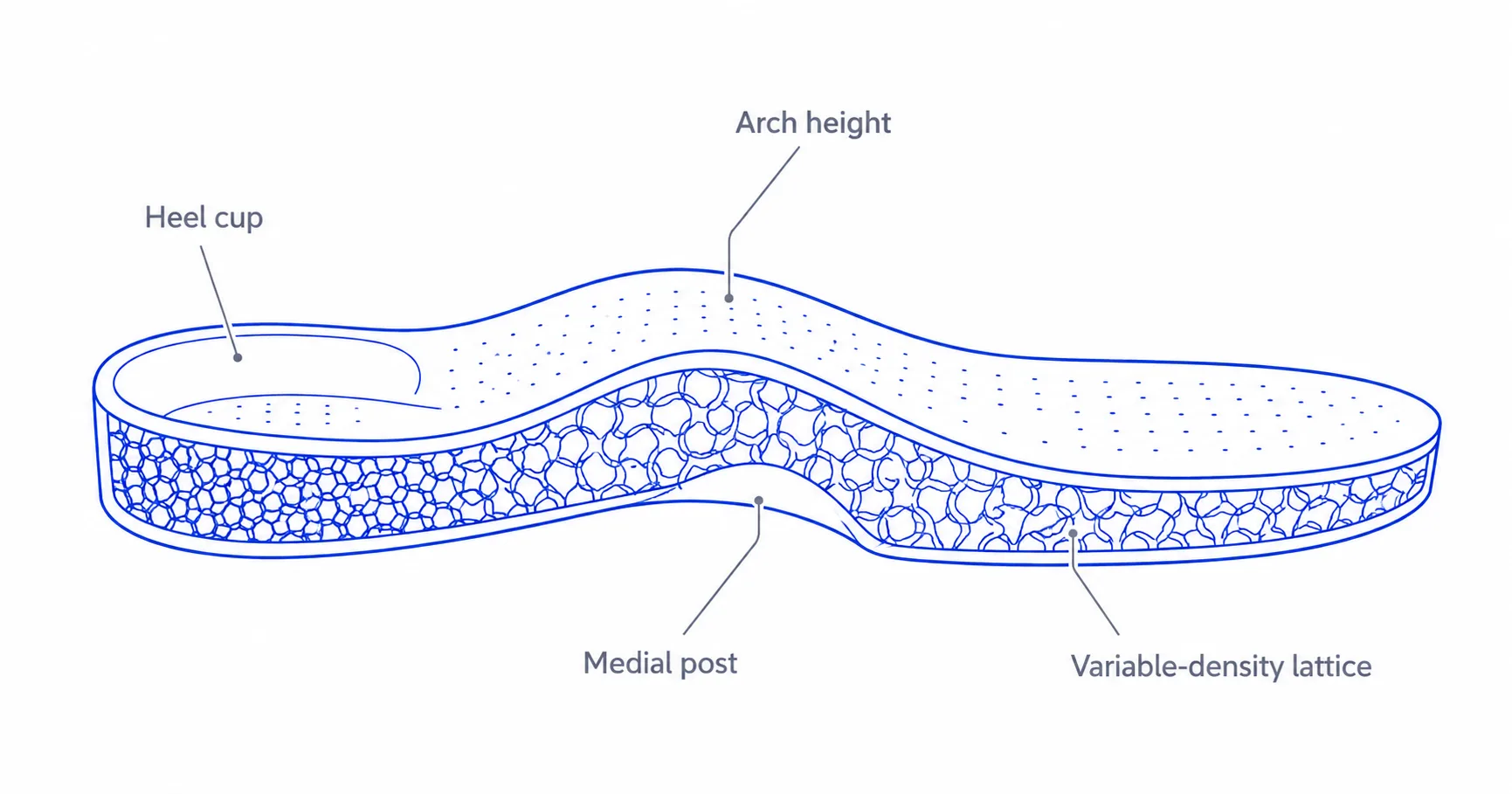
Flat feet need medial support tuned to the foot, not a generic template — arch height, posting, heel cup depth and TPU stiffness, set per foot.
What to customize in arch support insoles — arch height, heel cup, posting — and when custom beats off-the-shelf.
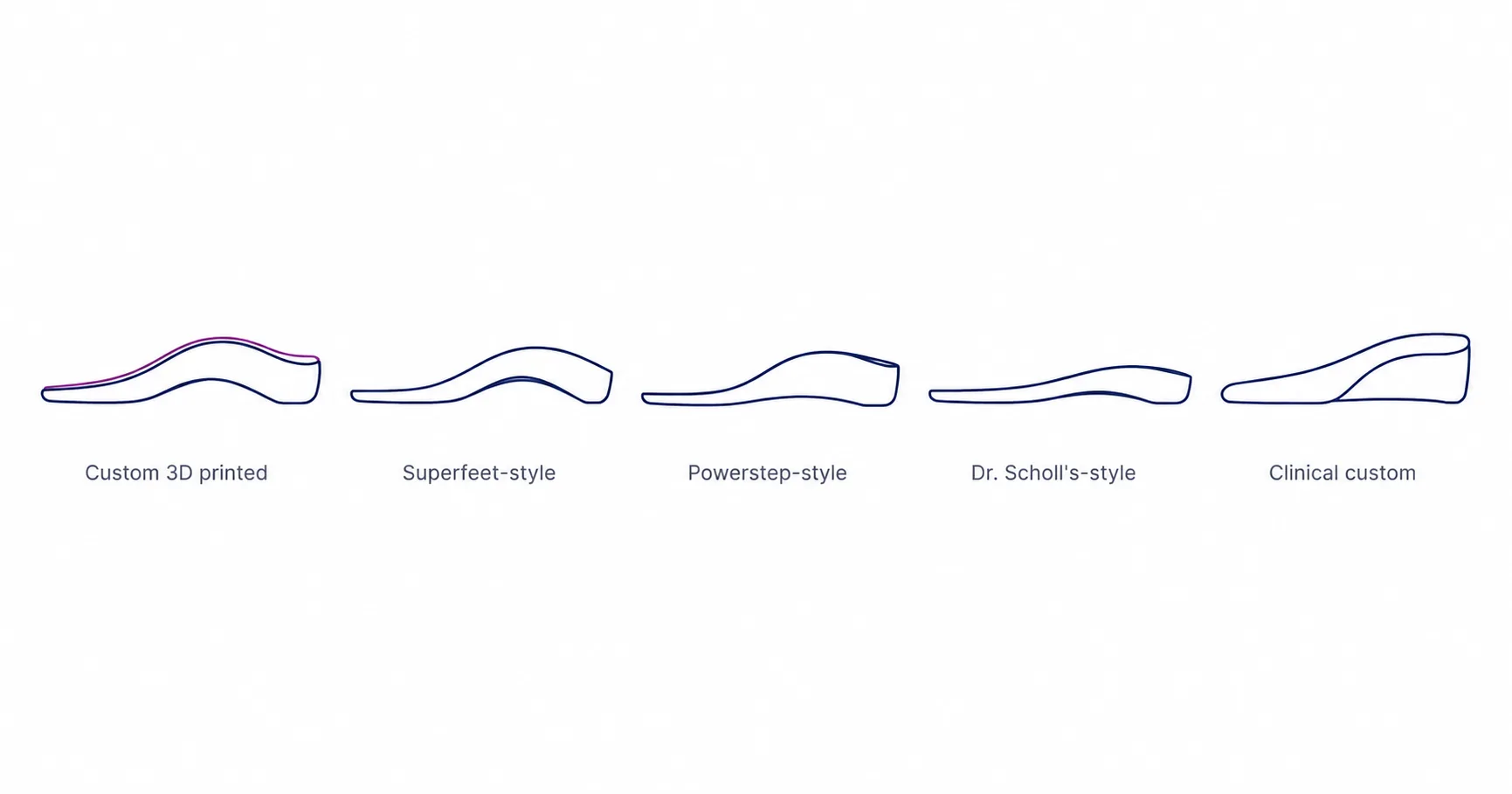
Pre-made vs custom vs clinical orthotics: cost, fit, durability, and where 3D printed insoles fit in.
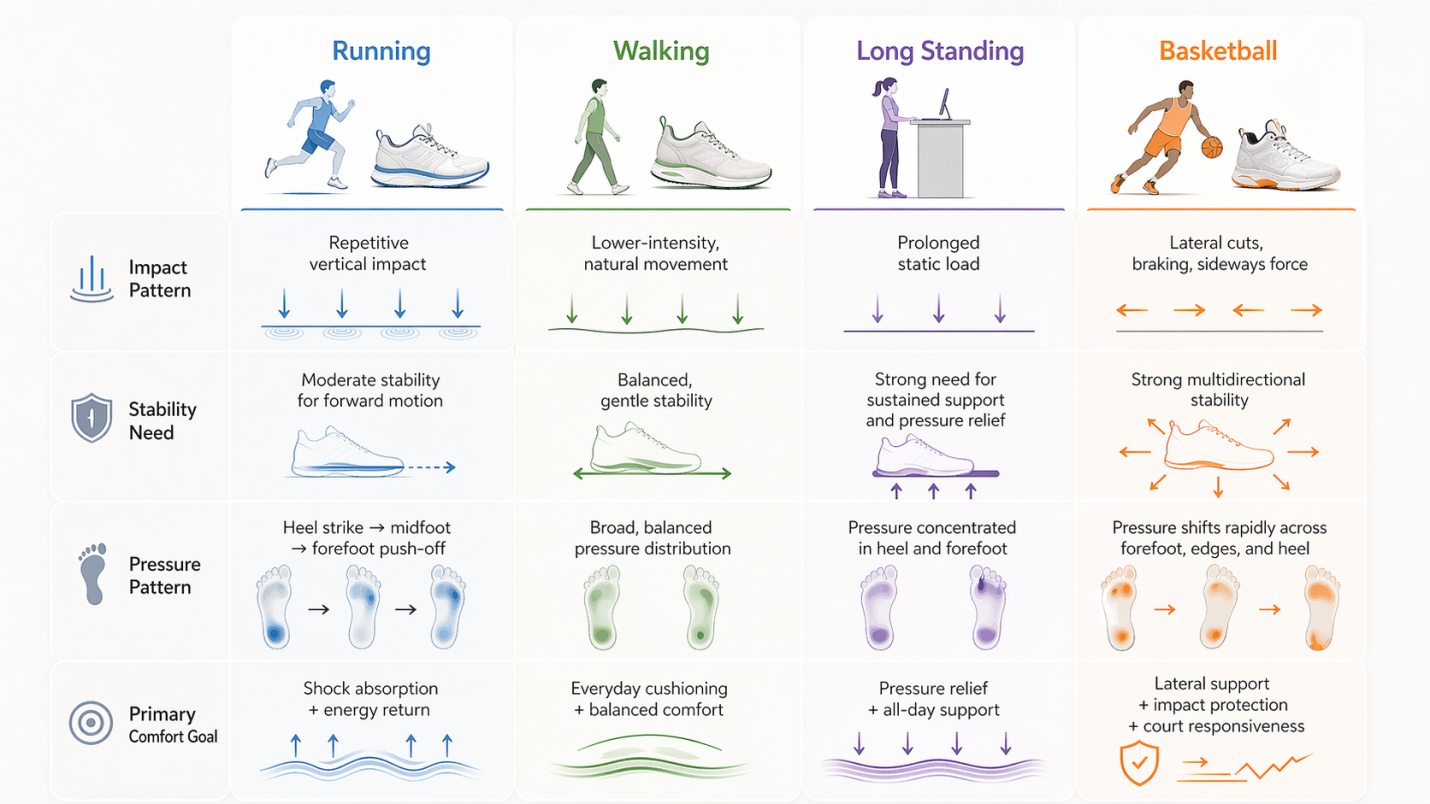
Running, walking, court sports, and long standing each ask different things from an insole. Here is why activity-specific design matters.
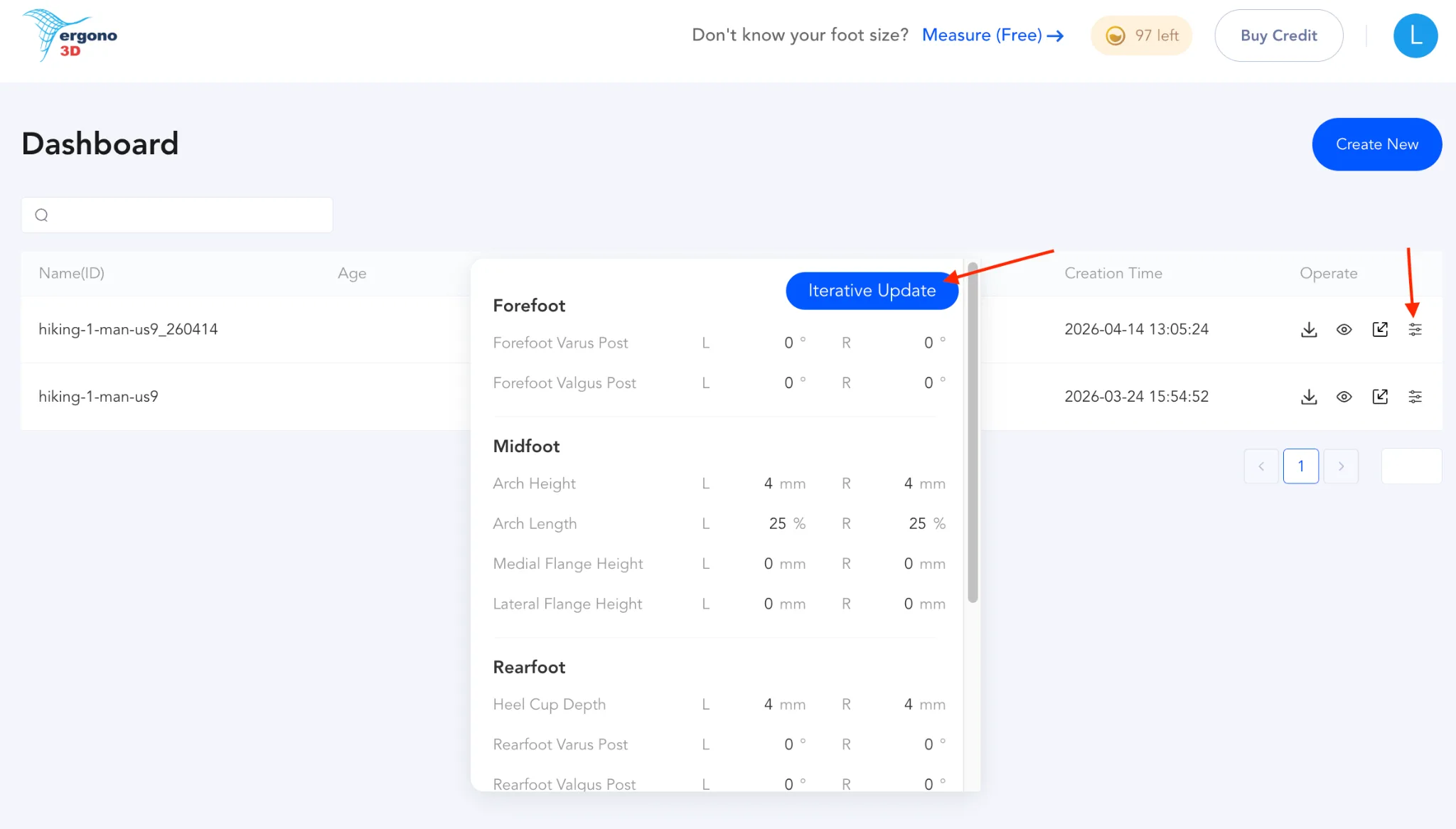
Each new insole design now includes 5 free parameter updates. Refine by describing how it feels, or adjust parameters directly — no need to start over.
Plain-language explanations of every adjustable parameter in Ergono3D — what it does geometrically and when to change it from the smart default.
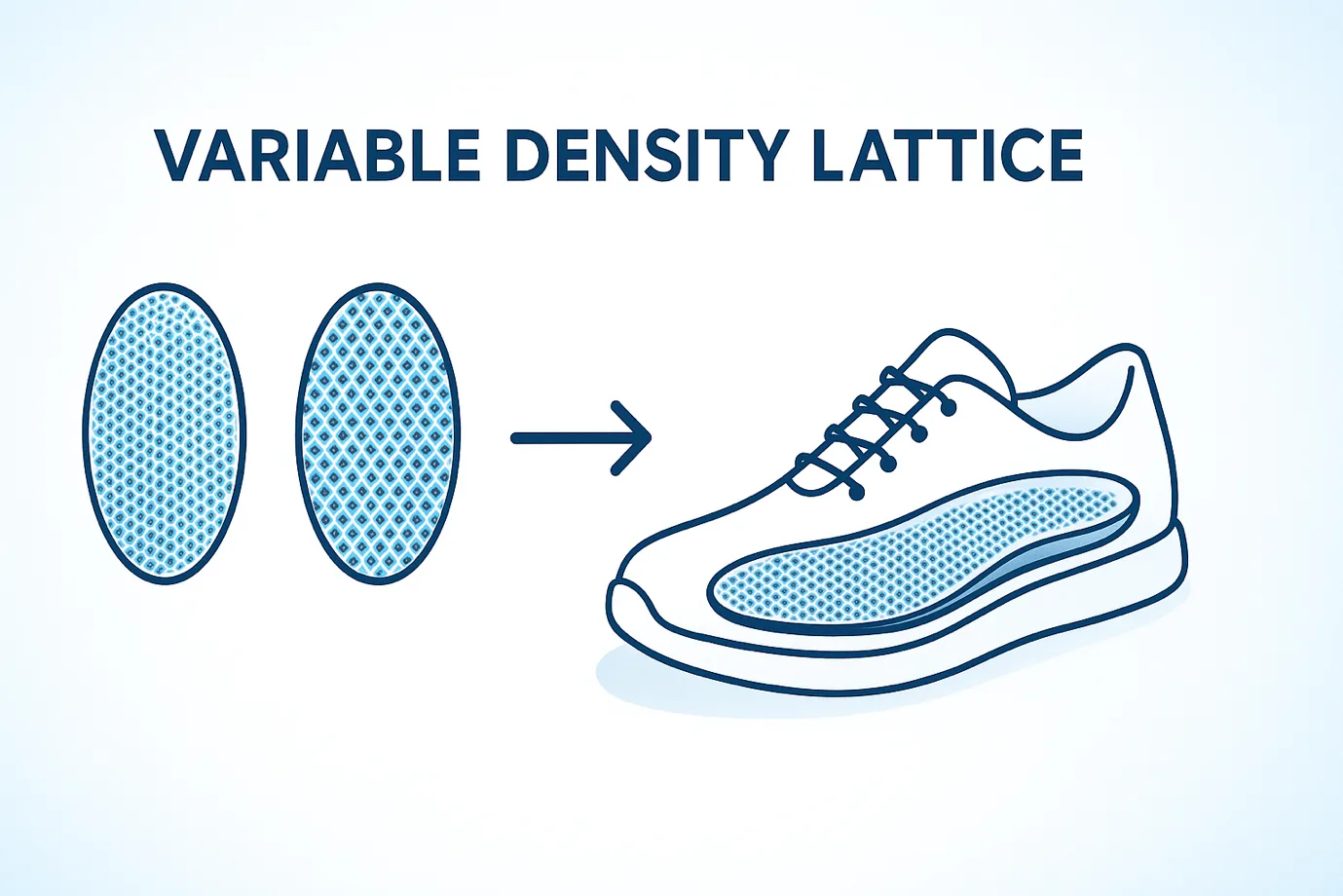
Why off-the-shelf insoles sort feet into three categories and call it personalization — and how computational design, variable-density lattices, and functional optimization are changing that.
How 3D printing and digital design are replacing weeks-long lab workflows with custom insoles that can be made the same day — and what that means for clinicians, patients, and athletes.
The physiology behind individual foot variation — pressure distribution, arch mechanics, gait biomechanics, and sensory feedback — and why generic solutions can't adequately address it.