
TL;DR
This is a plain-language reference to the adjustable parameters in Ergono3D, grouped by region. Forefoot covers varus and valgus posting; midfoot covers arch height, arch length, and medial and lateral flange height; rearfoot covers heel cup depth, varus and valgus posting, and medial and lateral heel skives. Each entry explains what the control does and the direction to move it.
Use it as a starting checklist, not a prescription: arch height and heel cup depth carry the most everyday effect, and every combination resolves differently in the solver. Ergono3D is a design workflow — guided inputs and parametric design generate a printable STL — a design tool, not a diagnosis or treatment.
Key takeaways
- Parameters are grouped by region. Forefoot, midfoot, and rearfoot controls each shape a different phase of the gait cycle.
- Arch height is the most-adjusted midfoot lever. Raise it for flat feet or pronation; lower it for high arches or comfort-first use to avoid new pressure.
- Heel cup depth is the most impactful rearfoot control. A deeper cup contains the calcaneal fat pad and adds stability; shallower is more comfortable but offers less control.
- Posting and flanges steer alignment. Varus/valgus posts and medial/lateral flanges guide pronation or supination at the forefoot, midfoot, and heel.
- Skives add localized control. A medial heel skive (Kirby technique) drives stronger pronation control than posting alone; a lateral skive does the reverse.
- It's a starting checklist, not a prescription. Every combination produces a different solver result. Ergono3D is a design tool, not a diagnosis or treatment.
You don't set these parameters from a foot scan. In Ergono3D, a short guided survey captures the inputs that matter — things like your shoe size, arch type, and the activity you're designing for — and maps them to sensible starting values for the controls below. From there you adjust each parameter yourself and watch the geometry update before exporting the STL. The reference that follows explains what every control does and which direction to move it.
Front of the foot.
Forefoot parameters affect how pressure is distributed when you push off during walking or running. Posting corrections here are typically used for forefoot alignment issues.
Forefoot Varus Post
Raises the inner (medial) side of the forefoot. Increases medial support and helps correct forefoot varus — where the forefoot sits inverted relative to the rearfoot. Improves balance and propulsion symmetry during push-off.
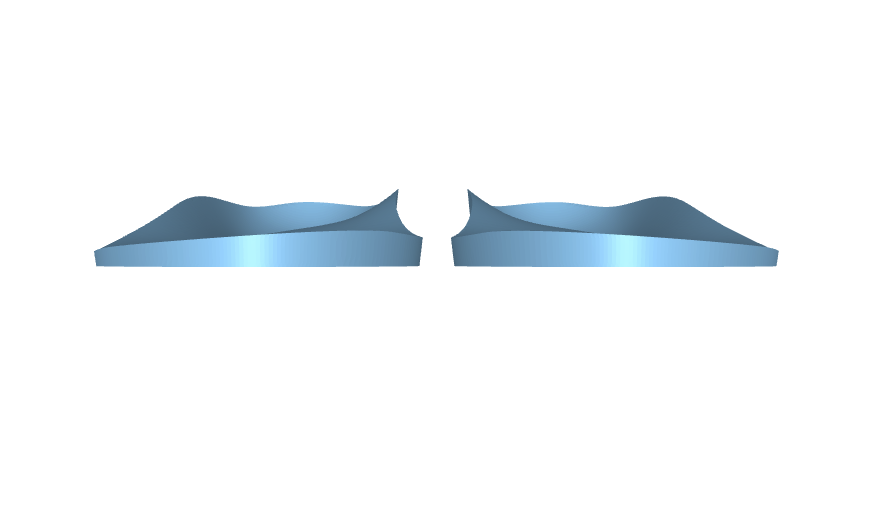
Forefoot Valgus Post
Raises the outer (lateral) side of the forefoot. Improves lateral stability and reduces pressure on the outer forefoot — useful for forefoot valgus, where the forefoot sits everted. Also used for lateral metatarsal offloading.
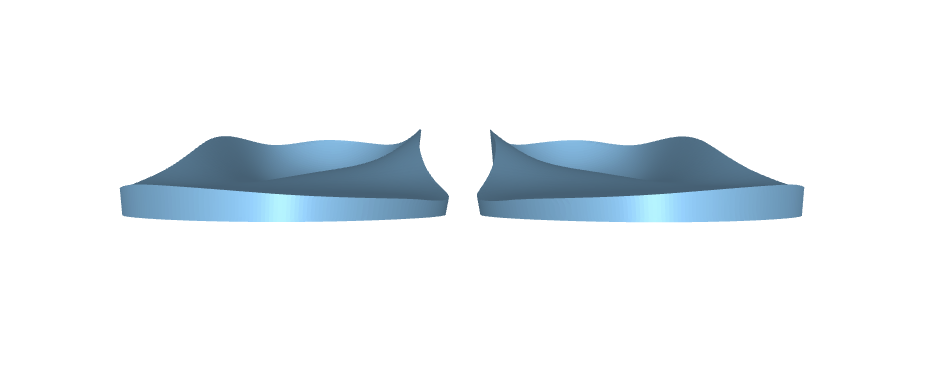
Arch area.
Midfoot parameters control arch support, comfort, and overall foot alignment. These are the most commonly adjusted parameters and have the largest effect on daily comfort.
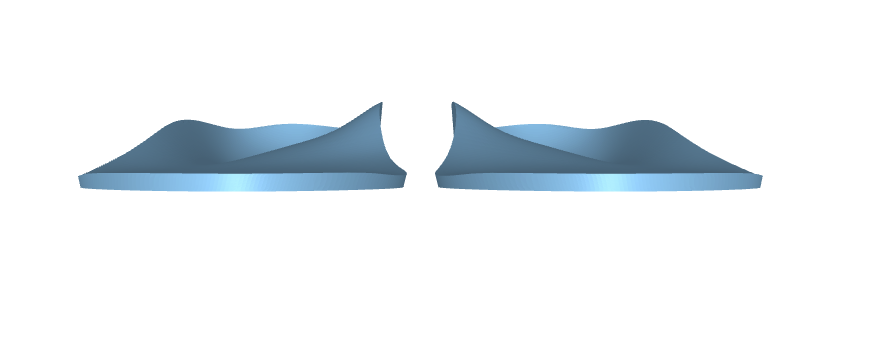
Arch Height
Controls how high the longitudinal arch support rises. Higher values provide stronger arch support and are suited to flat feet or pronation correction. Lower values feel more comfortable for neutral or high arches where aggressive support would create pressure.
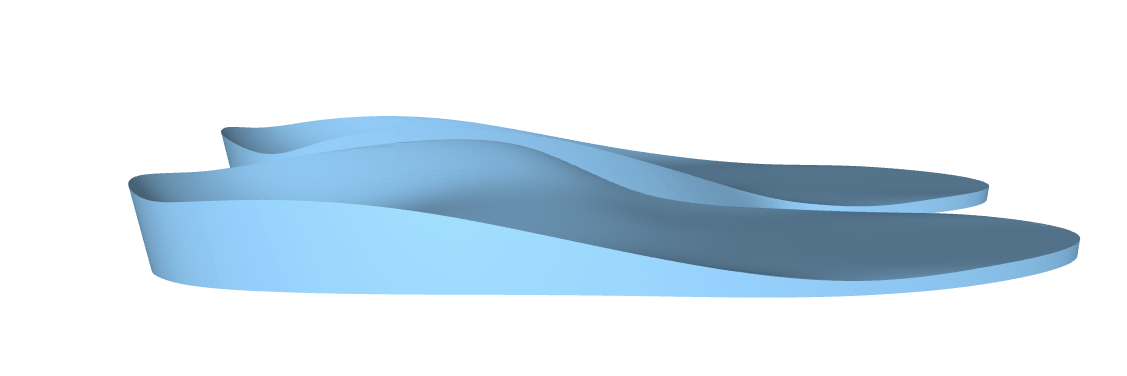
Arch Length
Controls how far forward the arch support extends along the foot. Larger values extend coverage further into the midfoot, providing support across a broader area of the plantar surface. Shorter arch lengths concentrate support closer to the heel.
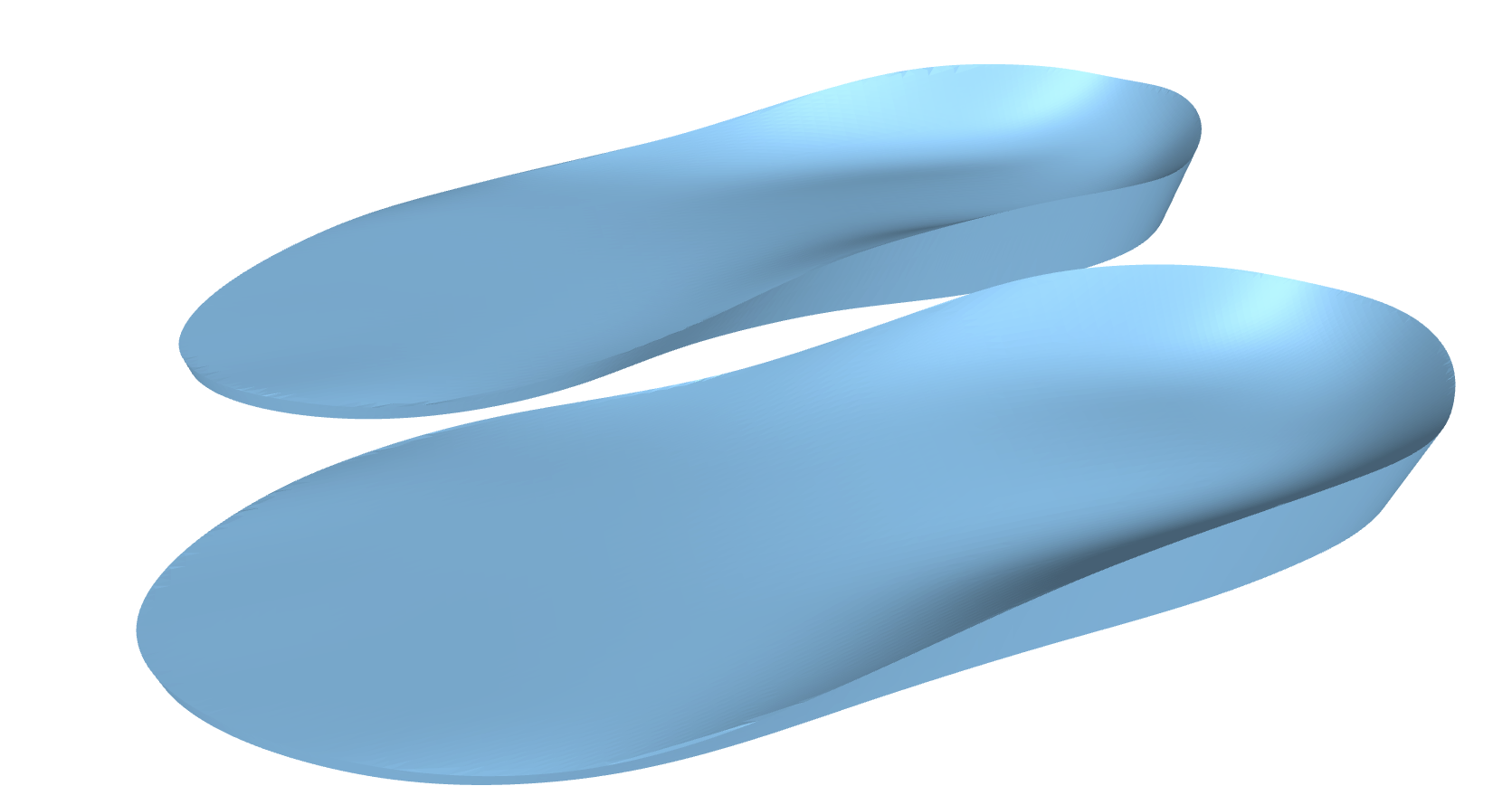
Medial Flange Height
Adds a raised sidewall along the inner (medial) border of the insole. Helps prevent the foot from rolling inward (pronation) by providing a physical wall that guides the foot into a more neutral position. Most relevant when controlling strong inward roll (hyperpronation) or medial arch collapse.
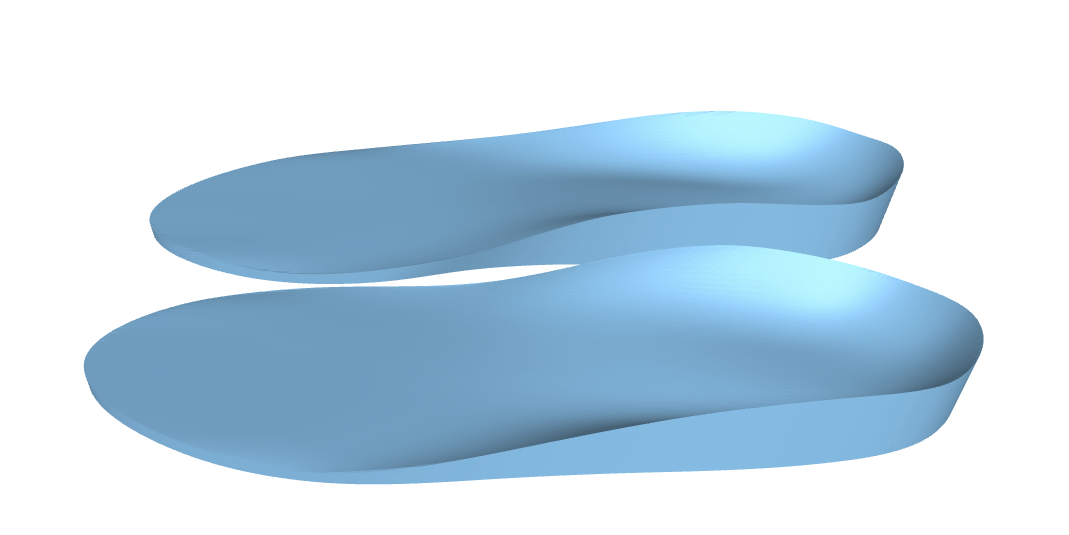
Lateral Flange Height
Adds a raised sidewall along the outer (lateral) border of the insole. Improves lateral stability and helps prevent excessive outward rolling (supination). Also relevant where lateral foot control is a priority, such as a foot that rolls outward easily.
Heel area.
Rearfoot parameters are critical for stability and alignment during heel strike. The heel is the primary ground contact point, and small changes here have a significant effect on overall biomechanical chain.
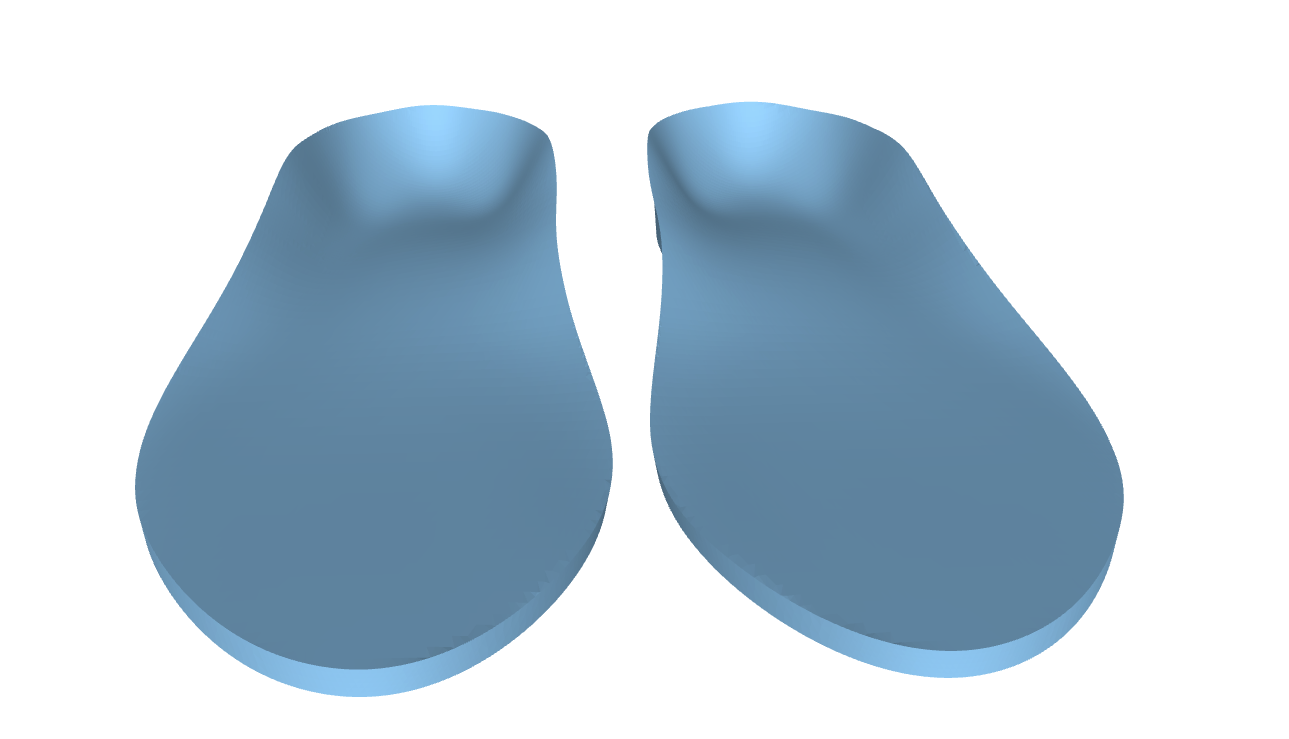
Heel Cup Depth
Controls how deeply the heel is contained within the cup of the insole. A deeper cup improves stability and control by keeping the calcaneal fat pad from spreading outward under load. Shallower cups are more comfortable but provide less mechanical control. This is the single most impactful rearfoot parameter for most feet.
Rearfoot Varus Post
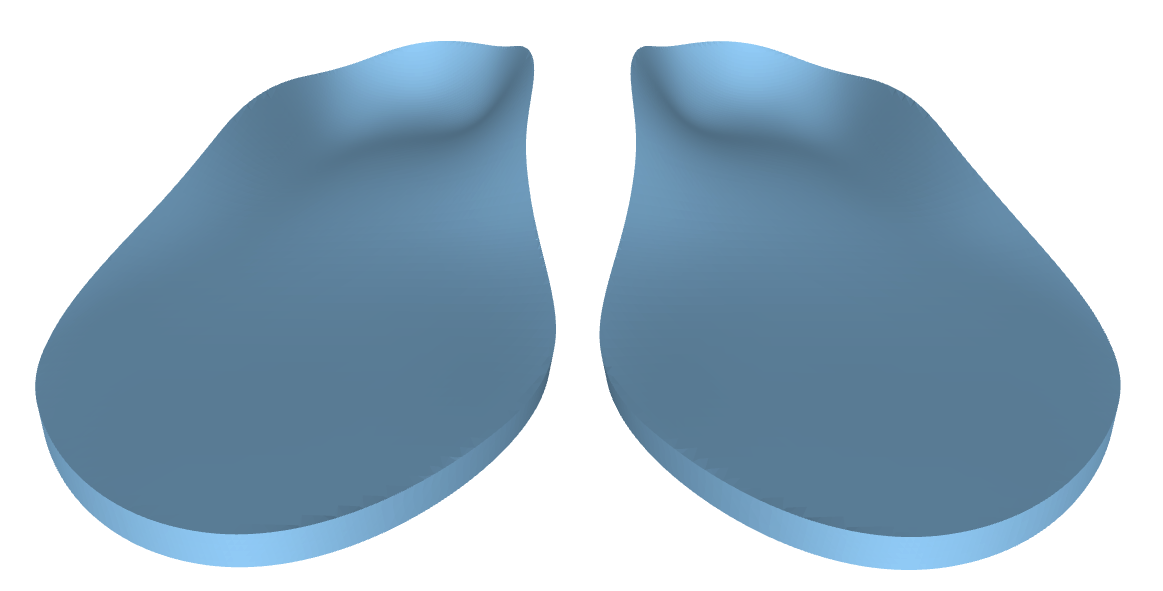
Raises the inner (medial) heel. Used to correct rearfoot varus — where the calcaneus sits in an inverted position. Helps control excessive pronation by bringing the rearfoot toward neutral and reducing the amount of subtalar joint motion needed to reach foot-flat.
Rearfoot Valgus Post
Raises the outer (lateral) heel. Used to correct rearfoot valgus — where the calcaneus sits in an everted position. Helps control excessive supination and improves lateral stability during heel strike. Commonly relevant for high-arched feet and feet that roll outward (supination).
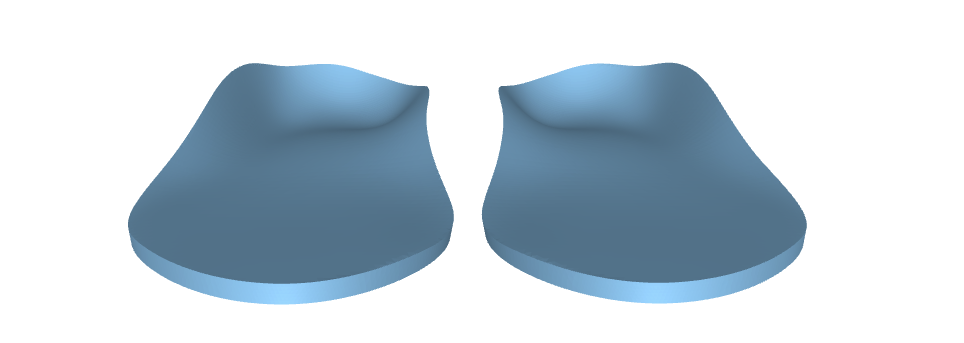
Medial Heel Skive
A localised bevel or reduction on the inner (medial) underside of the heel. Creates a ground reactive force that pushes the calcaneus into inversion — providing a stronger pronation control effect than posting alone. Known as the Kirby skive technique; it gives a strong inward-roll (pronation) control effect.
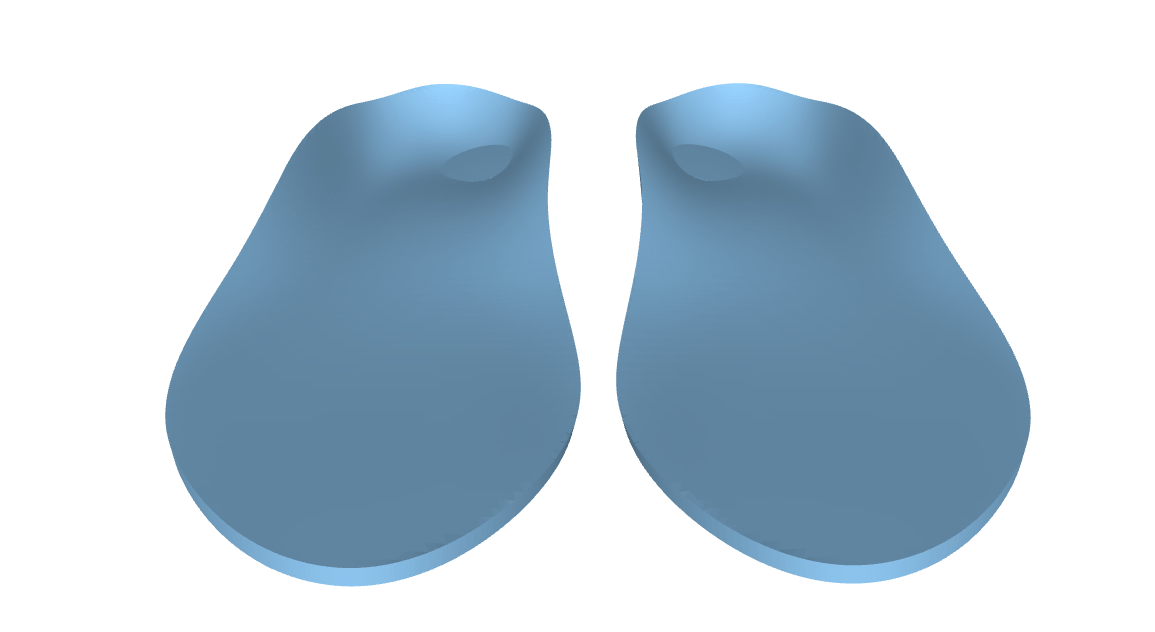
Lateral Heel Skive
A localised bevel on the outer (lateral) underside of the heel. Creates a ground reactive force that pushes the calcaneus into eversion, improving lateral control and stability. Relevant for outward roll (supination) and high-arched feet, where the heel needs to be guided laterally at contact.
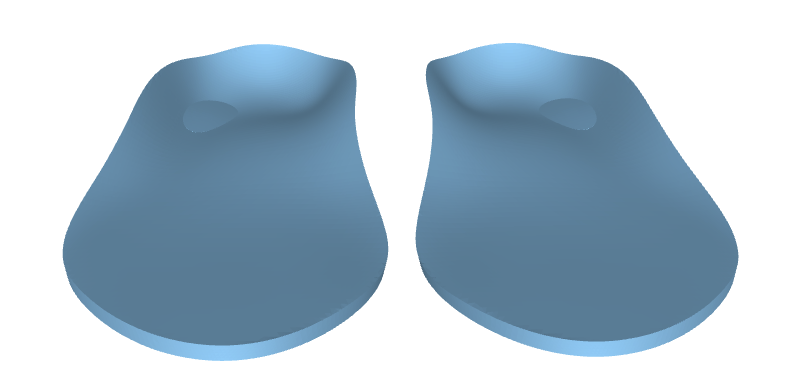
When to adjust each parameter.
Use this as a starting checklist, not a prescription — it describes what each control does, not what to set for a given diagnosis. Whether a parameter suits a specific foot is a clinical judgment. Every combination produces a different result in the solver.
| Parameter | Increase when… | Decrease when… |
|---|---|---|
| Arch Height | Flat foot · pronation · low arch | High arch · comfort-first · pressure under arch |
| Arch Length | Long midfoot · wider support needed | Short foot · localised rearfoot support only |
| Heel Cup Depth | Instability · more heel containment · fat-pad thinning | Shoe volume is tight · comfort-only use |
| Medial Flange | Hyperpronation · medial arch collapse | Neutral foot · lateral instability dominant |
| Lateral Flange | Supination · outward roll | Pronation · medial control is priority |
| Forefoot Varus Post | Forefoot varus · medial forefoot pressure | Neutral forefoot alignment |
| Forefoot Valgus Post | Forefoot valgus · lateral metatarsal offload | Neutral forefoot alignment |
| Rearfoot Varus Post | Rearfoot varus · strong pronation control | Neutral or valgus rearfoot |
| Rearfoot Valgus Post | Rearfoot valgus · supination · high arch | Neutral or pronated rearfoot |
| Medial Skive | Severe pronation · strong medial control | Neutral or supinated rearfoot |
| Lateral Skive | Outward roll · supination | Pronation · medial control is priority |
Common questions about insole design parameters.
When should I increase arch height?
Arch height is typically raised for a flat foot, pronation, or a low arch; it is reduced for a high arch, comfort-first use, or pressure under the arch.
What is a medial heel skive and when is it used?
A medial skive is a rearfoot adjustment that adds strong inward-roll (pronation) control. Ease it back for a neutral or supinated rearfoot.
When should I deepen the heel cup?
Deepen the heel cup for instability, more heel containment, or fat-pad thinning. Reduce it when shoe volume is tight or for comfort-only use.
What is the difference between a medial and a lateral flange?
A medial flange supports the inner arch for hyperpronation or medial arch collapse; a lateral flange supports the outer edge for supination or outward roll.
See how these parameters change your insole in real time. Free preview — 5 credits, no card required. Export the STL when you're ready to print.