
TL;DR
Off-the-shelf foam inserts sort feet into three or four categories — usually by arch height and width — and miss the heel angle, forefoot splay, tissue density, and left-right asymmetry that actually shape how load travels through a foot. Computational design asks a different question: what does this specific foot need? It turns detailed geometry and pressure data into algorithmic designs, then uses variable-density lattices and functional optimization to vary stiffness by zone rather than cut uniform foam.
The result is a shift from category-sorted approximations to per-foot interfaces. Ergono3D sits on the custom-design side: guided inputs and parametric design generate a printable STL tuned per foot — a design tool, not a diagnosis or treatment.
Key takeaways
- Categories collapse continuous variation. Three or four buckets capture arch height and width but miss most of what determines how forces distribute across a foot.
- Computational design starts from the individual foot. Detailed 3D geometry and pressure data become the input for algorithmic design rather than a category label.
- Variable-density lattices replace uniform foam. Internal geometry gives different mechanical properties by zone using one base material — energy return, pressure redistribution, or progressive support.
- Optimization can be proactive, not just reactive. Designs can be tuned for goals and refined by adjusting parameters and reprinting, practical when a new design can be generated within a day.
- It's a philosophy shift. From "what do people with feet like yours need?" to "what does your foot need?" Ergono3D delivers the custom side via guided inputs and parametric design — a design tool, not a diagnosis or treatment.
Walk into any sporting goods store or pharmacy and you'll encounter a familiar sight: rows of prefabricated insoles packaged with promises of comfort, support, and pain relief. Some feature gel or silicone cushioning. Others advertise memory foam or "orthotic-grade" arch support. Most follow a similar template — a contoured shape with some degree of arch elevation and cushioning material in key areas. They represent the current standard in foot care for most people: affordable, immediately available, and better than nothing. But there's a fundamental problem with this approach: these insoles are designed for categorical approximations of feet, not actual individual feet.
The limitations of categories.
Categorical design made sense when custom manufacturing was impractical. But categories are inherently limited — they collapse continuous variation into three or four buckets and miss most of what matters.
The traditional design process works like this: biomechanics researchers study large populations to identify common foot types — neutral arch, high arch, flat arch, perhaps with subcategories for pronation tendencies. Designers create templates for each category. Manufacturing scales up these templates across standardized shoe sizes. The result is a system where you're expected to identify which category best describes your foot and hope the corresponding insole addresses your specific needs.
Categories capture only the most obvious variables — primarily arch height and foot width. They miss the countless other factors that influence how forces distribute across your foot: heel angle, forefoot splay, metatarsal positioning, variations in tissue density, asymmetries between left and right feet, and the specific movement patterns of your gait. Two people might both have "high arches" by categorical definitions, but their feet could differ substantially in ways that affect what kind of support would actually help them.
The limitation becomes particularly apparent when you consider that foot structure exists on multiple continua, not in discrete categories. Arch height isn't just "high," "medium," or "low" — it's a measurement that varies across a smooth spectrum. By collapsing this continuous variation into three or four categories, we're inevitably providing suboptimal solutions for most people.
The computational design alternative.
Instead of asking "which category does this foot fit into?", computational design asks "what are the specific structural and functional characteristics of this foot, and what design would best address them?"

The process begins with data collection. Traditional assessment might note that someone has flat arches and overpronates — category assignments. At the high end, clinical and research systems capture detailed geometry: the three-dimensional shape of the foot under load, pressure distribution across many sensors, even kinematic data about how the foot moves through the gait cycle. That data isn't used to assign the foot to a category; it becomes the input for algorithmic design. Ergono3D sits at the accessible end of this spectrum: instead of a scanner or pressure plate, a short guided survey captures the inputs that matter, and you tune arch, heel-cup, and firmness parameters directly before exporting a print-ready STL.
The algorithms encode biomechanical principles — understanding of how foot structure relates to pressure distribution, how different support configurations influence joint mechanics, how material properties affect both comfort and corrective function. When given specific data about an individual foot, these algorithms generate designs that address that particular foot's needs.
Consider arch support as an example. In a categorical system, you get high, medium, or low arch support. In a computational system, the algorithm determines exactly where your arch needs support (medial longitudinal arch, lateral arch, transverse arch), how much support is appropriate based on your tissue properties and body weight, and how that support should transition into the forefoot and heel regions to create optimal pressure distribution for your specific foot shape. Modern approaches replace foam with 3D parametric insole design, enabling better customization and performance.
Material structure and advanced geometry.
Traditional manufacturing is constrained to simple geometries and uniform material properties. 3D printing and computational design remove those constraints entirely.
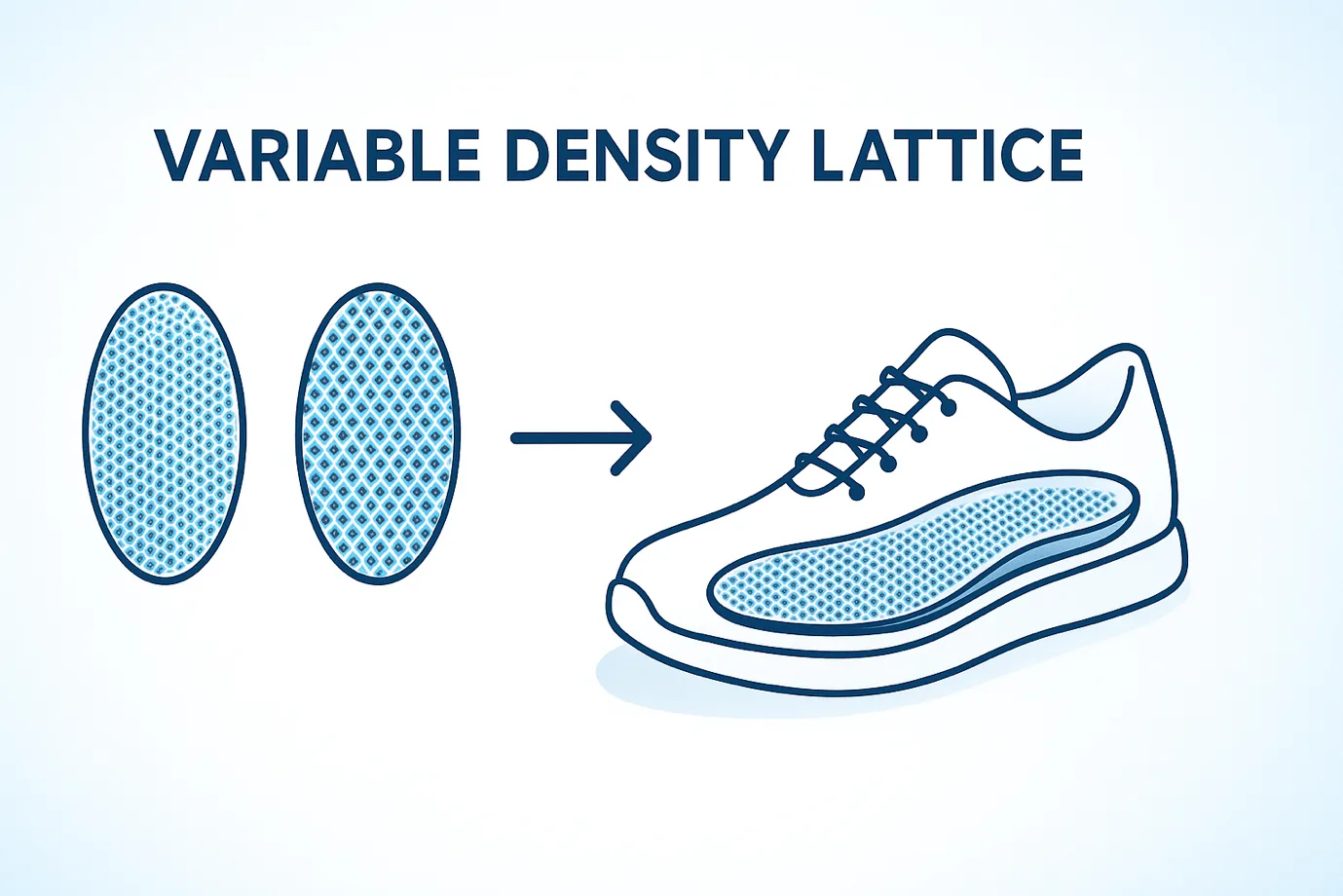
When you're cutting shapes from sheets of foam or molding thermoplastic, you're limited to relatively simple geometries and uniform material properties within each component. An insole might have a firm plastic shell for support with soft foam layers for cushioning, but the foam is uniformly soft and the shell is uniformly rigid.
3D printing and computational design remove many of these constraints. Modern design algorithms can create variable-density lattice structures — internal geometric patterns that provide different mechanical properties in different regions while using the same base material. These lattices can be optimized for specific functions: energy return for athletic performance, targeted pressure relief, or progressive support that adapts to different activity levels.
The geometric possibilities expand significantly. Instead of simple contours, designers can create complex surface textures that enhance grip, improve moisture management, or provide targeted pressure relief. Support structures can follow the natural curves and force paths of the foot rather than approximating them with simplified shapes. Transitions between different functional zones can be gradual rather than abrupt, reducing pressure points and improving comfort.
Functional optimization beyond basic support.
Traditional insole design is largely reactive — you have flat feet, so we add arch support. Computational design can also optimize for positive outcomes, not just address identified problems.
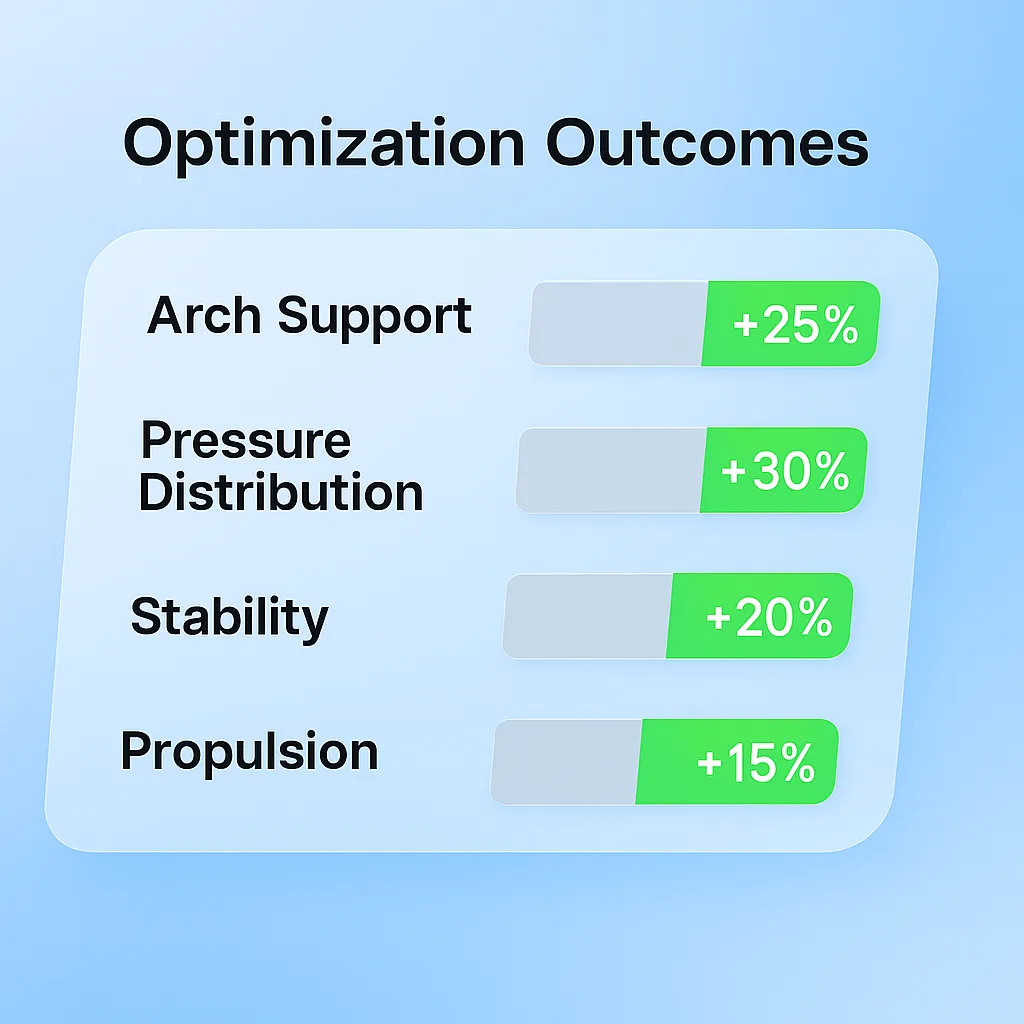
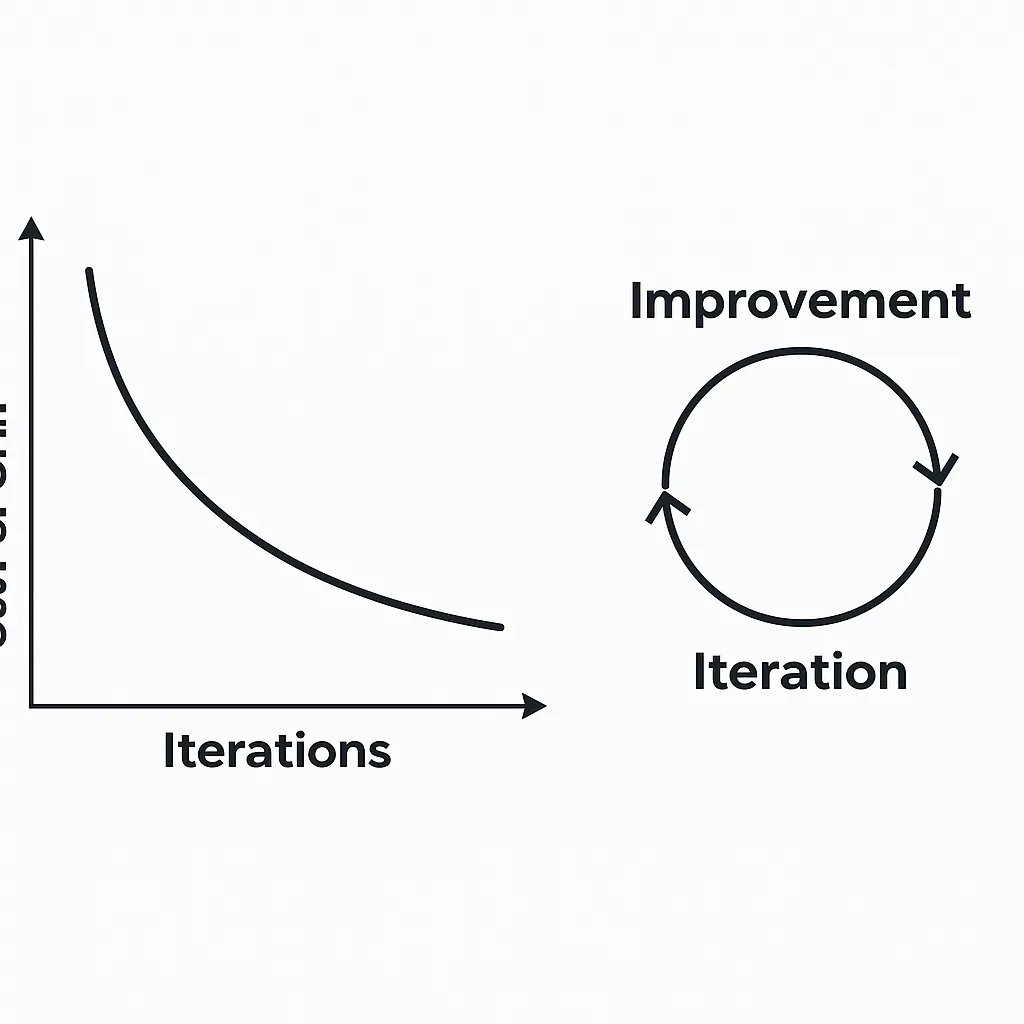
The algorithms can simulate how different design features affect outcomes and iteratively refine designs to achieve specific goals. For an athlete, this might mean a design that maximizes energy return during push-off while maintaining stability during lateral movements. For someone with balance issues, it might mean enhanced sensory feedback through specific surface features that improve proprioception. For a person who spends all day on their feet, it might mean optimizing for comfort over extended periods while preventing fatigue.
This kind of iteration becomes practical when a new design can be generated and produced within a day — something that would be prohibitively expensive and slow with traditional manufacturing. If a design doesn't feel right, you adjust the parameters and reprint, refining toward what works for you rather than living with a fixed off-the-shelf shape.
Personalization across use cases.
The ability to truly customize rather than select from categories matters differently across different use cases — but it matters for all of them.
Complex & clinical cases
Some feet have needs that off-the-shelf categories simply can't meet — significant left/right asymmetry, an unusual pressure pattern, or support needed in a very specific spot rather than where the "average" foot needs it. These are exactly the cases where per-foot geometry helps. They are also cases that belong with a qualified clinician: Ergono3D is a design tool, not a medical device, and anyone managing diabetes, a recent surgery, or a diagnosed condition should have their footwear and offloading directed by a professional.
Athletic Performance
For athletes, the difference between category-based and truly custom insoles is mostly about fit and comfort over long training loads — support matched to the individual foot rather than the closest template. Whether that translates into measurable performance or injury-risk benefits varies by person and is not something an insole can promise; the evidence on insoles and athletic outcomes is mixed. The more reliable benefit is a setup that fits, can be tuned, and stays comfortable.
Everyday Comfort
Many people experience foot discomfort that isn't severe enough to seek medical treatment but still affects quality of life. They might try various off-the-shelf insoles with mixed results. Access to genuinely customized insoles that actually fit their feet — not just their foot category — could provide meaningful improvements in daily comfort and potentially prevent issues from developing into more serious problems.
Integration with footwear design.
An often-overlooked aspect of insole design is how it interacts with footwear. Shoes aren't neutral containers — they have their own structural characteristics, heel-toe drops, cushioning systems, and fits. An insole designed in isolation might not work optimally within a specific shoe.
Computational design can potentially account for this. If the design algorithm knows not just your foot characteristics but also the characteristics of your intended footwear, it can optimize the insole for that specific foot-insole-shoe system. The insole's thickness might vary to work with the shoe's existing arch support. Its surface features might complement the shoe's interior. Its flexibility might match the shoe's intended use.
This systems-level thinking represents another departure from categorical design. A "neutral arch" insole is designed to work in any neutral shoe with any neutral foot. A computationally designed insole can be optimized for your specific foot in your specific shoes for your specific activities.
The design philosophy shift.
The deeper change here isn't just technical — it's philosophical. Traditional insole design asked: "What do people with feet like yours typically need?" Computational design asks: "What does your foot specifically need?"
This shift mirrors broader changes in how we think about personalization in medicine and consumer products — moving away from one-size-fits-most approaches toward solutions tailored to individual variation. The tools now exist to do this efficiently: to generate truly custom designs without requiring custom engineering for each case.
For insoles specifically, this matters because feet are highly variable organs performing complex biomechanical functions. The category-based approximations we've relied on were never ideal; they were simply the best we could do with available technology. As that technology evolves, we can do better. The result isn't just better insoles — it's a fundamental rethinking of what insoles can be. Not generic cushioning devices or category-sorted supports, but precisely engineered interfaces between your unique feet and the ground, optimized for your specific structure, function, and goals. This shift is powered by digital insole design workflows that scale customization.
Common questions about custom insoles versus foam inserts.
Why do off-the-shelf, category-based insoles fall short for most feet?
Categories capture only the most obvious variables — primarily arch height and foot width. They miss the countless other factors that influence how forces distribute across your foot: heel angle, forefoot splay, metatarsal positioning, variations in tissue density, asymmetries between left and right feet, and the specific movement patterns of your gait. Foot structure exists on continua, not in discrete categories, so collapsing it into three or four buckets provides suboptimal solutions for most people.
How is computational insole design different from categorical design?
Instead of asking "which category does this foot fit into?", computational design asks "what are the specific structural and functional characteristics of this foot, and what design would best address them?" Detailed geometry and pressure data become the input for algorithmic design rather than being used to assign the foot to a category.
What is a variable-density lattice and why does it matter?
Variable-density lattice structures are internal geometric patterns that provide different mechanical properties in different regions while using the same base material. They can be optimized for specific functions such as energy return for athletic performance, targeted pressure relief, or progressive support that adapts to different activity levels.
Can a custom insole account for the shoe it goes in?
Yes. If the design algorithm knows not just your foot characteristics but also the characteristics of your intended footwear, it can optimize the insole for that specific foot-insole-shoe system. The insole's thickness might vary to work with the shoe's existing arch support, its surface features might complement the shoe's interior, and its flexibility might match the shoe's intended use.
How do custom insoles compare to gel or silicone insoles?
Gel and silicone insoles are mass-produced for cushioning — they soften impact but are not shaped to your foot, so they add padding without targeting a specific arch height, heel-cup depth, or posting. A computationally designed insole is generated from your guided inputs, so support and firmness are placed where your foot actually needs them, and a 3D-printed TPU insole holds that structure far longer than gel or silicone, which tend to compress and flatten with use. Gel or silicone can be an inexpensive cushioning option; a custom insole is a structured, fitted alternative. Neither is medical treatment — see a clinician for persistent pain.
Design your own custom insoles with parametric control. Free preview — 5 credits, no card required. Export the STL when you're ready to print.