
Custom insoles for plantar fasciitis.
Arch support, shaped to you.
Ergono3D lets you design insoles with the arch support, heel cup, and firmness you want, then export a print-ready STL built from your own foot profile. Many people living with plantar fasciitis look for firmer arch support they can tune. It is a design tool, not a medical treatment — see a clinician for persistent pain.
Shape your arch support without CAD.
Instead of pushing vertices around in CAD, you answer a guided survey and adjust the support that shapes the final insole — the arch, the heel cup, and the firmness. That keeps it easy to refine after you've actually worn it.
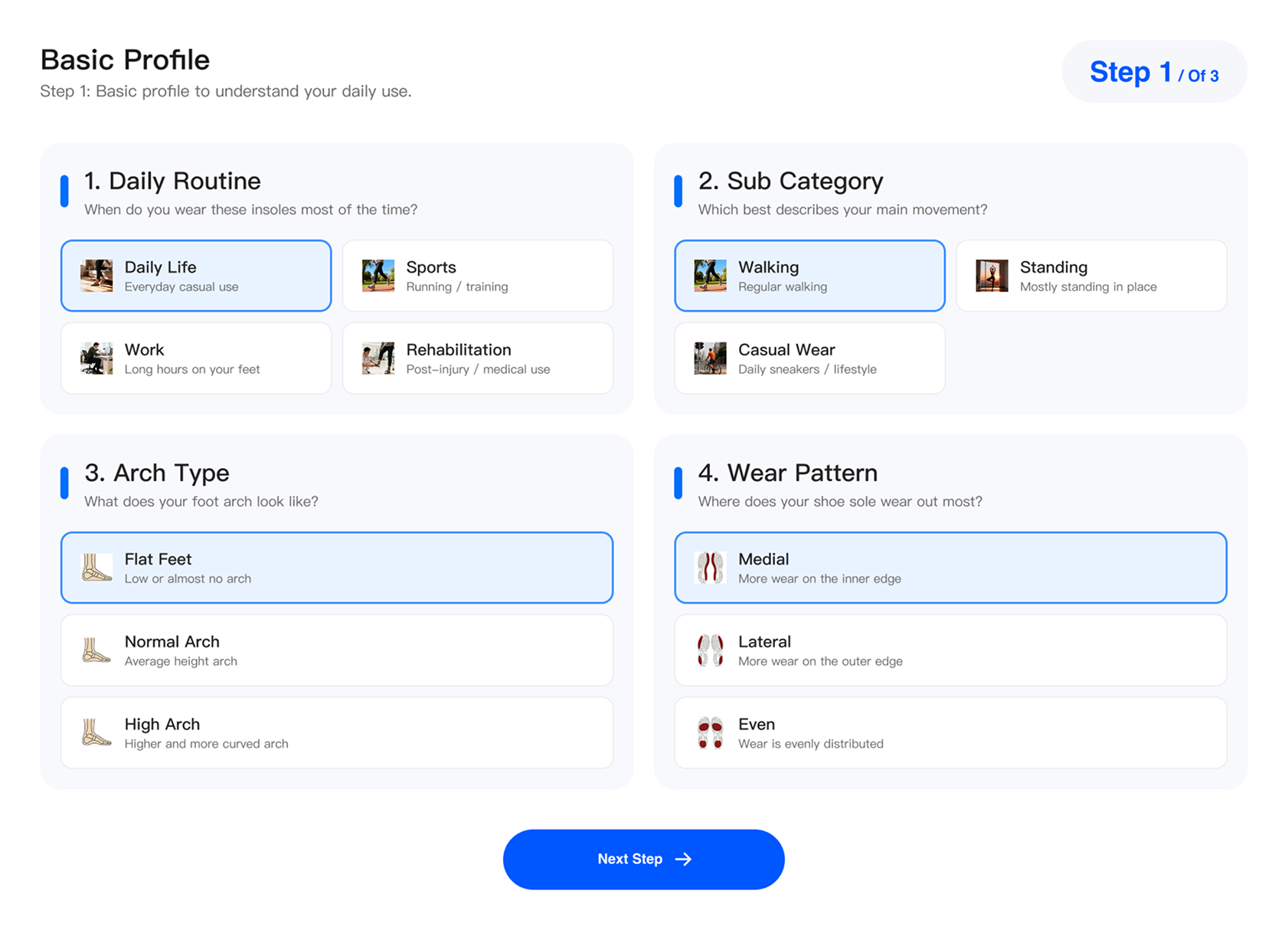
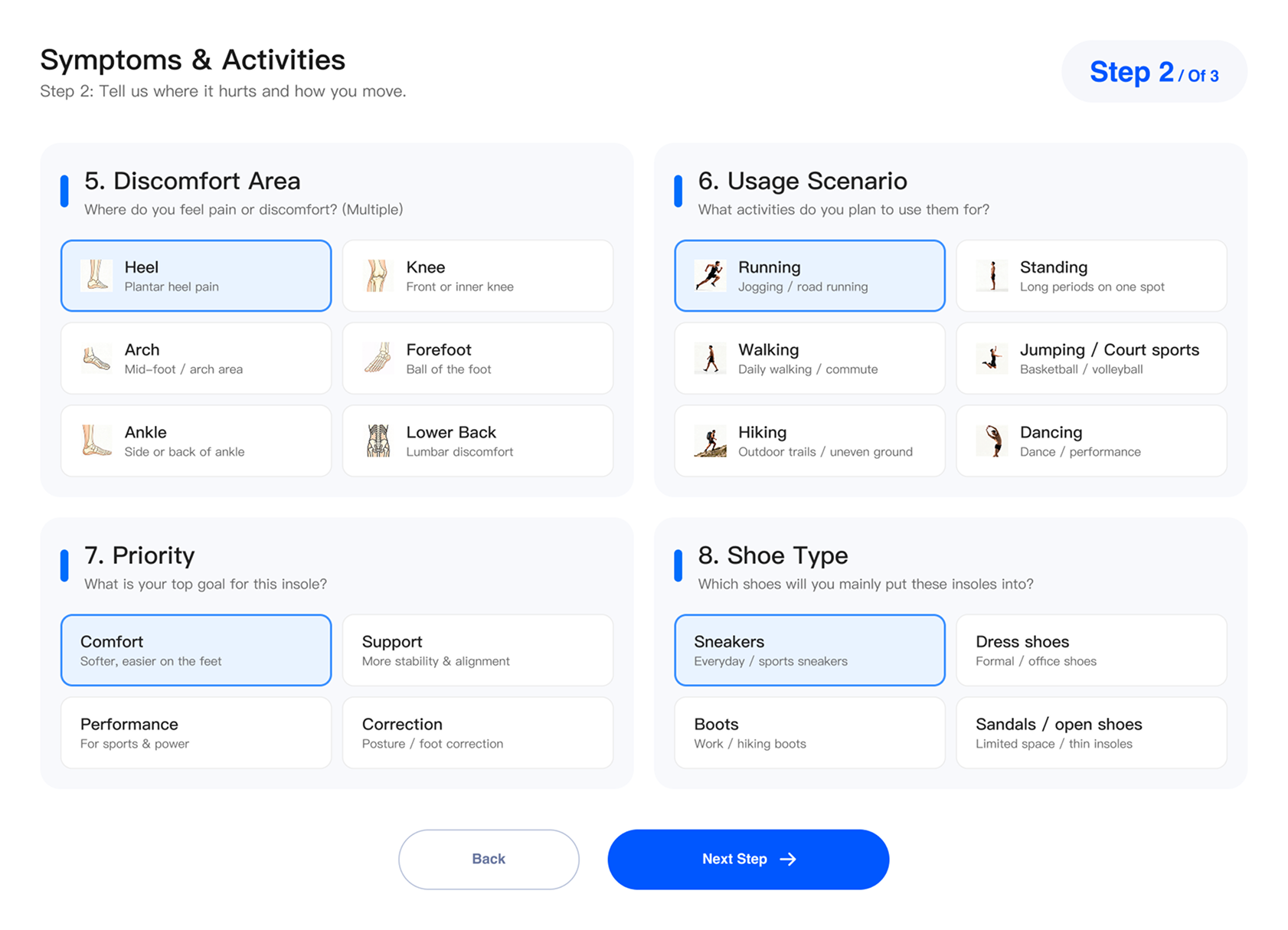
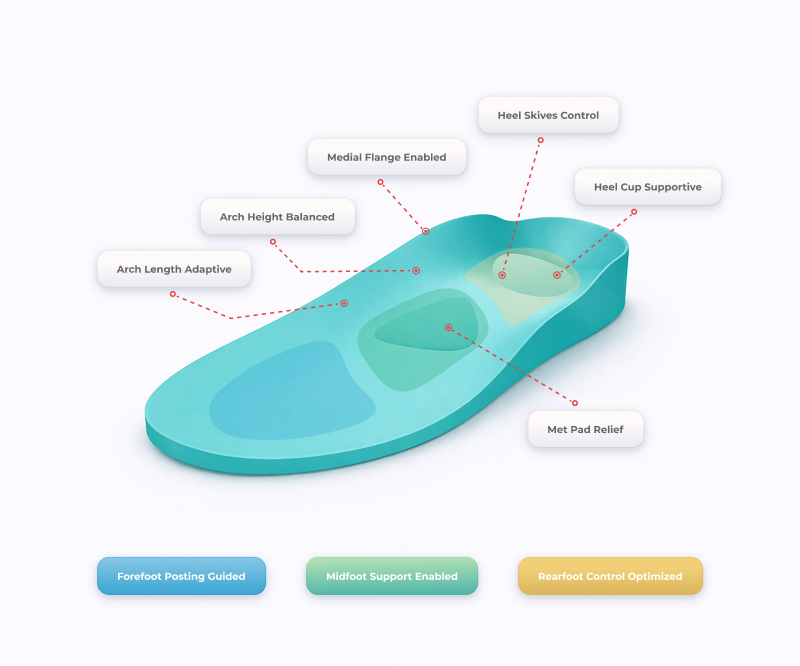
Arch support, profiled to your foot — not an average.
The plantar fascia is the band of tissue along the bottom of your foot, and plantar fasciitis is one of the more common causes of heel and arch discomfort (Mayo Clinic, AAOS OrthoInfo). Store-bought arch supports come in a handful of fixed arch heights and one firmness. A design you control follows the height and length of your own arch, cradling the medial arch so load spreads along the fascia instead of pressing one spot — and it's a file you can re-profile, not a pair you replace.
A stock arch sits at a generic height and curve, so its peak may land ahead of or behind where your own arch wants the support.
Start from a guided survey, then dial in the arch height, length, and where the rise sits, so the contour follows your arch rather than an average curve.
Off-the-shelf means hunting for another product each time the arch sits too high, too low, or too far forward.
Raise or soften the arch, shift where it peaks, and export the next version — print at home or via a service.
The right arch is personal.
There is no universal arch height or shape. Arch support is the part that cradles the medial arch and spreads load along the fascia; many people find a firmer arch profiled to their own foot more comfortable for standing and walking, but the right height varies and an insole is not a cure. This isn't medical advice — for foot pain, especially pain that persists, see a podiatrist or clinician.
From your foot to a wearable insole.
Ergono3D keeps it practical: design the file, print it in TPU, wear it, and tune the next version without rebuilding anything by hand.
Shaped to your foot
Set arch height and length and the heel cup to match you, not a shelf size.
Softer or firmer
Choose the firmness and cushioning, then re-export to fine-tune after you've worn them.
Adjust and re-print
Wear it, learn from it, export the next version — it's a file you keep, not a final purchase.
Home or service
Print in TPU at home for a few dollars of filament, or send the STL to a print service.
Guided, not modeled
Answer a survey and tune controls — no scanner, no manual modeling step.
How does it fit without a scan? The guided survey asks about things like your daily activity, your arch type, your shoe wear pattern, and where your heel or arch feels sore, then turns those answers into the starting geometry. You adjust from there and re-export — so the fit comes from your inputs, not a 3D scan of your foot.
Print your design into a wearable insole.
Print the generated file, wear it in your everyday shoe, then refine the arch and firmness from how it actually feels.
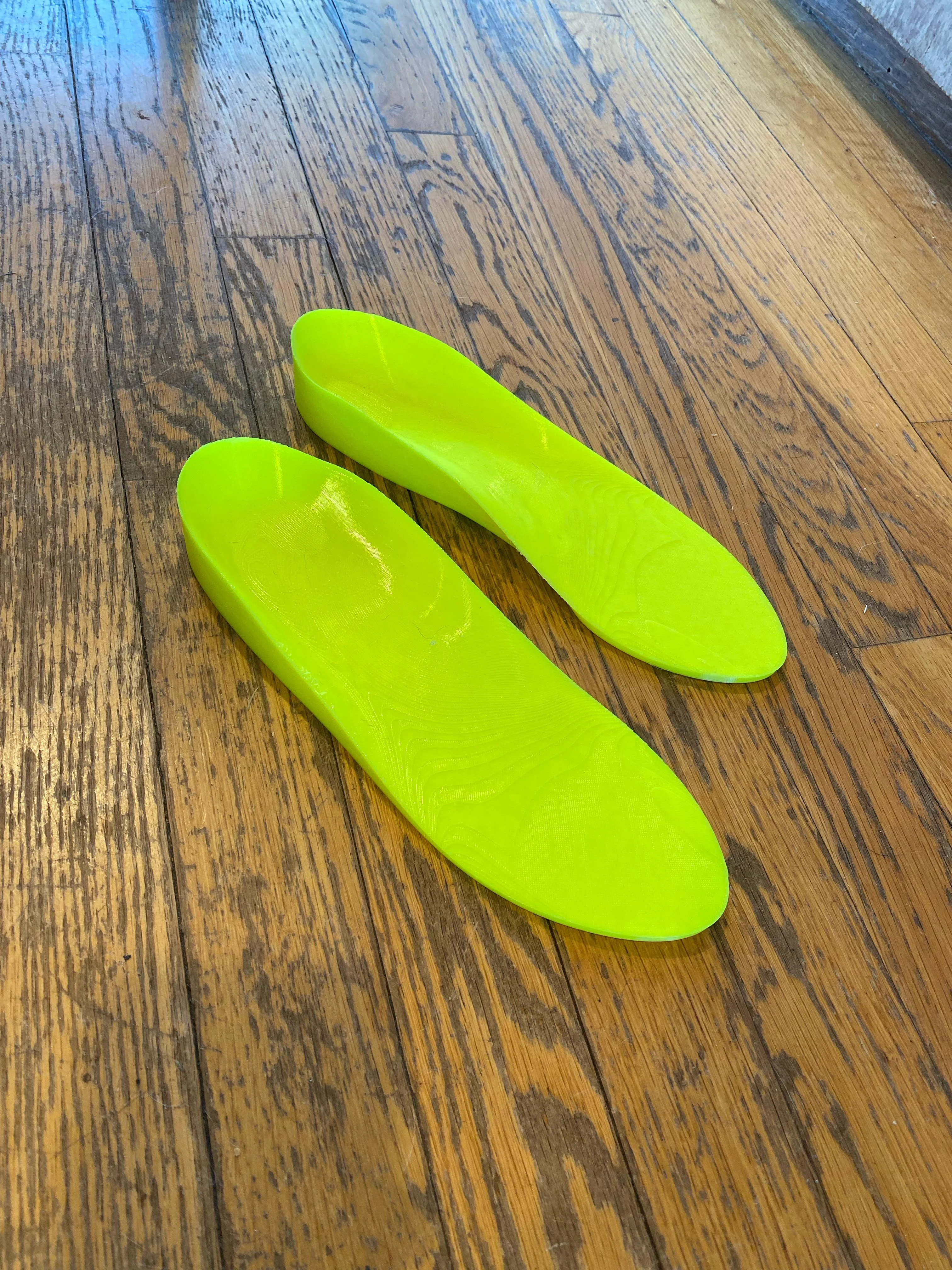
Which TPU firmness for your insole.
Every design exports as TPU-ready geometry, but the firmness you print in changes how it feels underfoot. A softer TPU cushions for long standing and sensitive feet; a firmer TPU holds arch support under load; a mid firmness is a balanced default. Comfort is personal, so many people print, feel, and adjust.
A nozzle made for flexible filament prints TPU more reliably, and a thin top cover can soften the contact surface. For firmness trade-offs, print temperatures, and top covers in depth, see the TPU hardness & top cover guide, or the DIY guide to 3D-printed insoles. Want more background? Read our plantar fasciitis insole guide and custom arch-support insole guide.
Arch support & plantar fasciitis — questions answered.
/ 01Does arch support help with plantar fasciitis?
Many people with plantar fasciitis look for firmer, made-to-fit arch support, and clinicians often discuss supportive footwear and insoles as part of everyday care. Comfort varies from person to person, and an insole is not a cure. This is not medical advice — see a podiatrist or clinician for diagnosis and for pain that persists. Ergono3D is a design tool that lets you shape the arch support yourself and export a print-ready STL.
/ 02Are custom insoles better than store-bought for plantar fasciitis?
Off-the-shelf insoles come in fixed sizes and a single firmness. A custom design is shaped to your own foot, so the arch height, heel cup, and firmness match you rather than an average. Whether that feels better is individual. With Ergono3D you can adjust the design and re-export rather than buying another pair to try.
/ 03Can I 3D-print my own arch-support insoles?
Yes. Ergono3D runs in your browser: you answer a guided survey, adjust parameters like arch shape, heel cup, and firmness, preview the geometry, and export a print-ready TPU STL. You can print at home on a Bambu, Prusa, or similar printer, or send the STL to a print service. See our DIY guide for the printing steps.
/ 04How firm should the arch support be?
There is no single right firmness — comfort depends on your foot, your footwear, and how you feel walking and standing. Ergono3D lets you set the firmness and arch profile, then re-export a new version after wearing it, so you can iterate. A podiatrist or clinician can advise on what suits you.
/ 05How long do 3D-printed insoles last?
It depends on the TPU you use, your weight, and how much you wear them — typically months to over a year. This is not clinically validated. Because the design is a file you keep, you can re-print or adjust and re-export when a pair wears down.
Shape a custom insole and preview it free.
Answer the guided survey, tune the arch and firmness, and export a print-ready STL. The free preview includes the survey and 5 credits — no scanner, no CAD.
Ergono3D is a design tool, not a treatment for plantar fasciitis or any condition; this page isn't medical advice. For diagnosis or persistent pain, see a podiatrist or clinician.