
Functional 3D prints
worth your filament.
The best one goes on your feet.
You bought the printer to make useful things — not another shelf trinket. So past the toys, what's actually worth the print time? The most functional print you can make is one you wear every day: a custom insole, fitted to your foot, in flexible TPU. This page covers what counts as a functional print, which material does which job, and why the insole is the standout — including a different pair for every activity.
A functional print does a job — it isn't decor.
A functional 3D print is a part that has to perform: bear load, fit a mating part, flex without snapping, or replace something that wore out. That's a different bar from a display model — geometry, material, and print settings all have to survive real use. The first decision is matching the material to the job.
| Material | Best for | Why it works (and where it doesn't) |
|---|---|---|
| PLA+ | Low-stress jigs, brackets, fixtures | Stiff, cheap, and easy to print — but softens with heat and creeps under sustained load, so it's wrong for wearables. |
| PETG | Durable rigid parts, outdoor & heat-exposed | Tougher and more heat-tolerant than PLA with a little flex and good layer bonding — a solid all-round functional material. |
| TPU (flexible) | Wearables, gaskets, bumpers — and insoles | Elastic and fatigue-resistant: it cushions, rebounds, and is built to take repeated flex cycles. The material that makes a printed insole work. |
| Nylon / PA-CF | High-stress mechanical parts, gears | Tough, abrasion- and heat-resistant — but needs a hardened nozzle and a capable, often enclosed printer. |
Material is only half of it. Wall count, infill pattern and density, print orientation, and dimensional tolerance decide whether a functional part actually holds up — for a load-bearing flex part like an insole, that means enough perimeters, a fatigue-friendly gyroid infill, and the right orientation for layer strength.
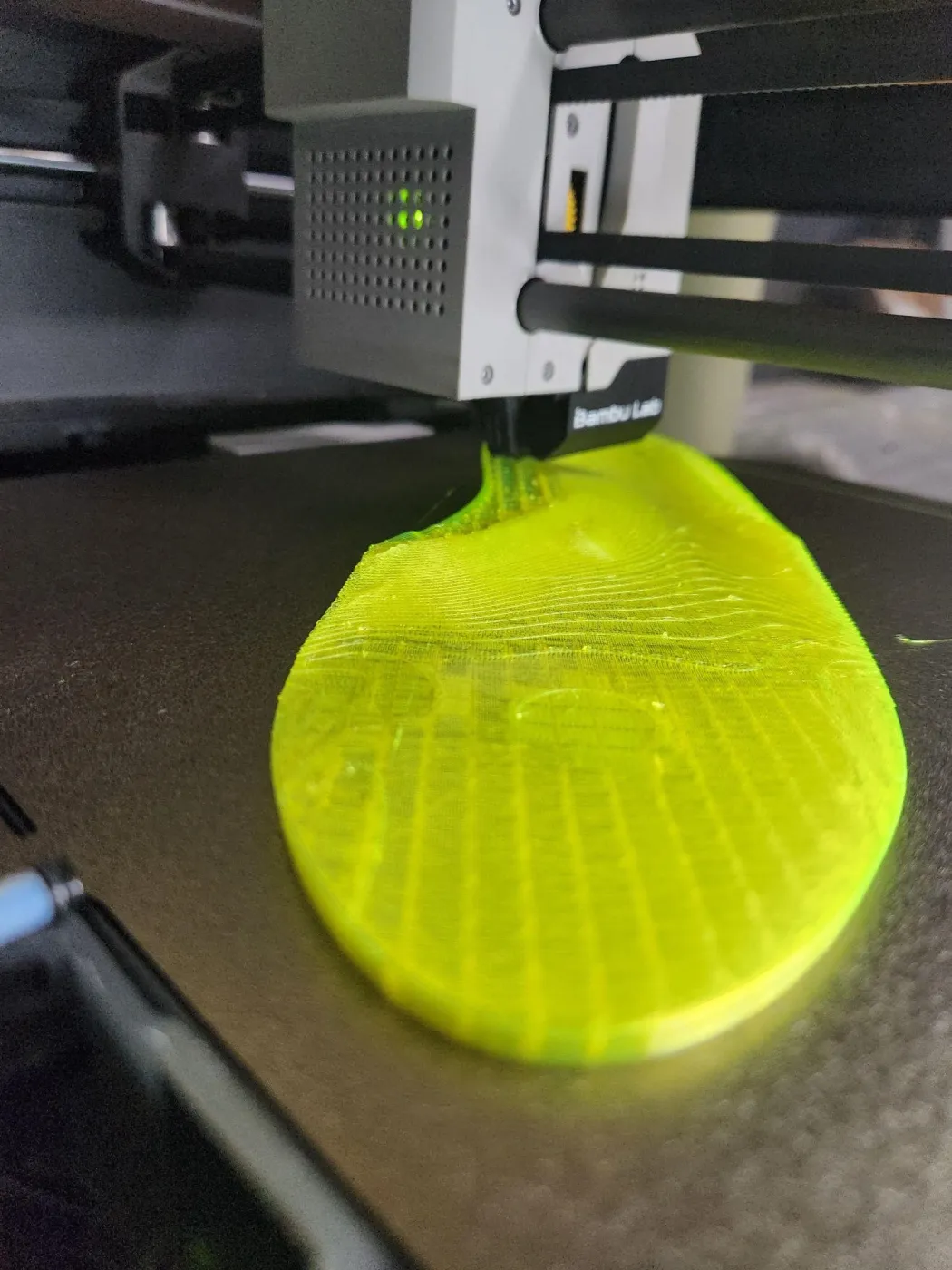
Functional prints that actually earn their print time.
Plenty of prints are genuinely useful. Here are the ones makers come back to — and then the one that beats them all.
Replacement parts & knobs
Bring a broken appliance clip, gear, or missing knob back to life instead of binning the whole thing.
Tool holders & shadow boards
Wall-mounted holders that keep the bench tidy and every tool exactly where your hand reaches.
Gridfinity & drawer bins
Modular bins sized to your exact drawers and gear — the print that quietly tidies a whole workspace.
Cable management & brackets
Clips, raceways, and custom mounts that route cables and fix hardware to the millimeter.
Jigs & fixtures
Drilling guides and alignment jigs that make every other project repeatable and square.
Custom insoles
Worn every day, genuinely load-bearing, fitted to one foot, and cheap to re-print. The rare functional print you put your whole body weight on — thousands of times a day.
Most functional prints sit on a wall or in a drawer. An insole is the one you load with every step — which is exactly why a personal fit matters, and exactly why printing your own (a few dollars of TPU, fully adjustable, re-printable on demand) beats a ~$300 lab pair or a flat foam insert off the shelf.
One design. A different insole for every activity.
A store-bought custom orthotic is one expensive pair trying to do everything. But your foot doesn't need the same thing on a long run as it does standing on a hard floor all day. Design your profile once in Ergono3D, then print cheap, dedicated pairs and swap them by activity — the thing a single lab pair can never do.
A printed insole is a comfort-and-fit product you design and make yourself — not a prescribed medical orthotic.
Firmer arch, forefoot rebound
More support and energy return, a snug heel — built for distance and less fatigue late in a run.
Cushioned, even pressure
Full-contact cushioning and a deeper heel cup to spread load over long hours on hard floors.
Softer, comfort-focused
A gentler durometer with generous cushioning for easy days and downtime.
Want the full breakdown? Read how to tune insoles for different activities, or jump to a sport: running and hiking.
How a custom insole goes from design to print.
No CAD, no scanner, no orthotic lab. Four steps turn your foot profile into a print-ready file, then into a wearable TPU insole on your own printer.
Enter your profile & activity
Guided inputs — foot dimensions, arch, support preferences, and what you're printing the pair for. No modeling.
Generate & adjust the geometry
Named parameters become an adjustable 3D insole — arch height, heel cup, regional stiffness — previewed live in the browser.
Export a print-ready STL
Download the STL packaged with TPU slicer settings, so the file lands on your printer ready to slice.
Print in flexible TPU
Run it on a Bambu, Prusa, or any capable printer — a wearable pair in roughly 5–7 hours, depending on size and layer height.
New to flexible filament? The TPU hardness & top-cover guide walks through durometer and finishing, and the insole design parameters post explains each adjustable setting.
Functional-print questions, answered.
/ 01What is the most useful functional 3D print?
A custom insole is one of the most useful functional prints you can make. Unlike most prints — which sit on a shelf or in a drawer — an insole is worn every day, carries real load for thousands of steps, and is fitted to one person's foot. In flexible TPU it costs only a few dollars of filament, and the design can be re-printed or adjusted any time.
/ 02What material should I use for a functional 3D print?
Match the material to the job. TPU (flexible) is for wearables, gaskets, bumpers, and insoles — it cushions and rebounds. PETG is for durable rigid parts and anything exposed to heat or weather. PLA+ suits low-stress jigs and brackets but creeps under sustained load. Nylon or PA-CF handles high-stress mechanical parts but needs a hardened nozzle and a capable, often enclosed printer.
/ 03Can you really 3D print insoles that hold up?
Yes. Printed in flexible TPU around 95A shore hardness at roughly 20% gyroid infill with three walls, an insole flexes and rebounds through the repeated compression of daily walking. TPU is fatigue-resistant by design — the property that makes it the standard material for printed footwear components.
/ 04Can I print a different insole for each activity?
Yes — and that's the real unlock. Design your foot profile once in Ergono3D, then export and print cheap, dedicated pairs: a firmer pair for running, a cushioned pair for standing all day, a softer pair for recovery. At a few dollars of filament each, you swap insoles by activity instead of compromising with one expensive lab pair.
/ 05Do I need CAD to design a functional insole?
No. Ergono3D turns guided inputs — foot profile, activity, and support preferences — into an adjustable 3D insole you can preview and export as a print-ready STL. There's no CAD modeling and no scanner required to start.
/ 06How much does a 3D-printed insole cost to make?
Filament for a pair is roughly three to five dollars. Because the design is reusable, every additional pair is essentially just print time — compared with around $300 for a single lab-made custom orthotic.
Make the most useful print yet.
You've printed the trinkets. Now print the one functional part you'll actually use every day — fitted to your foot, in TPU, for a few dollars a pair.
DIY 3D-printed insoles
The end-to-end walkthrough — from measuring your feet to a printed pair.
TPU hardness & top covers
Pick the right durometer and finish so the print feels right underfoot.
Custom vs. foam inserts
Why a fitted, printed insole outperforms a flat off-the-shelf insert.