TL;DR
Hiking loads the foot differently from running: not fast repetitive impact, but long hours on uneven ground, steep descents that hammer the forefoot and toes, and a loaded pack that overloads the whole foot. A hiking insole needs full-length structured arch support to fight fatigue, a deep heel cup to stay stable on uneven terrain and control the foot on descents, cushioning at the heel and forefoot, and durability — thin stock foam packs out fast. A custom 3D-printed insole tunes support, cushioning, and a durable structure per foot, and is cheap to reprint when a pair wears down. Insoles can improve comfort and reduce fatigue; recurring blisters, black toenails, or persistent pain are worth a clinician's look.
Key takeaways
- Hiking load = long hours + uneven terrain + steep descents + pack weight, not just impact — so support, stability, and durability matter most.
- A hiking insole needs full-length firm arch support, a deep heel cup, heel + forefoot cushioning, and durability (stock foam packs out fast).
- Custom levers: arch height/length, heel cup, durable firm TPU, cushioned zones, met pad, thickness — per foot, and reprintable when worn.
- Ergono3D = parametric, per-foot, iterable STL at roughly material cost (<$10) vs $40–$60 premium hiking insoles — reprint a packed-out pair cheaply.
- Insoles can help comfort and fatigue; recurring blisters, black toenails, or persistent pain are worth a clinician's look.
Searches for insoles for hiking and best insoles for hiking boots usually come from hikers who have felt the back half of a long day in their feet — sore arches, a bruised forefoot after a descent, or boots that feel unstable on rocky ground. The factory insole in most boots is thin foam built for general comfort, and it is rarely the part doing the work. This guide covers what hiking does to the foot, what a hiking insole actually needs, and where a durable custom 3D-printed insole fits.
What hiking does to the foot.
Hiking is not just a long walk. Four things stack up that a running insole is not built for.
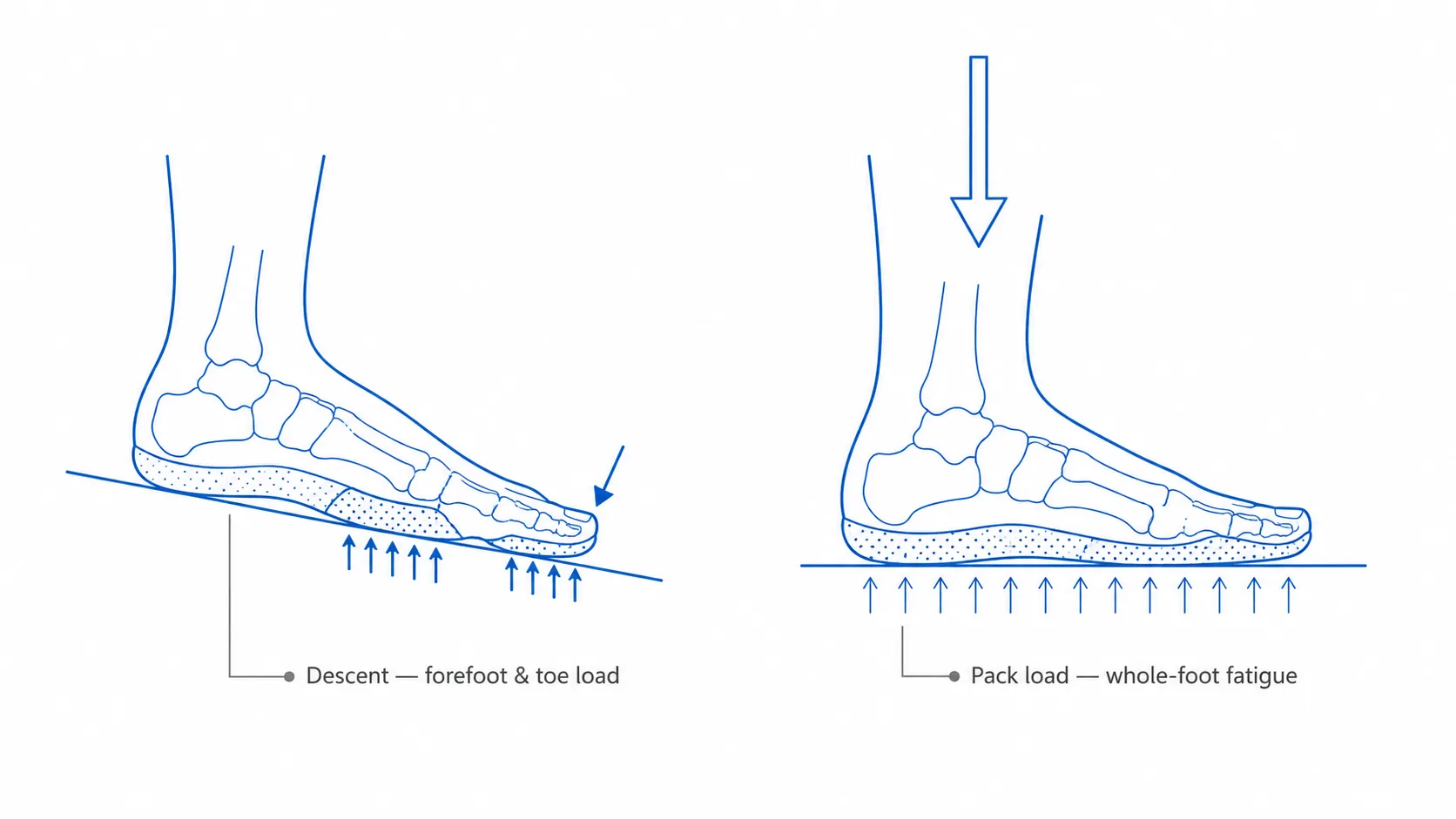
Duration. A hike is measured in hours, not minutes. The arch that feels fine for the first mile is asked to hold its shape for the tenth, and an insole that supports well early but collapses or compresses by afternoon stops helping exactly when you need it.
Uneven terrain. Trails are rocks, roots, and off-camber ground. Every irregular footfall tries to tip the foot, so stability — a foot that stays put in the boot instead of sliding around — matters as much as cushioning. A foot that shifts is a foot that fatigues faster and blisters sooner.
Steep descents. Going down is where hiking gets hard on feet. Weight tips forward onto the forefoot and toes, impact rises with every step, and toes can jam against the front of the boot — the classic cause of bruised forefeet and black toenails. Descent control is a real design goal, not an afterthought.
Pack weight. A loaded backpack adds bodyweight straight down through the foot, and if support is uneven that extra load piles onto whatever spot is already working hardest. Spreading load across the whole foot is part of what a good hiking footbed does.
What a hiking insole actually needs.
Map those loads to design, and a clear set of priorities falls out — leaning toward support and durability over soft cushioning.
A hiking insole that holds up tends to combine:
- Full-length, structured arch support — to carry the arch through hours of walking, not just the first stretch.
- A deep heel cup — to keep the foot stable on uneven ground and controlled on descents, so it does not slide forward into the toe box.
- Cushioning at the heel and forefoot — to absorb downhill impact where it concentrates, without turning the whole insole into collapsing foam.
- Durability — thin factory foam compresses and packs out quickly; a hiking insole needs to keep its shape over real mileage and pack load.
The trade-off worth naming: very soft, cloud-like cushioning feels great in the store and collapses under a loaded pack on a long day. For hiking, structured support that lasts beats plush that packs out. As REI's guide to choosing insoles and most trail-gear reviews put it, the factory insole is usually the first thing worth upgrading, and support plus durability is what separates a good hiking insole from a comfortable-feeling one.
The custom design levers for hiking.
A custom hiking insole is custom because these are tuned to your foot and your trail demands, not picked from a size bucket.
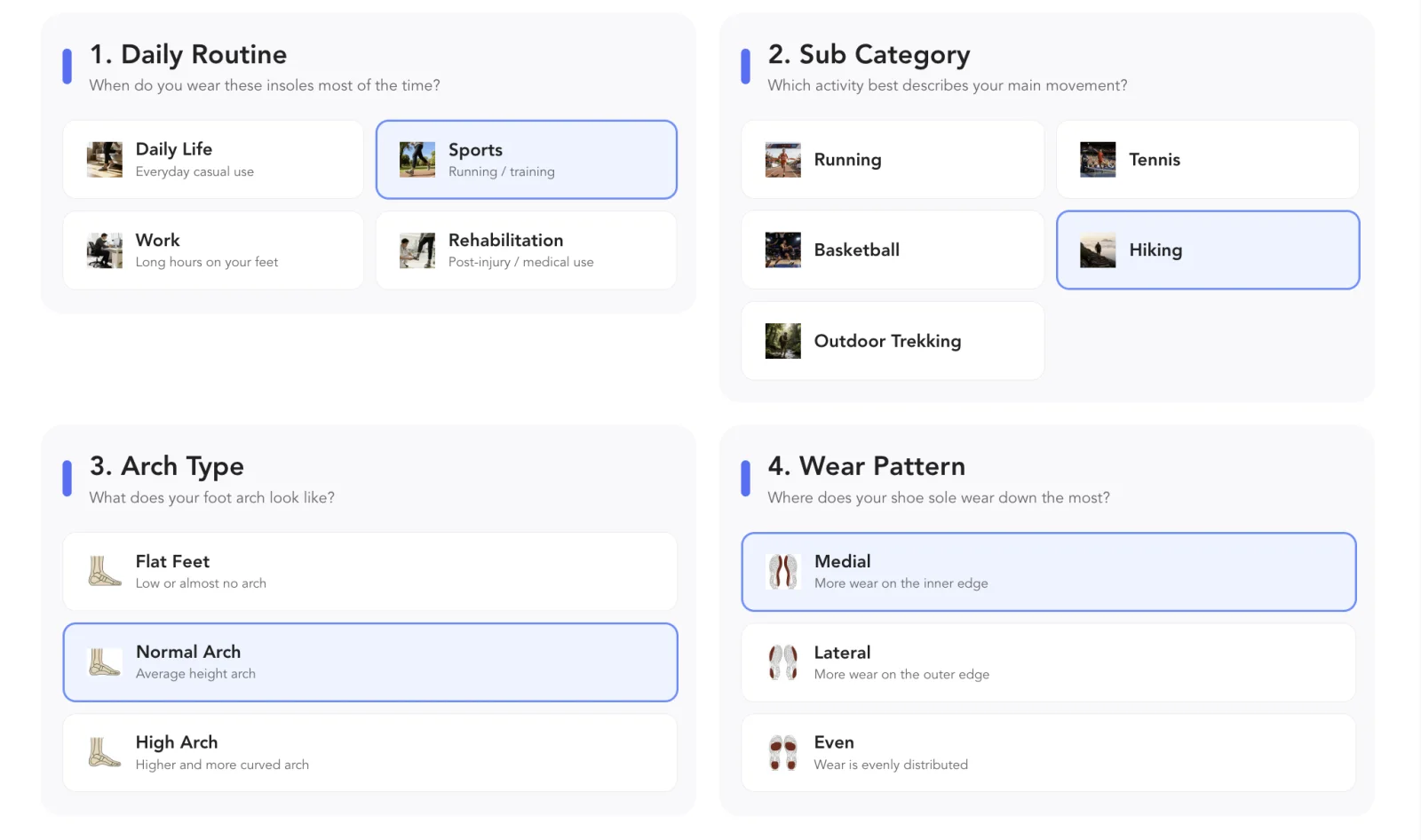
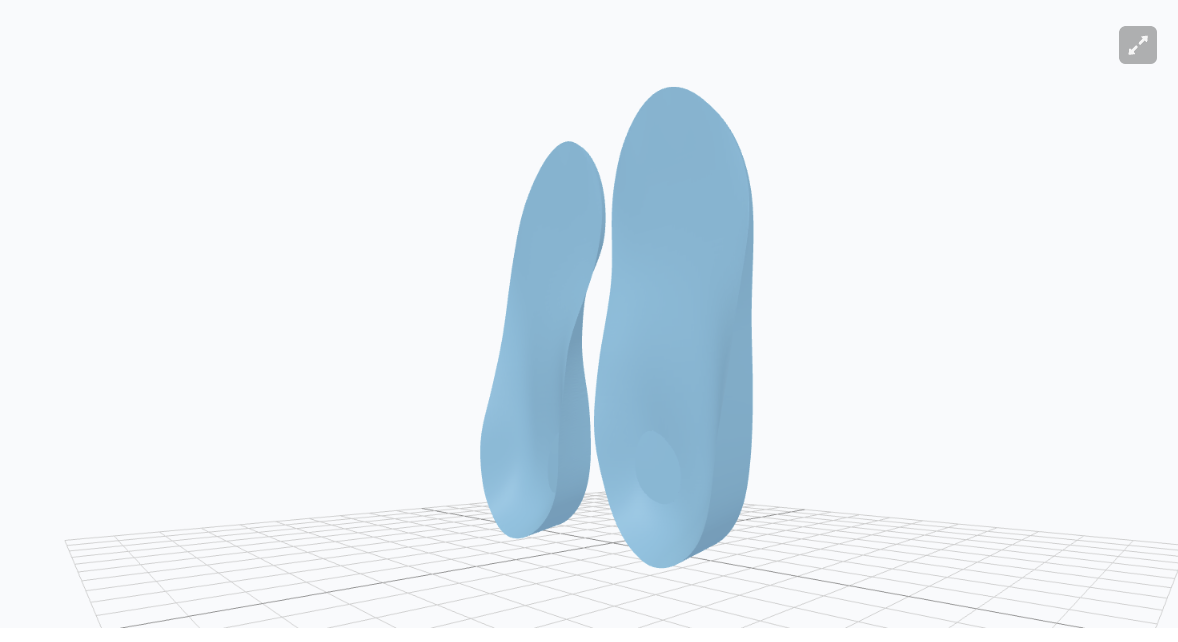
Ergono3D is an AI-guided, parametric 3D printed custom insole design platform. For hiking, the levers that matter are:
- Arch height and length — full-length support matched to your foot, set to carry through long days.
- Heel cup depth — deeper for stability on uneven ground and to control the foot on descents.
- Cushioned zones and met pad — at the heel and forefoot for descent impact, with a met pad if the forefoot takes a beating on downhills.
- Durable, firm TPU and thickness — a firmer durometer and adequate structure so the insole keeps its shape under mileage and pack load, sized to fit the boot.
Every control is set independently per foot, and the output is a print-ready STL. For how each parameter behaves, see understanding insole design parameters. The durability angle is where hiking gets a specific advantage: when a pair eventually packs out, a reprint costs filament, not another $50 insole.
Day hike, backpacking, and descents — and your foot type.
The hiking demand shifts with the trip, and the right setup still starts from your foot type.
Day hikes on moderate terrain ask the least — supportive comfort and stability are usually enough. Backpacking adds pack weight and consecutive long days, which raises the priority on durable support that does not pack out mid-trip. Steep, technical descents put the emphasis on a deep heel cup and forefoot cushioning to manage the forward-loaded impact.
Underneath all of that is foot type. A flat, overpronating hiker needs firm medial support and a deep heel cup so the arch does not collapse under hours of load — see custom insoles for flat feet. A high-arched hiker needs the arch gap filled plus extra cushioning, because a rigid high foot absorbs shock poorly and feels descents more — see custom insoles for high arches. As the pillar piece argues in why one insole design does not fit every activity, match the foot first, then the activity.
Pre-made versus custom for hiking.
Pre-made hiking insoles are good and enough for many hikers. The custom case is about exact fit and cheap reprints when one wears out.
| Option | Typical cost per pair | Per-foot tuning | Replace when worn | Best fit for hikers |
|---|---|---|---|---|
| Stock / factory boot insole | Included | No | Packs out fast | Almost nobody on long trails — upgrade it |
| Pre-made hiking insole (Superfeet Hike, Sidas, Currex) | $40–$60 | No (arch bucket) | Buy another | Many hikers; neutral feet; first upgrade |
| Ergono3D custom 3D printed insole | Under $10 (TPU filament at home)* | Yes (per foot, parametric) | Reprint from the same design | Off-bucket arches, asymmetry, reprinting when packed out |
| Clinical / custom orthotic | $300–$600 | Yes (clinician-led) | Return visit | Pain, diagnosed conditions, clinician-prescribed care |
*The under-$10 figure is the TPU filament for one pair printed at home, depending on size, infill, TPU price, and settings. It excludes printer cost, failed prints, electricity, top covers, labor, and Ergono3D design or export credits. Pre-made and clinical pricing vary by brand and region.
For hikers, the durability-and-reprint angle is the strongest custom argument. Every insole packs out eventually; with a fixed retail pair that means buying another, and with a parametric design it means reprinting the same dialed-in shape for the cost of filament. For the general worth-it case, see are custom insoles worth it?
How to 3D print a hiking insole.
Same loop as any Ergono3D insole, with hiking's emphasis on durable structure.
- Answer the guided survey. Foot type and arch height, any left-right difference, your typical terrain and pack weight, and where discomfort shows up.
- Tune the hiking parameters. Full-length arch support, a deep heel cup, heel and forefoot cushioning, and a durable firm structure — per foot.
- Export the STL. Ergono3D exports a print-ready file for each foot.
- Print durable. Use a firm TPU and adequate infill so the insole holds up to long mileage and pack load; print on any FDM printer that handles flexible filament.
- Hike, then iterate or reprint. Adjust support or cushioning if needed, and reprint cheaply when a pair packs out.
The full print walkthrough — slicer settings, TPU handling, finishing — is in how to make your own custom insoles at home. The same per-foot approach applies to other activities, including insoles for running and custom ski boot footbeds.
Answer a short guided survey about your feet, your terrain, and your pack. Ergono3D turns it into adjustable parameters — arch support, heel cup depth, cushioned zones, a durable structure — per foot, and exports a print-ready STL. Free preview available. For recurring pain, see a clinician.
Foot care, and when to see a clinician.
An insole is part of the picture, not all of it. A few trail realities sit outside what any insole fixes.
A good insole helps with support, stability, and fatigue — but it will not cancel out a boot that fits poorly, socks that bunch, laces that let the foot slide on descents, or a training jump that is too big too fast. Blisters, in particular, are mostly a friction-and-fit problem: a stable footbed helps by keeping the foot from sliding, but sock choice, lacing, and break-in matter just as much.
Stop treating it as a gear problem and see a clinician if you have:
- Foot, heel, or lower-limb pain that is persistent or getting worse
- Blisters that keep recurring in the same spot despite better fit and socks
- Repeated black toenails after descents (often a boot-fit or downhill-control issue)
- Numbness, tingling, or swelling that does not settle with rest
Those can point to fit, alignment, or other issues that an insole alone will not resolve. An insole is a comfort and support product, not a treatment, and should not delay care for problems that keep coming back. For heel pain specifically, see insoles for plantar fasciitis.
FAQs about insoles for hiking.
Do hiking boots need insoles, and are they worth it?
Most hiking boots ship with thin factory insoles built for general comfort, and those compress quickly and offer limited arch support and shock absorption. For many hikers, replacing them with a supportive insole is a worthwhile upgrade that reduces foot fatigue on long days and steep descents. Not every hiker needs one, but if your feet ache on the back half of a hike or your boots feel unstable on uneven ground, a better insole is one of the cheapest improvements you can make.
What makes a good hiking insole?
Four things: full-length structured arch support to fight fatigue over long hours, a deep heel cup to stay stable on uneven terrain and control the foot on descents, cushioning at the heel and forefoot to absorb downhill impact, and durability so it does not pack out in a few trips the way thin foam does. The balance leans toward support and durability rather than soft, cloud-like cushioning that collapses under a loaded pack.
Do I need custom hiking insoles, or are pre-made enough?
Pre-made hiking insoles from brands like Superfeet, Sidas, or Currex are a solid upgrade and enough for many hikers. Custom becomes worth considering when pre-made arch heights keep missing your foot, your two feet differ noticeably, or you want to reprint a fresh pair cheaply once one packs out. A custom 3D-printed insole tunes support and durability per foot rather than picking the closest size bucket.
Do flat feet and high arches need different hiking insoles?
Yes. A flat, overpronating foot wants firm medial support and a deep heel cup so it does not collapse under hours of load. A high-arched foot wants the arch gap filled plus extra cushioning because it absorbs shock poorly — which matters on long descents. Match the insole to your foot type first, then to the hiking demands of duration, terrain, and pack weight.
How does Ergono3D make a custom hiking insole?
Ergono3D is a custom insole design workflow. The hiker answers guided questions about foot type, arch height, terrain, and pack weight; Ergono3D turns those into parametric controls — arch support, heel cup depth, cushioned zones, a durable firm structure, and thickness — set per foot, and exports a print-ready STL. The hiker prints it durable, hikes on it, and can reprint cheaply when a pair packs out.
When should I see a clinician about hiking foot problems?
See a clinician for foot pain that is persistent or worsening, recurring blisters that do not resolve with better fit, repeated black toenails after descents, or any numbness, tingling, or swelling. Those can point to fit, alignment, or other issues that an insole alone will not fix. An insole is a comfort and support product, not a treatment, and should not delay care for problems that keep coming back.
Related: insoles for running · custom insoles for flat feet · why one insole does not fit every activity.