
TL;DR
Custom insoles for flat feet are not a size pick. Flat feet and overpronation need medial support tuned to the foot — the levers that matter are medial arch height, arch length, medial posting and skive, heel cup depth, and a firm enough TPU that the support does not collapse under load. Pre-made flat-feet insoles set these to a generic mid-value; Ergono3D turns guided inputs into a parametric design and exports a print-ready STL per foot, so the left and right insole can differ and the design can be iterated after real wear. Insoles support flat feet — they do not cure them — and persistent pain belongs with a clinician.
Key takeaways
- Flat feet cannot be permanently "fixed" by an insole. Insoles support and redistribute load; they are not a cure.
- The flat-foot priority is firm medial support that holds shape — a deep heel cup and structure under the arch, not soft uniform cushioning.
- Pre-made flat-feet insoles are templates; they cannot tune arch height, posting, or heel cup per foot, and overpronation is often asymmetric.
- Ergono3D is on the custom side: guided survey → parametric controls per foot → print-ready TPU STL → wear → re-parameterise → reprint.
- See a clinician for persistent or severe pain, a recently collapsed arch, diabetes or neuropathy — possible posterior tibial tendon issues need evaluation.
Searches for custom insoles for flat feet usually come from people who have already tried something off the shelf and still feel the arch giving way, the ankle rolling in, or the familiar end-of-day ache. Flat feet — fallen arches — are common and often painless, but when they do cause discomfort, the instinct is to buy "a flat-foot insole." The problem is that a flat foot is not a single shape, and the two feet of one person are frequently not the same. This guide explains what flat feet actually need from an insole, where a template stops being enough, and how a parametric custom workflow like Ergono3D approaches the problem per foot.
What flat feet actually need from an insole.
Before any product, the design question is mechanical: a flattened medial arch lets the foot roll inward under load. Support has to meet that, in the right place, without collapsing.
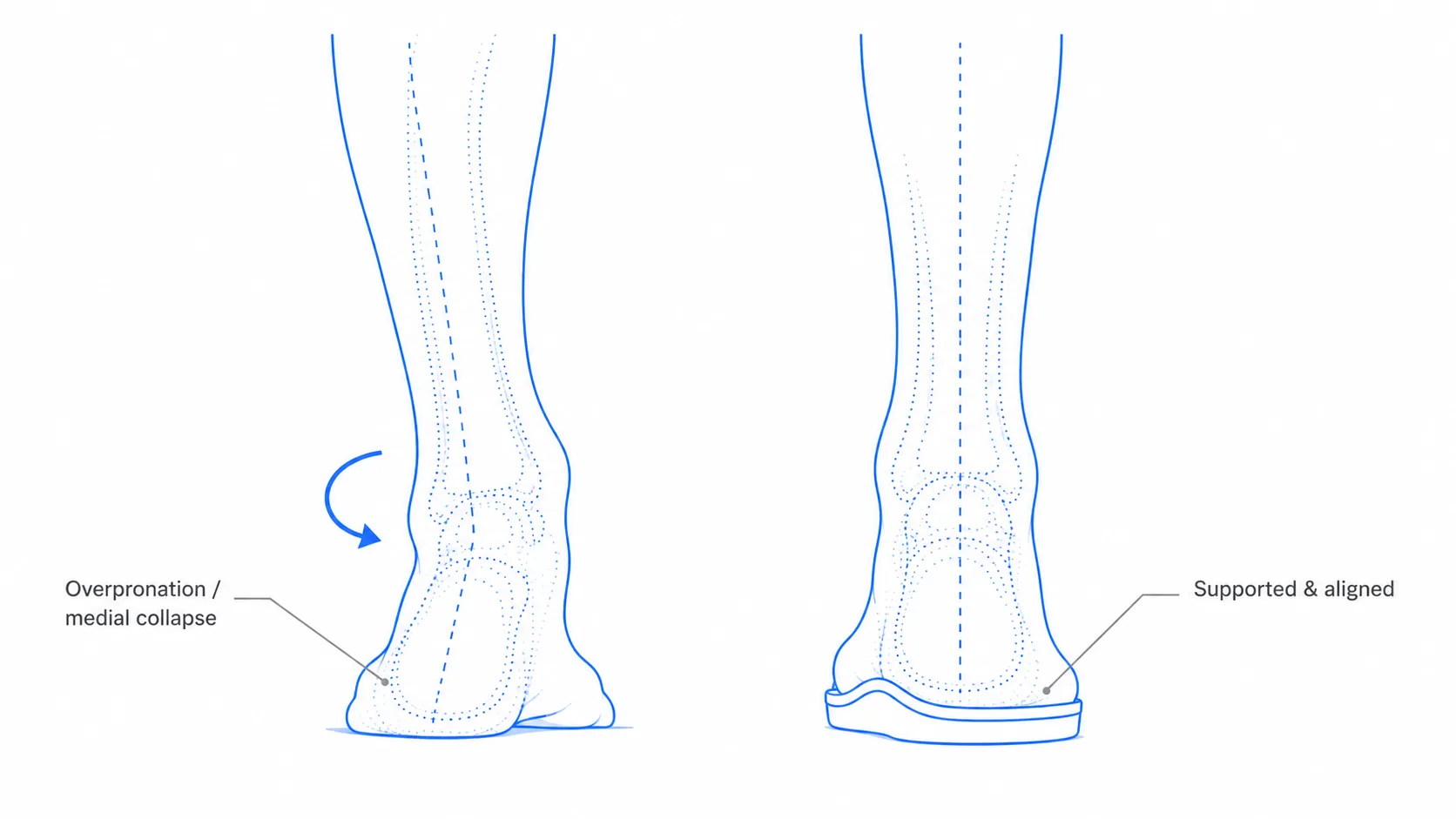
Flatfeet is a condition where the arch flattens so the sole sits closer to the ground, often allowing the whole sole to touch the floor on standing. It is common and, per the Mayo Clinic, frequently painless. When it does cause symptoms, the mechanical pattern is usually overpronation: the foot and ankle roll inward, the medial arch drops further under load, and strain can travel up to the arch, shin, knee, and back.
That tells you what a flat-foot insole has to do. It is not "more cushioning." Very soft, uniform foam compresses under exactly the load the arch needs help carrying, so the foot feels padded but still collapses. The useful combination is the opposite: a firm structure under the arch, a deep heel cup to center and stabilise the rearfoot, and a medial bias so support concentrates where the foot rolls in. Get those right and the insole holds the arch the foot already has, rather than trying to rebuild one.
A second fact drives the case for custom: overpronation is frequently asymmetric. One arch often drops more than the other, and the two feet can differ in length and width. A product that puts the same shape in both shoes can only ever be right for one side at best.
Where pre-made flat-feet insoles run out.
Off-the-shelf flat-foot insoles are well made for what they are — templates. The honest question is what a template cannot reach.
Pre-made flat-feet insoles from brands such as PowerStep, Superfeet, Tread Labs, Dr. Scholl's, and Aetrex sort feet into a few buckets — usually a shoe size and a low / medium arch label — and use a fixed shell, a generic heel cup, and one material profile per SKU. For someone with mild symptoms, roughly symmetric feet, and a general comfort goal, that is often a sensible and inexpensive first step. It is not the right starting point to dismiss.
It runs out of reach in predictable places for flat feet specifically:
- It cannot fine-tune medial arch height to the wearer's actual arch — only step it up or down by category.
- It cannot move the arch peak forward or back, so support can land in the wrong place even at the right height.
- It cannot handle left-right asymmetry — and overpronation is commonly worse on one side.
- It cannot set medial posting or heel skive per foot to address how each side rolls in.
- It cannot tune TPU stiffness to body weight and activity, so it may be too soft to hold a heavier or more active wearer's arch.
- It cannot be iterated — if the first pair is close but not right, the next move is another SKU, not an adjustment.
This is the gap behind searches like customized insoles for flat foot and custom inserts for flat feet: the wearer has discovered that "the closest template" is not the same as "designed for this foot." For the broader argument, see beyond the foam insert and why custom insoles matter: a look at the science.
The custom design levers for flat feet.
Custom is not a foot-shaped outline. It is a set of parameters you can tune. For flat feet, these are the ones that change how the support behaves.
Medial arch height and arch length
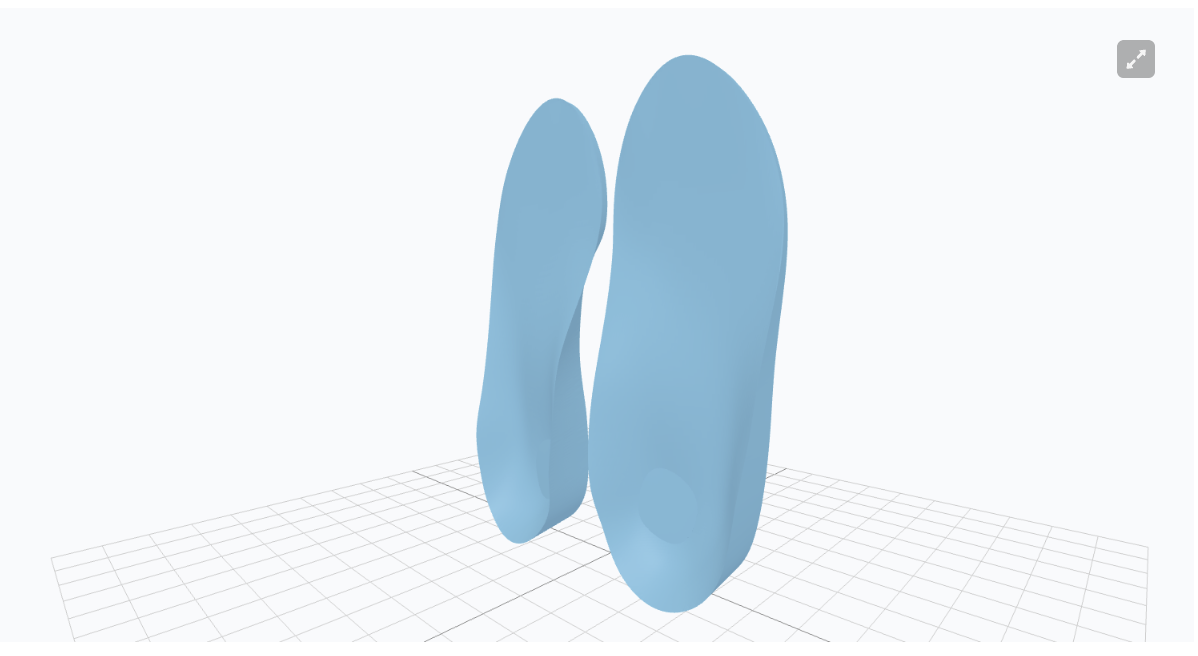
The core lever. Height sets how much the medial contour rises; arch length sets where the peak sits and how support transitions toward heel and forefoot. For flat feet the goal is support matched to the wearer's arch and aligned to where it drops — not the tallest possible arch, which a flexible flat foot may simply override and a rigid one may find harsh. Tuning height and peak position independently is what lets the support meet the foot.
Medial flange and heel cup depth
A taller medial flange adds a wall on the inner edge that resists the inward roll and improves midfoot containment. A deeper heel cup centers the heel and reduces side-to-side wander, which steadies an overpronating rearfoot. Both can be set higher on the side that pronates more.
Medial posting and heel skive
Posting uses wedged geometry, and a skive is a small angled relief in the medial heel area; both bias how load enters under the heel and arch. For flat feet a conservative medial post or skive can ease the inward roll. "Conservative" is the operative word — these are small adjustments, and in clinical practice posting decisions are made in relation to gait and assessment, which a self-guided design workflow does not replace.
TPU hardness and thickness
Material is part of the design for flat feet. A shell that is too soft collapses under the very load the arch needs support for. A firmer TPU — often 90A or 95A — holds shape under standing and walking, while thickness has to respect the shoe's internal volume. Keeping hardness and thickness inside the parameter set means the printed insole behaves the way the design intended. For a full parameter walkthrough, see understanding insole design parameters.
Flat feet and running, standing, and sport.
The most-searched flat-foot scenario is activity — running especially. The design priorities shift with how the foot is loaded.
Flat feet and overpronation are common among runners and are not automatically a problem — plenty of people run comfortably with flat feet. Where insoles for flat feet running help, it is usually by giving the medial arch firm support and the heel a deep, stable cup so repetitive loading does not fatigue the arch as quickly. Running adds two demands over standing: higher peak forces, and many repetitions, so the shell has to be firm enough not to pack down. A firmer TPU and a supportive medial flange usually matter more here than soft cushioning.
Court and field sport — where basketball arch support and similar searches come from — add lateral cuts and landings on top of the inward-roll tendency, so heel cup depth and rearfoot stability carry more of the load. All-day standing is the opposite end: lower peak force but long duration, where arch fatigue and a foot that "spreads" by evening are the issue, and firm but not harsh support tends to win.
The common thread is that one flat-foot insole does not serve every use equally. That is the whole argument for tuning the design to the activity — covered in depth in why one insole design does not fit every activity. With a parametric workflow, "a running pair" and "a standing pair" are two parameter sets from the same foot profile, not two separate shopping trips. None of this is a treatment claim: if activity reliably produces pain, that is a reason to see a clinician, not to add more arch.
Pre-made, Ergono3D custom, or clinical custom.
The real decision for flat feet is pre-made versus custom — and within custom, whether the case is a fit problem or a medical one.
| Option | Typical cost per pair | Per-foot tuning | Iteration | Best fit for flat feet |
|---|---|---|---|---|
| Pre-made flat-feet insole (PowerStep, Superfeet, Tread Labs, etc.) | $20–$80 | No (size + arch bucket) | Buy another SKU | Mild, non-complex symptoms; roughly symmetric feet; first trial |
| Ergono3D custom 3D printed insole | Under $10 (TPU filament at home)* | Yes (per foot, parametric) | Low — re-parameterise and reprint | Asymmetric pronation, atypical arch, activity demands, iterate after wear |
| Traditional clinical custom orthotic | $300–$600 | Yes (clinician-led) | Higher — follow-up visit | Pain, PTTD, diabetes risk, rigid flat foot, clinician-prescribed care |
*The under-$10 figure is the TPU filament used for one pair when printing at home, depending on size, infill, TPU price, and print settings. It does not include printer cost, failed prints, electricity, top covers, labor, or Ergono3D design or export credits. Clinical pricing varies by country, clinic, and insurance.
Ergono3D is not a middle ground between pre-made and clinical orthotics — it belongs on the custom side. The difference is the workflow: guided inputs, parametric design, and TPU 3D printing make custom geometry faster, lower-cost, and easier to iterate than a plaster-cast lab order. For flat feet, the iteration loop matters more than usual, because the right amount of medial support is often found by trying a version, wearing it, and adjusting — not guessed perfectly the first time. For the cost-and-worth breakdown, see are custom insoles worth it?
How to 3D print custom insoles for flat feet.
The custom path for flat feet is a short loop: generate, print, wear, refine. Here it is end to end.
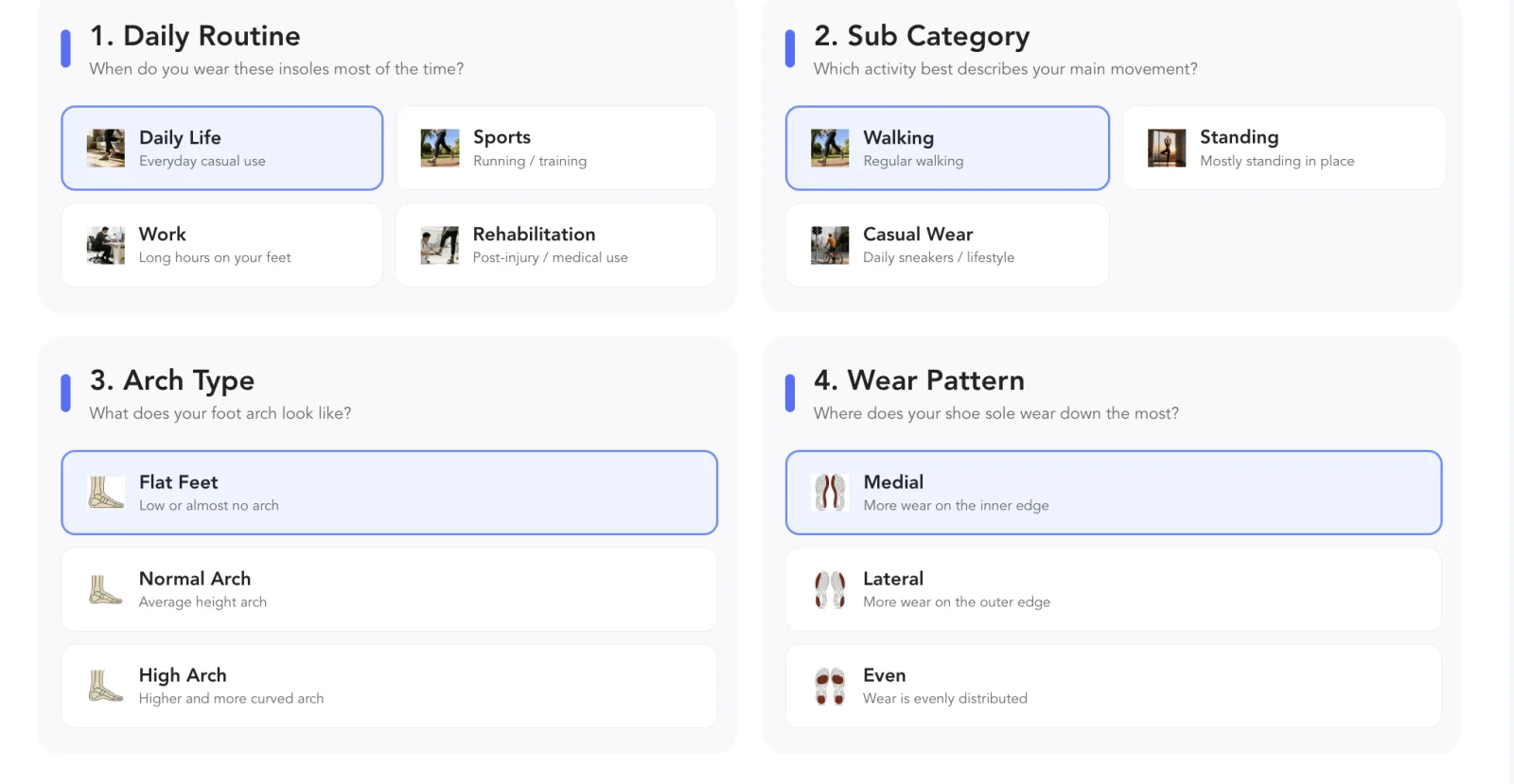
- Answer the guided survey. Foot length and width, arch type, any left-right difference, typical activity, and what feels wrong now — arch fatigue, inward roll, heel wander.
- Tune the flat-feet parameters. Medial arch height and peak position, medial flange, heel cup depth, a conservative medial post or skive, and TPU hardness — set per foot.
- Export the STL. Ergono3D exports a print-ready file for each foot.
- Print in a firm TPU. A firmer TPU such as 90A or 95A holds the arch under load; print on any FDM printer that handles flexible filament.
- Wear, then iterate. Use them in real shoes for real days, then return to nudge arch peak, heel cup, posting, or hardness and reprint.
The full step-by-step print walkthrough — slicer settings, TPU handling, and finishing — lives in how to make your own custom insoles at home. For how the digital workflow replaces casting and milling, see digital insole manufacturing.
Answer a short guided survey about your feet and how you move. Ergono3D turns it into adjustable parameters — medial arch height, posting, heel cup depth, TPU hardness — per foot, and exports a print-ready STL. Free preview available. Explore custom insole geometry; for persistent pain, see a clinician.
When to see a clinician about flat feet.
This is the most important section. Insole design is a supportive product step — not a diagnosis, and not a substitute for care when the signs point to a medical problem.
Insoles support flat feet; they do not cure them. For most adults the arch shape is permanent, and per the Mayo Clinic, surgery is reserved for severe cases that fail conservative care. A flat foot that has recently collapsed or worsened is different from a lifelong flat foot: the American Academy of Orthopaedic Surgeons notes that adult-acquired flatfoot often begins with dysfunction of the posterior tibial tendon, and that most cases are managed without surgery using orthotics and bracing under clinical guidance.
Stop product experimentation and see a clinician if any of these apply:
- Flat-foot pain that is persistent, severe, or limits normal walking
- An arch that has recently dropped or visibly worsened on one side
- Swelling, warmth, or tenderness along the inner ankle or arch
- Pain that radiates, or numbness and tingling
- Diabetes, peripheral neuropathy, or poor circulation
- A recent injury, or pain that is rapidly getting worse
The right clinician may be a podiatrist, orthotist, physiotherapist, or physician. For plantar-fascia-related heel pain that often accompanies flat feet, see custom insoles for plantar fasciitis, which keeps the same conservative boundary.
FAQs about custom insoles for flat feet.
Can insoles fix or cure flat feet?
No. Flat feet cannot be permanently restructured by an insole — for most adults the arch shape is fixed, and surgery is reserved for severe cases that fail conservative care. What insoles can do is support the arch the foot already has, redistribute pressure, and reduce strain, which many people find makes standing and walking more comfortable. Insoles are supportive products, not a cure, and not a substitute for clinical care.
What insole features matter most for flat feet?
The priority is support that does not collapse under load: a firm structure under the arch, a deep heel cup, and a medial bias rather than soft, uniform cushioning. In design terms that means medial arch height matched to the foot, a supportive medial flange, conservative medial posting, adequate heel cup depth, and a firmer TPU such as 90A or 95A so the shell holds its shape.
Are custom insoles worth it for flat feet versus pre-made?
Pre-made flat-feet insoles from brands like PowerStep, Superfeet, or Tread Labs are a reasonable first step for many people with mild, non-complex symptoms and roughly symmetric feet. Custom becomes worth considering when pre-made keeps missing the arch, the two feet differ noticeably, the arch is unusually low, or activity demands are high. Persistent, severe, or atypical pain should be evaluated by a clinician regardless of insole choice.
How does Ergono3D make a custom insole for flat feet?
Ergono3D is a custom insole design workflow, not a diagnosis or treatment tool. The wearer answers guided questions about foot shape, use scenarios, and comfort goals; Ergono3D turns those into parametric design controls — medial arch height, posting, heel cup depth, flange, TPU hardness — set independently per foot, and exports a print-ready STL for TPU 3D printing. The wearer prints, wears, and can return to re-parameterise and reprint.
Are flat feet a problem for running?
Flat feet and overpronation are common among runners and are not automatically a problem — many people run comfortably with flat feet. Supportive insoles with firm medial support and a deep heel cup can help some runners manage arch fatigue and pressure during repetitive loading, but individual response varies. Persistent pain, or pain that changes the way you run, is a reason to see a clinician rather than to keep swapping insoles.
When should I see a clinician about flat feet?
See a clinician if flat-foot pain is persistent or severe, if one arch has recently collapsed or worsened, if there is swelling along the inner ankle, if you have diabetes, neuropathy, or poor circulation, or if pain limits normal walking. A sudden change in arch shape can signal posterior tibial tendon dysfunction and should be evaluated. Insole design is a supportive product step, not a replacement for diagnosis.
Related: custom arch support insoles · are custom insoles worth it? · why one insole does not fit every activity.