TL;DR
Running loads each foot thousands of times a mile, so a running insole's job is to support the arch, cushion the high-impact heel and forefoot, and smooth the heel-to-toe roll — matched to your foot type. A neutral foot, a flat (overpronating) foot, and a high-arched (supinating) foot need close to different setups, so foot type matters more than buying the most-cushioned or highest-arch model. A custom 3D-printed insole tunes arch, heel cup, and forefoot cushioning per foot and is cheap to iterate after real mileage. Insoles can improve comfort and fit; the evidence that they prevent injury is mixed, so treat pain as a reason to see a clinician, not to add more insole.
Key takeaways
- Running = thousands of repetitive impacts per mile; the insole job is support + cushioning + a smooth heel-to-toe roll.
- Foot type drives the setup: neutral, flat/overpronation (firm medial support), high/supination (fill the gap + cushion). Close to opposite needs.
- Custom levers: arch support, heel cup, forefoot cushioning, met pad, TPU — per foot, and easy to iterate after mileage.
- Ergono3D = parametric, per-foot, iterable STL at roughly material cost (<$10) versus $40–$60 premium running insoles.
- Insoles can help comfort and fit; injury-prevention evidence is mixed. Pain is a reason to see a clinician, not to add more insole.
Searches for insoles for running and best running insoles usually come down to one real question: what should a running insole actually do, and which one is right for your feet? The shelves are full of models that all claim to help, and the honest answer is that the right choice depends mostly on your foot type and what you feel when you run — not on which box promises the most. This guide covers what running does to the foot, what a running insole needs, how that changes by foot type, and where a custom 3D-printed insole fits.
What running does to the foot.
Running is not just walking faster. The loading pattern is different enough that it changes what an insole has to do.
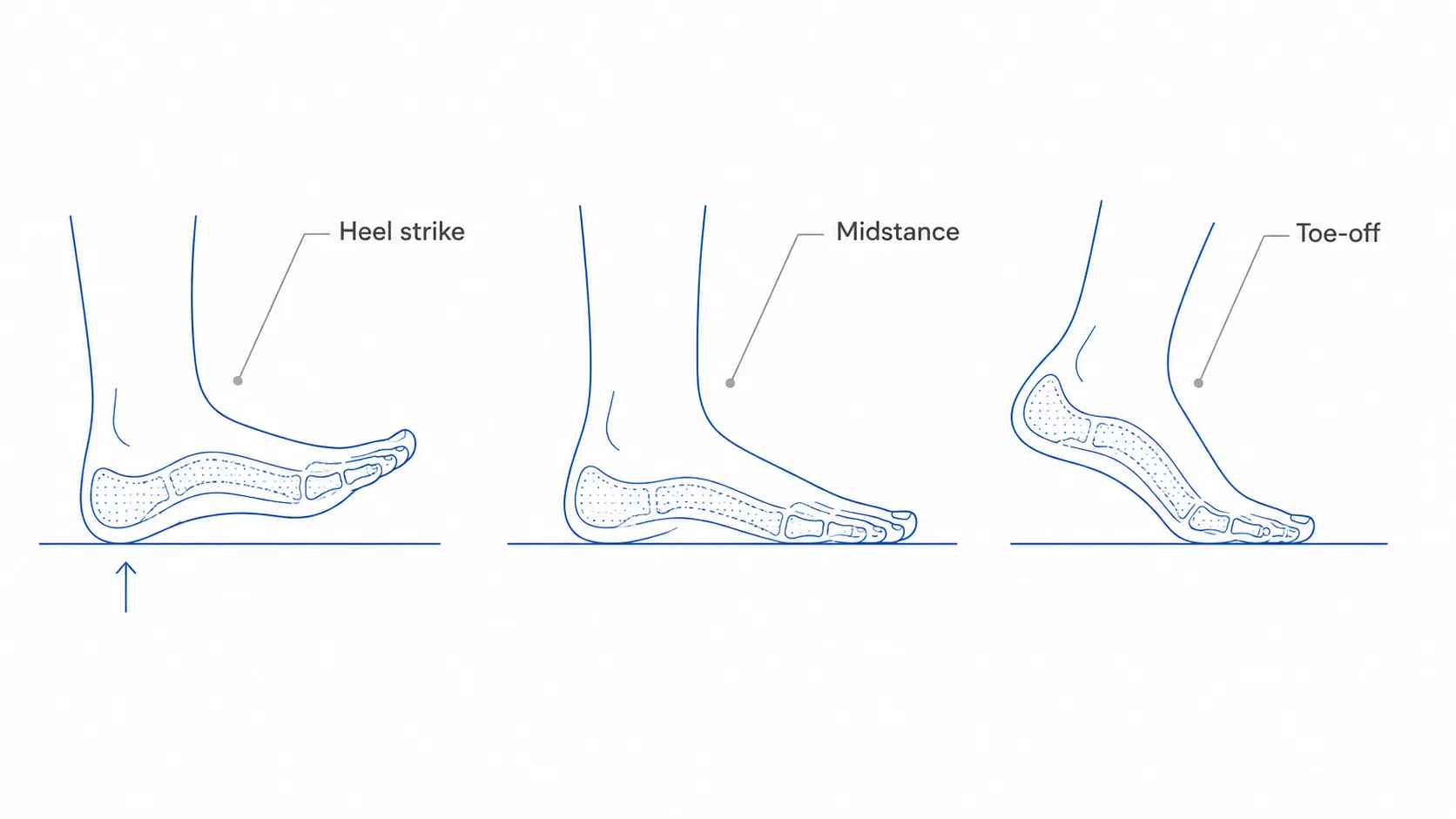
A runner takes on the order of a thousand-plus steps per mile, and each footstrike lands with more force than a walking step. That is the defining fact: running is repetitive vertical impact, over and over. The foot has to absorb that impact on landing and then turn into a rigid lever to push off — twice the job, every stride.
Through each stride the foot rolls heel-to-toe: it contacts (often at the heel or midfoot), flattens through midstance as it absorbs load, then pushes off through the ball of the foot and toes. How much the foot rolls inward as it flattens — pronation — sits on a spectrum, and where a runner falls on it changes what their insole should do. None of this is a flaw to be fixed; it is normal mechanics that an insole can either support well or get in the way of.
Two consequences follow. First, cushioning matters in a way it does not for a stiff ski boot — the heel and forefoot take real impact. Second, support has to match the foot, because the same arch shape that is fine at walking pace is loaded much harder when running.
What a running insole actually needs.
Across foot types, a good running insole does three things at once. A bigger arch bump alone is not it.
A running insole that works tends to combine:
- Arch support matched to the foot — enough to keep the foot aligned through midstance, not so much that it jams a rigid arch or props up a foot that does not need it.
- Cushioning where impact lands — under the heel at contact and under the ball at push-off, to take the edge off repetitive load.
- A deep enough heel cup — to center and stabilize the heel at footstrike, which steadies everything above it.
- A smooth heel-to-toe transition — the insole should work with the roll through the stride, not fight it with a hard step or edge.
The mistake the shelf encourages is treating "more" as better — the highest arch, the softest foam. A high arch bump can be wrong for a flat foot that needs firm support and wrong for a rigid high arch that needs contact, not lift. Soft foam that collapses defeats the support a runner's arch needs under load. The useful insole is the one matched to the foot, which is why the next section is organized by foot type.
Running insoles by foot type.
This is the part that actually decides what to buy or design. Neutral, flat, and high-arched feet want close to different things.
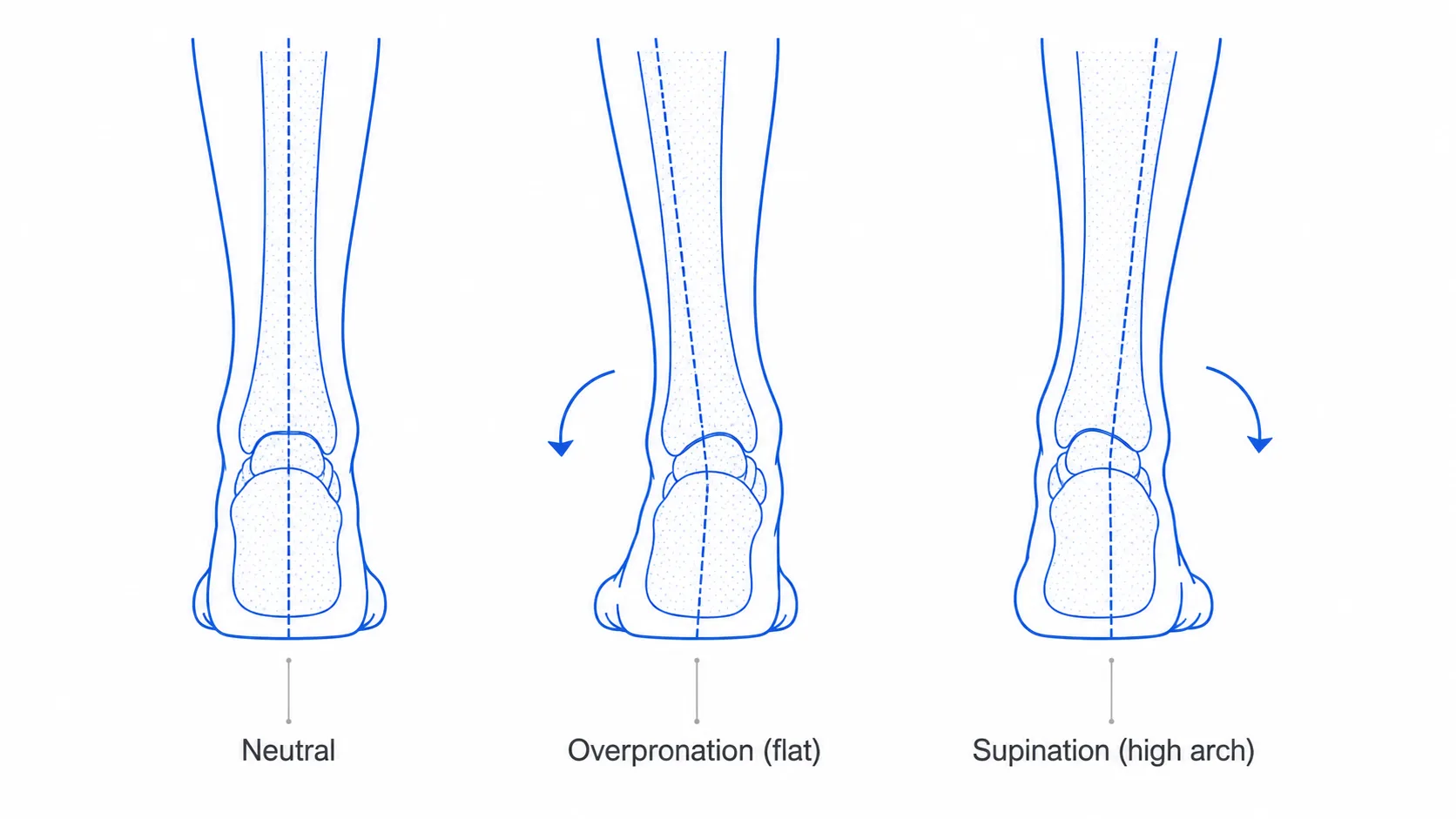
Neutral foot
A neutral runner's arch sits in a middle range and the foot rolls inward a moderate, normal amount. The priority is balanced support and cushioning — enough arch contact to stay aligned, good heel and forefoot cushioning for the repetitive impact, and a stable heel cup. Custom matters here less for correction and more for exact fit and the ability to tune cushioning to mileage and surface.
Flat foot / overpronation
A flat, overpronating runner's arch collapses inward under load, which can travel up the chain. The priority flips toward firm medial support that does not give way, plus a deep heel cup to limit the inward roll. The full breakdown of those parameters is in custom insoles for flat feet, which covers the running scenario specifically.
High arch / supination
A high-arched, supinating runner has a rigid midfoot that barely contacts the ground, concentrates pressure on the heel and ball, absorbs shock poorly, and tends to roll outward. The priority is almost the opposite of the flat foot: fill the arch gap for contact and add cushioning, rather than firm anti-collapse support. See custom insoles for high arches for the detail.
The custom design levers for running.
A custom running insole is custom because these are tuned to your foot and your running, not picked from a size bucket.
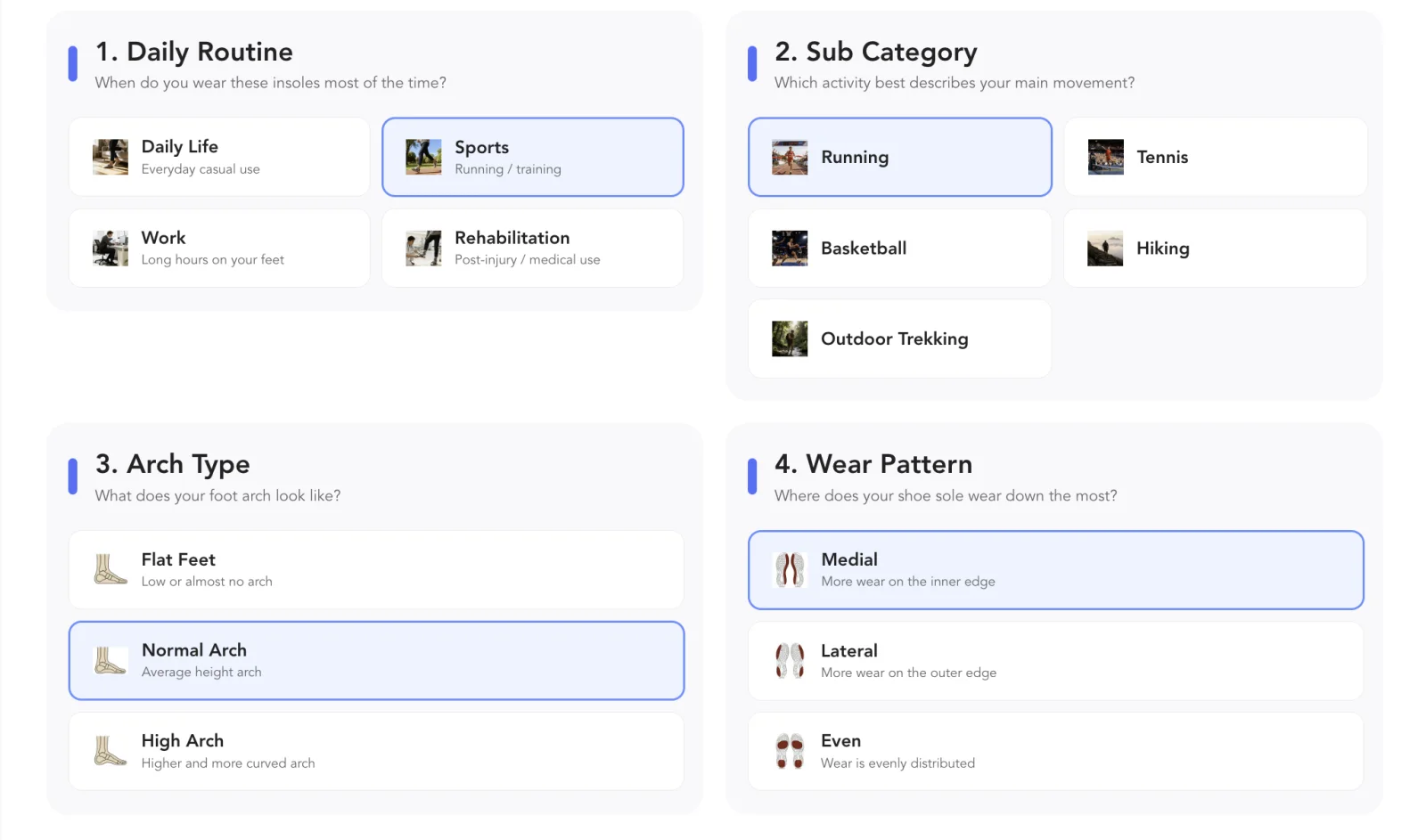
Ergono3D is an AI-guided, parametric 3D printed custom insole design platform. For running, the levers that matter are:
- Arch support height and length — set to your foot type and aligned to your actual arch, the single most important running lever.
- Heel cup depth — to center and stabilize the heel at footstrike.
- Forefoot cushioning and met pad — to manage push-off load and the forefoot pressure runners often feel on longer efforts.
- TPU hardness and thickness — balancing support through the arch with cushioning under the heel and ball, while still fitting the running shoe.
Every control is set independently for the left and right foot, and the output is a print-ready STL. For how each parameter behaves, see understanding insole design parameters. The advantage over a fixed retail insole is iteration: run a real training block, notice the arch sits a touch high or the forefoot wants more padding, adjust a parameter, and reprint.
Pre-made versus custom for running.
Pre-made running insoles are good and, for many runners, enough. The question is when matching the foot exactly — and iterating — is worth it.
| Option | Typical cost per pair | Per-foot tuning | Iteration | Best fit for runners |
|---|---|---|---|---|
| Pre-made running insole (Currex, Superfeet, PowerStep) | $40–$60 | No (arch bucket) | Buy another model | Neutral feet; runners close to a bucket; first upgrade |
| Ergono3D custom 3D printed insole | Under $10 (TPU filament at home)* | Yes (per foot, parametric) | Low — re-parameterise and reprint | Off-bucket arches, asymmetry, tuning after real mileage |
| Clinical / custom orthotic | $300–$600 | Yes (clinician-led) | Higher — follow-up visit | Pain, diagnosed conditions, clinician-prescribed care |
*The under-$10 figure is the TPU filament for one pair printed at home, depending on size, infill, TPU price, and settings. It excludes printer cost, failed prints, electricity, top covers, labor, and Ergono3D design or export credits. Clinical pricing varies by country, clinic, and insurance.
For runners, iteration is the strongest argument for the custom path. The right running insole is usually found over a few runs, not guessed perfectly the first time — and adjusting a parameter and reprinting is far cheaper than buying model after model. For whether custom is worth it in general, see are custom insoles worth it?
How to 3D print a running insole.
Same loop as any Ergono3D insole, with running's emphasis on balancing support and cushioning.
- Answer the guided survey. Foot type and arch height, any left-right difference, typical mileage and surface, and where discomfort shows up.
- Tune the running parameters. Arch support to your foot type, heel cup depth, forefoot cushioning, and a met pad if needed — per foot.
- Export the STL. Ergono3D exports a print-ready file for each foot.
- Print in TPU. Balance support through the arch with cushioning under the heel and forefoot; print on any FDM printer that handles flexible filament.
- Run, then iterate. Run a real block, then adjust arch, cushioning, or heel cup and reprint.
The full print walkthrough — slicer settings, TPU handling, finishing — is in how to make your own custom insoles at home. The same per-foot approach applies to other activities, including custom ski boot footbeds.
Answer a short guided survey about your feet and your running. Ergono3D turns it into adjustable parameters — arch support, heel cup depth, forefoot cushioning — per foot, and exports a print-ready STL. Free preview available. For pain that does not settle, see a clinician.
Do running insoles prevent injury?
This is where a lot of marketing overreaches, so it is worth being straight about it.
Running insoles are often sold as a way to prevent injuries — shin splints, plantar fasciitis, runner's knee. The honest position is more careful: the evidence is mixed. Studies on whether insoles or orthoses prevent running injuries have reached inconsistent conclusions, and no insole should be presented as injury prevention you can count on.
What is better supported is the more modest claim: an insole can improve in-shoe fit, distribute pressure more evenly, add arch support, and cushion impact — and many runners find that makes running more comfortable and can help them manage symptoms of issues like plantar fasciitis. "Help manage comfort" is a fair claim. "Prevents injury" is not, on current evidence.
The practical takeaway: use a running insole as a comfort and fit upgrade, matched to your foot, and do not treat it as a substitute for sensible training load, suitable shoes, and strength work. And treat pain as information. Persistent or worsening foot, heel, or lower-limb pain — or pain that changes the way you run, or comes with swelling, numbness, or tingling — is a reason to see a clinician, not to add more insole. For heel pain specifically, see insoles for plantar fasciitis, which keeps the same conservative boundary.
FAQs about insoles for running.
Do insoles for running actually help?
For many runners, yes — a good running insole gives a more customized in-shoe fit, distributes pressure more evenly, adds arch support, and cushions the heel and forefoot, which can make running more comfortable and the shoe feel more stable. What is less certain is injury prevention: the research is mixed. Treat an insole as a comfort and fit upgrade, and treat pain as a reason to see a clinician rather than to add more insole.
What kind of insole is best for running?
It depends on your foot type. A neutral foot wants balanced support and cushioning. A flat, overpronating foot wants firmer medial support that does not collapse. A high-arched, supinating foot wants the arch gap filled plus extra cushioning because it absorbs shock poorly. Across all three, a running insole should support the arch, cushion the high-impact heel and forefoot, and allow a smooth heel-to-toe roll.
Do running insoles prevent injury, shin splints, or plantar fasciitis?
The honest answer is that the evidence is mixed. Insoles can improve comfort, fit, and pressure distribution, and some runners find they help manage symptoms of issues like plantar fasciitis or shin splints. But studies on whether insoles prevent running injuries have reached inconsistent conclusions, so no insole should be sold as injury prevention. Persistent or worsening pain should be assessed by a clinician.
Do flat feet and high arches need different running insoles?
Yes. A flat, overpronating runner usually needs firm medial support and a deep heel cup to limit the inward roll. A high-arched, supinating runner needs the arch gap filled and extra cushioning because the foot absorbs shock poorly and rolls outward. They are close to opposite setups, which is why matching the insole to the foot type matters more than buying the most-cushioned or highest-arch model.
How does Ergono3D make a custom running insole?
Ergono3D is a custom insole design workflow. The runner answers guided questions about foot type, arch height, mileage, and where discomfort shows up; Ergono3D turns those into parametric controls — arch support, heel cup depth, forefoot cushioning, met pad, TPU hardness — set per foot, and exports a print-ready STL. The runner prints, runs on it, and can return to re-parameterise and reprint after real mileage.
When should I see a clinician about running foot pain?
See a clinician if foot, heel, or lower-limb pain is persistent, worsening, or changes the way you run, or if it comes with swelling, numbness, or tingling. Sharp or localized pain that does not settle with rest can signal issues like a stress fracture that need assessment. An insole is a comfort and support product, not a treatment, and should not delay care for pain that is not improving.
Related: custom insoles for flat feet · custom insoles for high arches · why one insole does not fit every activity.