01 / Collect
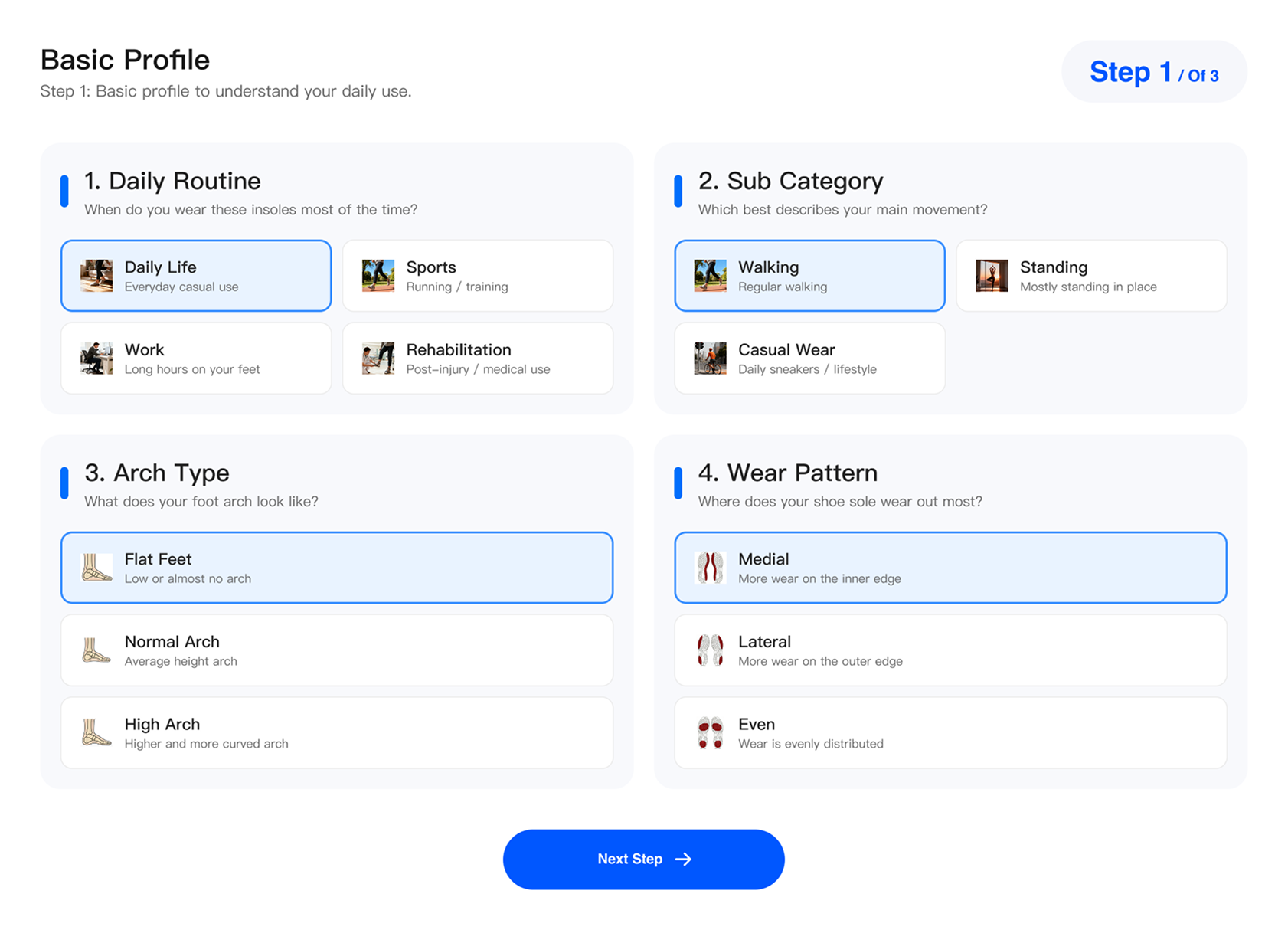
Guided patient inputs
Capture foot size, shoe type, activity, discomfort areas, support goals, and clinic notes.
Ergono3D helps podiatry, orthotic, and sports rehab clinics turn patient needs into adjustable, 3D-printable insole designs. Start with guided inputs, preview the geometry online, then export an STL for in-house printing or a local production partner.
Ergono3D helps clinics turn common patient needs — such as flat feet, high arches, heel instability, running discomfort, and long-standing fatigue — into adjustable 3D-printable insole designs.
Create adjustable insole designs for flat feet, low arches, high arches, arch fatigue, and general support needs using guided inputs and editable arch parameters.
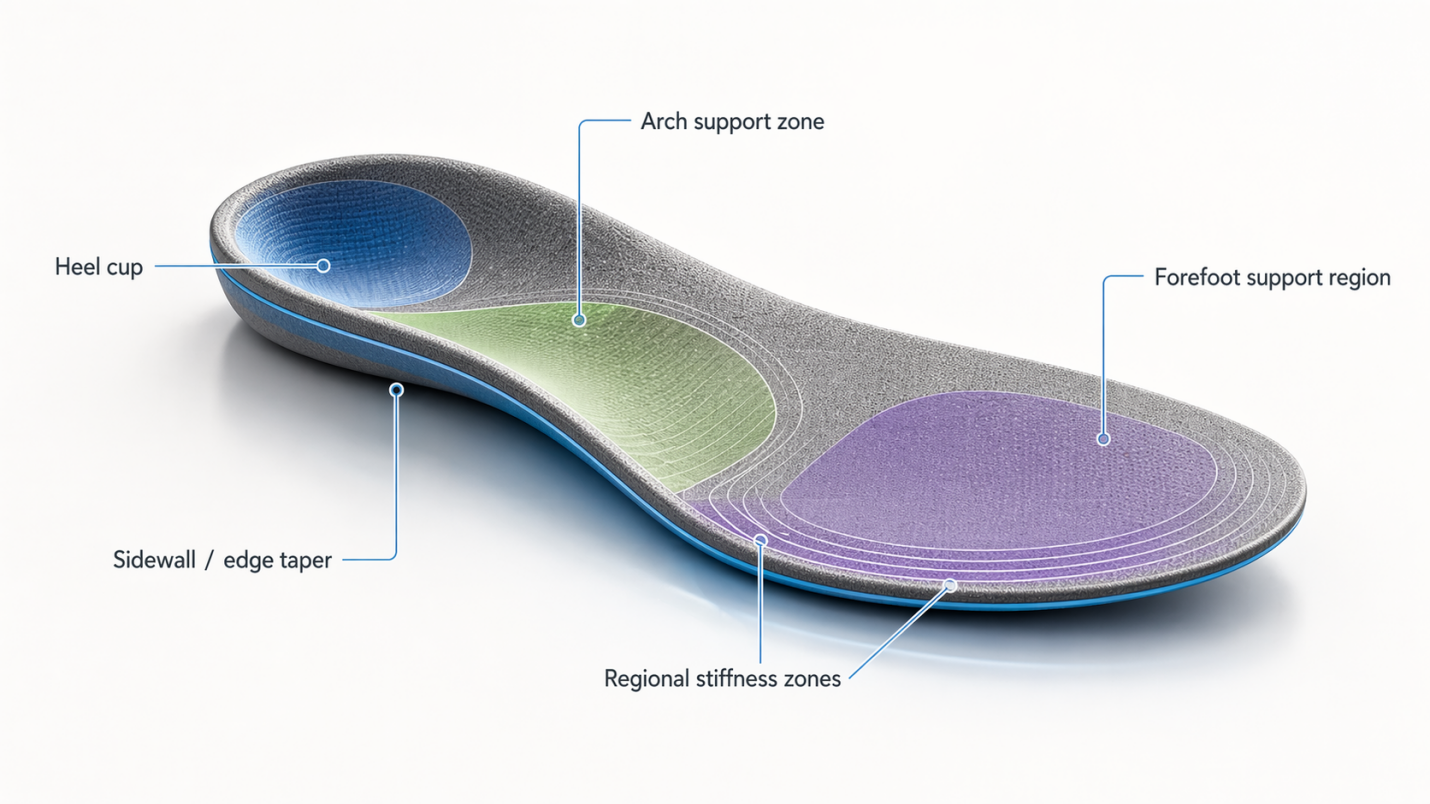
Adjust heel cup depth, rearfoot posting, forefoot posting, and support zones to help clinics explore different support strategies for common movement-control cases.
Generate activity-specific insole designs for running, tennis, basketball, gym training, long-standing work, and everyday comfort cases.
A guided, repeatable process that fits alongside existing clinical assessment — no scanner, no CAD training, and no upfront software cost.
Capture foot size, shoe type, activity, discomfort areas, support goals, and clinic notes.
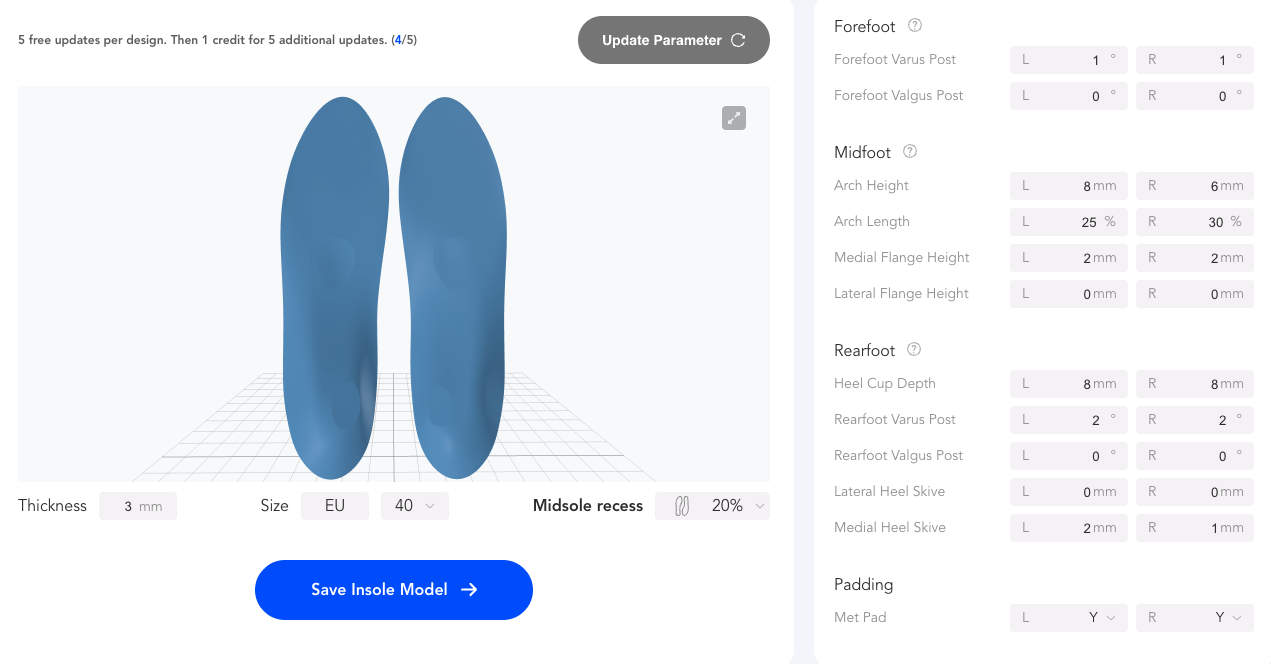
Turn named clinical parameters into an adjustable 3D insole mesh without CAD modeling.
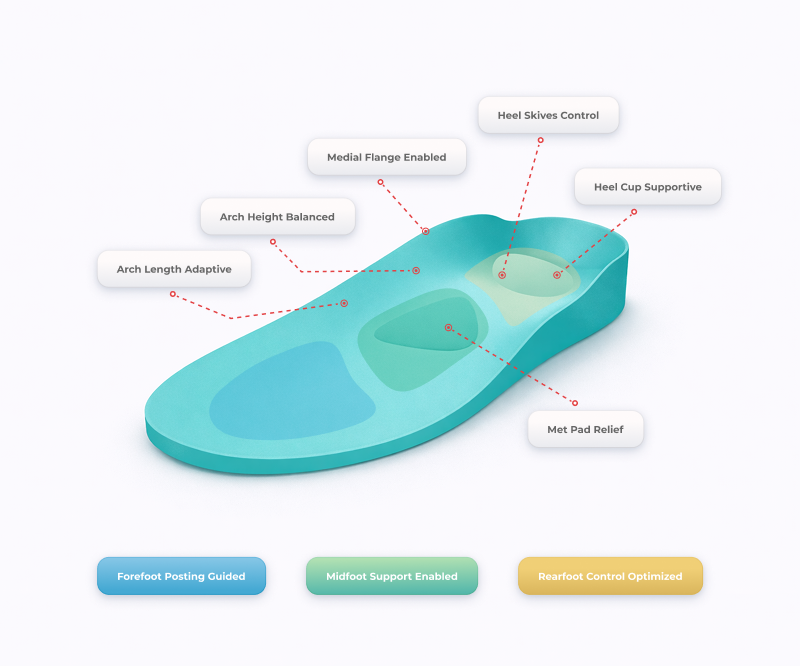
Review the geometry, make final adjustments, and export a production-ready STL file.
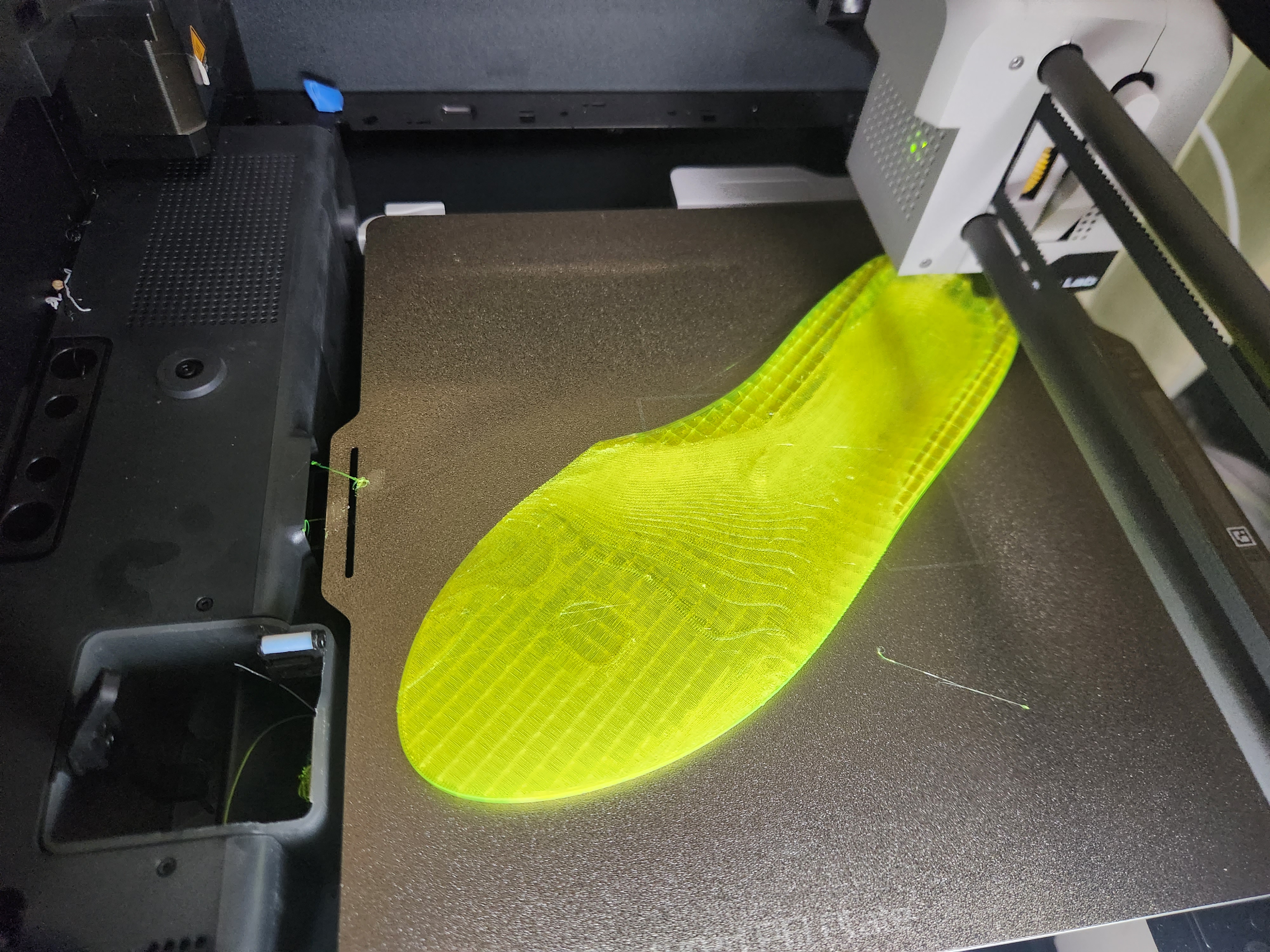
Print in-house or send the exported STL to a trusted production partner.
Foot size, shoe type, activity, discomfort areas, support goals, and clinic notes — entered through structured questions, not CAD.
Arch height, heel cup depth, thickness, stiffness zones, posting, and other design settings — controlled through named parameters and turned into a generated 3D mesh.
Review the generated insole or orthotic geometry in an interactive 3D preview, adjust if needed, then export the STL for production.
Print the exported STL in-house or through a service partner. Your team can evaluate fit, production, and workflow before scaling.
Generic CAD, external lab workflows, and static STL marketplaces each solve part of the problem and leave the clinic with the rest. Ergono3D was built for the full path — from prescription vocabulary to a print-ready TPU file the clinic can produce in-house.
| Path | What clinics still have to do | Ergono3D |
|---|---|---|
| Professional CAD or 3D modeling software | Hire or train a CAD specialist; translate a prescription into manual modeling each time; pay per-seat licenses | Parameters already named in prescription vocabulary — no manual modeling step |
| External orthotic lab | Wait days for each revision; accept whatever the lab produces; pay per pair | Adjust parameters in the same session and re-export — no lab back-and-forth |
| Static STL marketplace | One fixed file, no patient context, no parameter control, no slicer profile | Custom file per case, adjustable parameters, packaged with TPU slicer profiles |
| Closed scanner-locked platform | Buy specific hardware first; locked into one vendor's print and material chain | Start without a scanner; print in-house on Bambu / Prusa / Ultimaker or send out |
Average turnaround per case
Most digital orthotic setups bundle a CAD seat, a scanner, a design specialist, and lab fees per pair. Ergono3D removes the upfront layer so a clinic can validate the workflow first.
| Cost category | Typical clinic spend today | With Ergono3D |
|---|---|---|
| Orthotic CAD subscription | Annual seat fee per designer | Not required to start |
| Foot scanner hardware | Upfront capital purchase | Not required to start |
| CAD specialist headcount | FTE salary and training time | Guided inputs replace manual modeling |
| External lab fee per pair | Per-pair cost on every revision | Adjust parameters and re-export |
| Onboarding and setup time | Weeks before first usable design | Same-day print-ready STL |
Three pilot patterns clinics typically run before scaling.
In conversations with clinics across · Australia · Mexico · North America · Europe
Starting point: A small podiatry or foot-care clinic already sees patients with foot pain, flat feet, high arches, running discomfort, or long-standing fatigue, but does not yet offer its own custom insole design service.
With Ergono3D: The clinic can start from simple guided inputs, generate a printable STL, and produce through a local 3D printing partner. This lets the clinic test a new custom insole service before investing in a full lab, scanner, or CAD workflow.
Why it matters: The clinic can expand its service offering, keep more patient follow-up in-house, and validate whether custom 3D-printed insoles are worth scaling.
Starting point: An established orthotic clinic already provides custom orthoses or insoles, but design changes, lab communication, and revision cycles can slow down delivery.
With Ergono3D: Clinicians can adjust key parameters such as arch height, heel cup depth, posting, stiffness, and activity-specific support, then re-export an updated STL for printing.
Why it matters: The clinic can respond faster after fitting feedback, reduce waiting time for minor revisions, and make the overall orthotic workflow more efficient.
Starting point: A sports rehab, physiotherapy, running, or performance clinic often sees clients with training load issues, foot fatigue, knee tracking problems, or sport-specific support needs, but usually refers them elsewhere for custom insoles.
With Ergono3D: The practice can use assessment-based inputs to create activity-specific insole designs for running, court sports, gym training, long standing, or recovery support, then print through a partner or later bring printing in-house.
Why it matters: The clinic can add a practical product-based service, improve client retention, and bring assessment and support delivery into the same session.
No. Ergono3D does not replace clinical judgment. It is a design-file workflow tool that helps clinics generate adjustable STL files based on guided inputs and support parameters. Clinical assessment and patient decisions remain with the clinic.
No. Ergono3D is designed around guided questions and adjustable parameters, so clinics can create printable design files without manually modeling the insole in CAD.
No scanner is required to start. Ergono3D can work from measurement-based and questionnaire-based inputs. Clinics may still use scanner data as part of their own workflow if they choose.
Ergono3D outputs custom insole and orthotic STL files that can be prepared for 3D printing.
Yes. Clinics can print in-house if they have suitable printers, TPU materials, and printing experience. They can also send STL files to a print service or local manufacturing partner.
Yes. Ergono3D supports parameter updates, so clinics can adjust support, thickness, heel cup, arch, or stiffness behavior after feedback — without starting from scratch.
Yes. The clinic pilot includes a print-ready STL — produce it on your own printer or service partner and verify production fit before committing to a wider rollout.
Staff can move from assessment notes to adjustable insole geometry without manual CAD modeling.
Use scanner data later if it helps, but do not make hardware the first purchase.
Check fit, TPU behavior, and revision speed before changing the wider clinic process.